
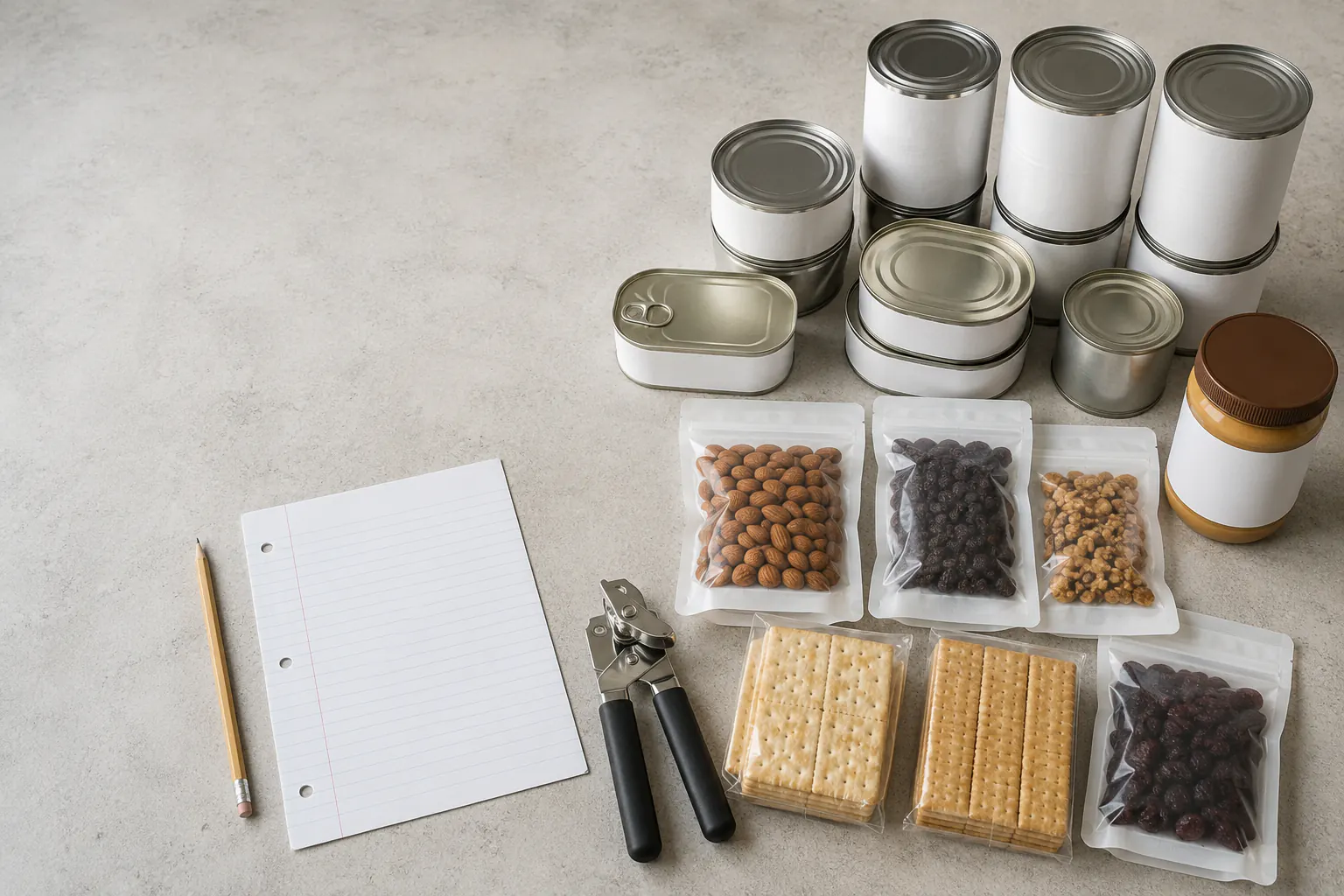
A power-outage food list should answer one question: what can this household actually eat for the next three days, then for the next two weeks, if a grocery trip, refrigeration, tap water, or normal cooking routine is disrupted? It is not a list of fashionable survival foods. It is a short plan for ordinary meals that remain workable when attention is limited. Treat it as the outage-facing slice of the full food storage plan.
Ready.gov includes shelf-stable food and a manual can opener in a basic emergency kit. FDA also calls out nonperishable food, bottled water, and a manual can opener before storms. Those are useful starting points, but the right quantity and mix depend on the people, labels, water, tools, and safe cooking options in the home.
Start with three days of food you already know how to use
Build the first layer from meals the household normally eats. A good three-day reserve needs a breakfast, lunch, dinner, snacks, drinks, and any diet-critical items for every person. It should contain food that can be opened, portioned, and safely eaten even if the household cannot cook.
| Meal job | Planning examples | Check before buying depth |
|---|---|---|
| Breakfast | shelf-stable cereal, oats that can be prepared within the plan, nut or seed butter, fruit | Does it need milk, heated water, or a specific utensil? |
| Ready-to-eat meal | canned meals, shelf-stable pouches, crackers, beans or fish when appropriate | Can it be opened manually and eaten without unsafe indoor cooking? |
| Simple sides | fruit cups, canned vegetables, dry snacks, shelf-stable grains when the plan supports preparation | Is there safe water and enough cleanup capacity? |
| Protein | beans, fish, meat alternatives, nut or seed products, shelf-stable dairy alternatives as label permits | Does anyone have an allergy, texture, sodium, or medical restriction? |
| Comfort and routine | tea, coffee, familiar snacks, child-appropriate foods | Is the preparation method still available? |
Do not count an item merely because it is in the cupboard. Count it only after confirming that the people who may need it can eat it, open it, and prepare it under the conditions you are planning for.
Extend one meal at a time toward two weeks
The two-week layer is not a second, separate pantry. It is additional depth for the meals that already work in the first layer. Add a few familiar servings during ordinary shopping trips, rotate them through normal meals, and replace them before quality becomes a problem.
Use a simple worksheet for each meal:
- Write the people who will be home and any guests, children, pets, or caregiving responsibilities that change the plan.
- List a familiar meal and its ingredients or ready-to-eat equivalent.
- Record the number of servings in each package from its label.
- Record whether it needs drinking water, preparation water, heating, refrigeration after opening, or a manual tool.
- Add the package to the three-day column first; only then add duplicate meals toward two weeks.
- Put the rotation month and storage location on the household inventory.
This avoids an impressive-looking pile that provides no complete meals. It also prevents an emergency pantry from becoming a graveyard for food nobody enjoys or can tolerate.
Food-list checks that are easy to miss
Manual access
Keep a manual can opener where the food is stored and test that the people who may prepare meals can operate it. Check pull tabs, pouches, jars, scissors, and any adaptive tool needed for reduced grip strength. A powered can opener does not solve a no-power meal.
Water and sanitation
Separate drinking water from water needed to rehydrate food, wash hands, clean utensils, and manage dishes. The emergency water storage guide helps build the water reserve; the sanitation plan covers hand hygiene and waste when normal utilities fail. Do not assume every dry food is low-resource food.
Food safety after the outage begins
This list is for a shelf-stable reserve. It does not decide whether food in a refrigerator, freezer, cooler, or flood-affected kitchen is safe. Use Power Outage Food Safety for that decision. Never taste food to decide whether it is safe.
Diets, infants, and medication
Infant feeding, allergies, prescribed diets, swallowing needs, and refrigerated medication are not ordinary substitutions. Keep exact products, labels, instructions, and clinical contacts in the household plan. The dietary-needs planning guide and medical continuity plan identify the questions to resolve before an emergency.
A printable three-day check
- Three familiar breakfast options for every person.
- Three ready-to-eat or safely prepared lunch and dinner options for every person.
- Diet-compatible snacks and drinks.
- A manual opener and any required adaptive tools.
- A written water and cooking requirement beside each meal.
- A location for trash, food-contact items, and hand hygiene.
- Shelf-stable food for pets if the household has them.
- A rotation month and a place to record what was used.
- A safe alternative if cooking, water, or refrigeration is unavailable.
What to buy later, not first
Avoid starting with large quantities of dehydrated food, unfamiliar rations, bulk grains, or specialty equipment. They can be useful only after the household has confirmed water, fuel, containers, preparation skills, diet compatibility, and rotation. The low-water and low-fuel meals guide is a better place to evaluate those tradeoffs.
The three-day layer should be boringly dependable. The two-week layer can become more varied after the household has used the first layer in normal life and corrected every friction point.
Review the list after a real grocery week
The list is not finished when it is purchased. During a normal week, choose one breakfast, one lunch, and one dinner from the reserve and use them as ordinary food. Notice whether a package produces leftovers, whether a child will eat it, whether a label requires refrigeration after opening, and whether the household can find the manual tools in low light. Replace what was used and correct the list while stores, water, and normal cooking are available.
Also write down what changes when the event lasts longer than expected. A household may initially plan for three days and later need to account for guests, missed work, a delayed delivery, a closed road, or a caregiver arriving. Extending to two weeks should add reliable familiar meals, not silently reduce portions or assume people will tolerate food they normally avoid.
Keep food and evacuation choices separate
Food is a support system, not a reason to remain in a location that authorities have told the household to leave. Keep a small group of ready-to-eat, manually accessible items in the go-ready part of the household plan, but follow evacuation orders, road closures, and shelter instructions. Do not load a vehicle or delay departure to preserve a larger pantry.
Keep a paper note with the reserve that names the rotation month, the manual opener location, and the first meal to use. In a dark or busy home, a short visible cue can prevent the household from opening refrigerated food or searching through every cabinet.
Use the note during ordinary meal rotation, too. It stays useful only when it reflects the actual shelf.
If this list is the household’s first preparedness step rather than an addition to an existing plan, the 72-hour household starter kit sets the water, light, and sanitation layers the food layer assumes.
Sources reviewed
ReadyLience reviewed Ready.gov basic-kit guidance, FDA storm food and water guidance, and USDA FSIS shelf-stable-food guidance. Product labels, current recalls, food and water advisories, local orders, and clinician or dietitian instructions control the household situation.