
A pet kit should make an established plan movable. It should not become a bin of generic animal products that nobody has weighed, inspected, or matched to the dog or cat. Build two layers: a portable module that can leave with the animal and a home reserve that supports a longer outage or shelter period.
This checklist adapts current CDC and Ready.gov categories. A veterinarian controls medication, first aid, diet, symptoms, species, age, behavior, and individual health needs. The Pet Emergency Preparedness hub owns the full household plan.
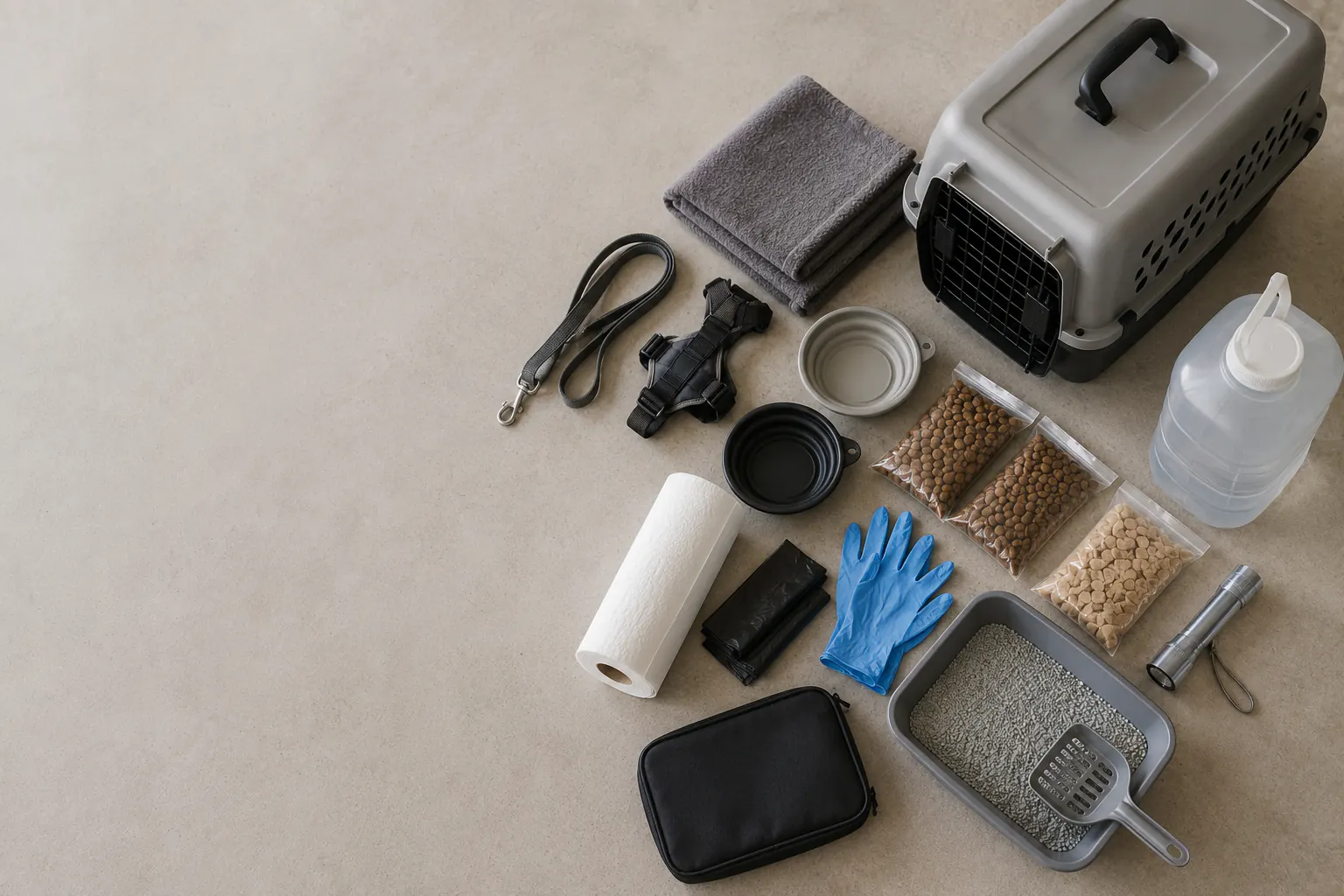
Make one module per animal or compatible group
Label the module with the animal and handler, but do not display private medical or access information outside. Multiple compatible pets may share some food or sanitation supplies only when the household can still identify ownership, dose, serving, and transport responsibility.
Do not combine medication, prescription food, records, or equipment when confusion is possible. A household with several animals should know which carrier, leash, medication pouch, water container, and destination assignment belongs to each animal.
Portable identification and records
Keep paper copies in a water-resistant inner pouch and protected digital copies in the household record system:
- current photograph of the animal and a separate photograph with the owner;
- species, breed or description, sex, color, markings, age, and current weight;
- current tag information and microchip number, company, and registration contact;
- vaccination and rabies records applicable to the animal and destination;
- medical summary, prescriptions, allergies, diet, and handling notes from the veterinarian;
- regular and emergency veterinary contacts, including one near the destination;
- ownership, adoption, registration, license, or boarding record where applicable;
- primary owner, approved backup handler, out-of-area contact, and two destinations.
Review the pet records and medication checklist before copying sensitive details. Do not post microchip numbers or a live destination publicly.
Portable food, water, and medication
CDC’s current checklist uses a two-week planning supply for food, water, and applicable medications. Treat that as a federal preparedness reference, not a claim that every household can carry two weeks at once or that every medication can be refilled that way.
Build the portable layer from the actual route, carrier, transport, destination, animal, and household capacity:
- normal food in sealed, water-resistant portions with feeding instructions;
- a manual can opener when the food requires it;
- confirmed-safe water and non-spill bowls;
- veterinary-directed medication in its proper labeled packaging with instructions;
- veterinary-approved administration supplies and storage method;
- a written resupply and refill path for anything that cannot travel in full.
Never ration or substitute medication from this checklist. Do not change diet abruptly without veterinary guidance. Use the Emergency Water Storage guide for household container and advisory safety, then apply the veterinarian’s animal-specific quantity and quality plan.
Containment and movement equipment
Every dog or cat needs the equipment selected for that animal and the planned mode of travel:
- intact appropriately sized carrier or crate;
- current collar and identification tag;
- leash and harness as directed for safe handling;
- carrier label with owner and fallback contact;
- familiar bedding or towel that does not create overheating, ingestion, or snag risk;
- approved vehicle restraint or carrier-securement method;
- a spare ordinary leash or handling item only when the plan calls for it.
Do not rely on carrying an animal loose, an untested soft container, a damaged latch, or equipment stored beyond the safe exit route. The pet evacuation guide will own loading and movement.
Sanitation and shared-space supplies
Pack only products already compatible with the animal and destination:
- waste bags and a closed waste-storage method;
- litter, scoop, and compact litter container for cats;
- paper towels or washable cloths kept separate from food;
- disposable gloves for ordinary waste handling when appropriate;
- bedding replacement and a sealed bag for contaminated items;
- cleaning product approved for the intended use, stored closed and separate.
Do not mix cleaners, pour products into unmarked bottles, use unfamiliar disinfectants around an animal, or create fumes in a vehicle, small room, or shelter. Follow the destination’s sanitation rules and wash hands after animal, food, and waste handling.
Comfort and routine items
One familiar object can help preserve routine: a small toy, washable bedding, familiar treat if veterinary and diet plans allow, or feeding cue. Do not overload the module with bulky toys or irreplaceable items.
Include a plain boarding or caregiver instruction sheet that states routine, handling, food, medication, bathroom, and contact information approved for sharing. Keep it concise enough for a tired backup handler.
Keep first aid veterinarian-led
CDC includes a pet first-aid book and kit in its planning categories, but a shopping list cannot establish safe animal treatment. Ask the veterinarian which supplies fit the animal, what training the handler needs, what must never be used, and which observations require immediate transport or a call.
Do not put human medication into the pet module, induce vomiting, apply a human treatment protocol, or assume a commercial kit is complete. The family first-aid access guide keeps human and veterinary systems separate.
Add the stay-at-home reserve
The home reserve can hold the portion that is too heavy or bulky for immediate movement: additional normal food and water, litter, bedding, sanitation, and environmental supplies. It still needs a relocation trigger. A larger reserve does not make unsafe heat, cold, smoke, flooding, fire, structural damage, failed powered husbandry, or an official evacuation safe.
Keep reserve containers manageable. A two-week water supply can be too heavy for one person or an apartment exit. Divide it into stable containers and identify the portable portion. Use the go-bag capacity planner only to compare entered weights; it cannot decide what a person can safely carry.
Inspect the kit on a real schedule
At least at the household’s regular emergency review and after any animal or plan change:
- verify tag and microchip registration contacts;
- replace expired food and inspect containers for moisture or pests;
- follow veterinary and pharmacy instructions for medication replacement;
- inspect carrier body, door, latch, handle, fasteners, leash, harness, and labels;
- confirm the animal still fits the selected equipment under professional guidance;
- update photographs, records, weight, diet, veterinarian, handler, route, and destinations;
- weigh the portable module and practise moving it without blocking exits;
- remove recalled, damaged, leaking, unfamiliar, or no-longer-approved products.
Record the date and the correction. Do not write “checked” when a destination, medication, or microchip record still needs verification.
Stage the kit at the departure path
Keep the portable module near the carrier and planned exit without narrowing a hall, stair, door, or mobility route. Medication storage instructions may require a different location; in that case, put a visible retrieval cue in the module without exposing private details.
The handler should be able to collect the animal, carrier, and module in the established order. A backup handler should know the same sequence and the stop rule for unsafe entry.
Skip the prepacked-kit shortcut
ReadyLience has not tested or ranked commercial pet emergency kits. A prepacked kit cannot know the animal’s food, water, records, medication, fit, carrier, destination, veterinary plan, or household transport limits. Research products only after the plan exposes a real gap, and disclose evidence before any future affiliate recommendation.
The useful kit is the one the household has matched, inspected, weighed, and practised with the actual animal and route.
The kit above is the baseline. Heat and cold change what an animal needs from it: see pets during extreme heat and outages and cold-weather and winter outage planning for pets.
Sources reviewed
- Centers for Disease Control and Prevention: pet disaster preparedness kit and emergency planning
- Ready.gov: Pets and Animals
Sources reviewed July 15, 2026. Veterinary, evacuation, shelter, public-health, building, transportation, animal-control, and product instructions control actual decisions.