
One family kit cannot make every person’s medical decisions. It can make the right plan easier to find: basic supplies in a known location, a safe access rule, a current contact record, and a clear distinction between general first aid and an individual’s clinical, infant-feeding, disability, or veterinary needs.
The guiding question is not “what special product should we add?” It is “who can safely access this, what separate professional plan does the person or animal need, and when do we call for help?”
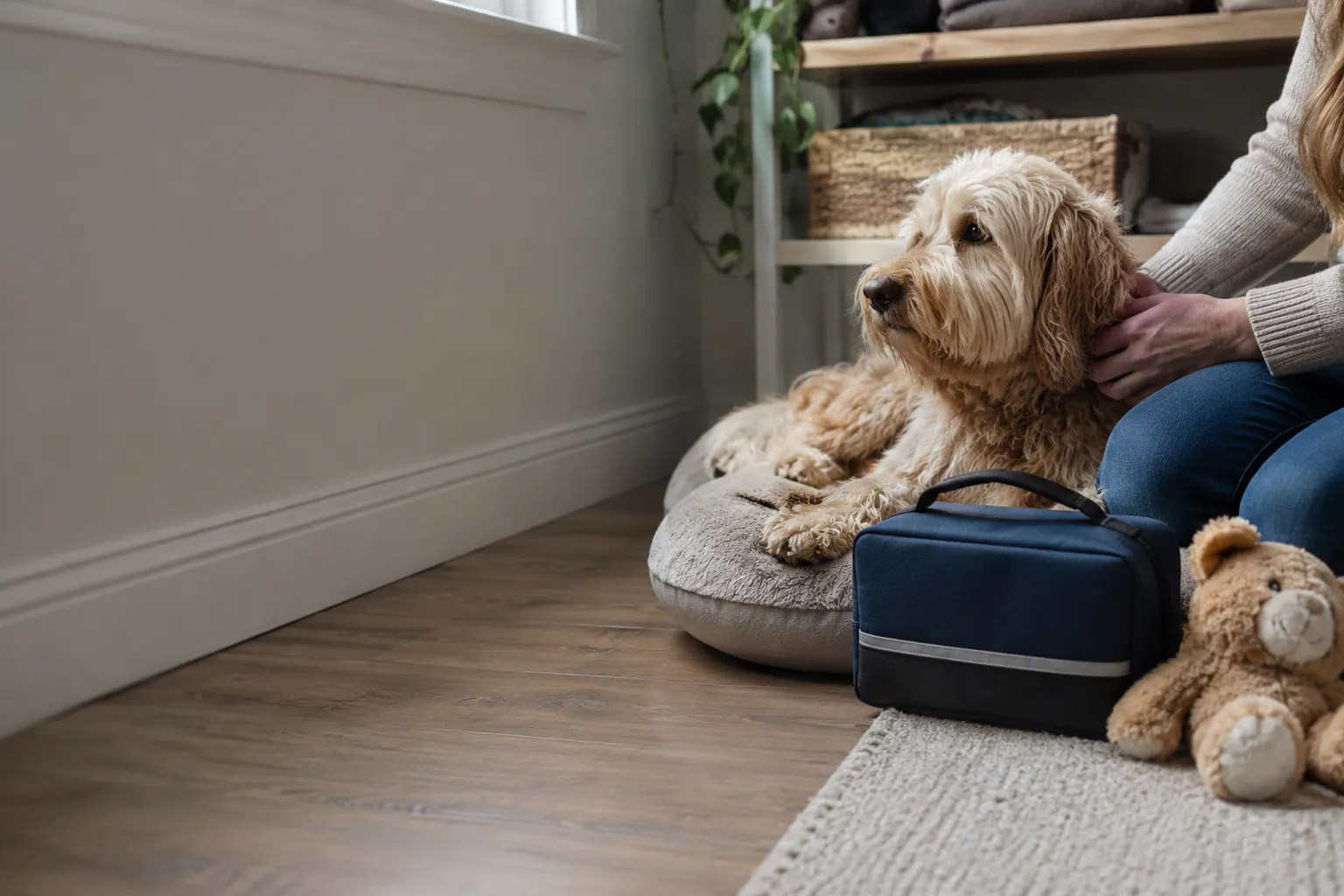
Plan for access before adding supplies
Children, older adults, caregivers, people with limited mobility or grip strength, low vision, hearing differences, cognitive changes, and pets may change where a kit lives and who can use it. Place the primary kit where a responsible adult can reach it without climbing, moving furniture, or crossing a hazardous area. Keep potentially dangerous contents away from unsupervised children and pets.
Use large, readable labels, a predictable layout, adequate battery lighting, and a simple instruction card. If a person needs a specific accessibility tool to open the case or read the plan, test that setup during normal conditions. Do not assume a caregiver will always be present or know where private supplies are stored.
Keep personal health needs separate and protected
The CDC emergency-kit checklist for pregnant people, infants, and children emphasizes tailoring a kit to everyday needs and keeping it current. Ready.gov similarly advises people with disabilities to include medications, medical supplies, and emergency information. Those are prompts to build an individual plan with the appropriate professional, not a generic list of clinical substitutions.
For each person with a special need, keep the following in the protected household plan:
| Need | The planning question |
|---|---|
| Medication or prescribed supply | Who confirms storage, replacement, and emergency action? |
| Infant feeding or nutrition | Which clinician or specialist controls the exact plan? |
| Device or mobility equipment | What is the manufacturer, supplier, and caregiver backup? |
| Communication or sensory need | How will the person understand alerts, contact help, and access the kit? |
| Caregiver handoff | Who can find the plan and who has consent to discuss it? |
Medical Device and Medication Continuity owns the clinician-led record. Emergency food planning for allergies and special diets separately owns protected food and diet questions.
Children need clear boundaries, not adult equipment
Teach children how to get a responsible adult, call for help when appropriate, state their address if they can, and avoid touching kit contents without supervision. Do not present a first-aid kit as a toy, a prize, or an invitation to experiment with sharp tools, medicine, creams, or unfamiliar supplies.
Prepare a caregiver handoff card with emergency contacts, allergies or care details only to the extent the parent or guardian has chosen and can store privately. Review it when child care, school arrangements, custody, address, or clinician information changes. A generic kit does not replace pediatric or infant-feeding guidance.
Older adults and caregivers need an access-and-handoff plan
Ask whether the case is reachable, whether labels can be read, whether the person can open it, and who can call or meet responders. Include mobility aids, glasses, hearing aids, communication needs, and essential equipment in the individual plan when relevant. Do not move a person’s medical equipment or medication into a general kit without following the established clinical plan.
During a power outage, heat, cold, or evacuation, early relocation may be safer than waiting until a caregiver cannot reach the home or a building system fails. Those triggers should come from the individual’s clinician, supplier, and household communication plan, not this article.
Pets need a veterinary plan, too
Pets are not small humans and should not receive a household member’s medication or treatment plan. Keep veterinary contact information, identification, transport equipment, food, water, and any professionally directed supplies in the pet plan. Ready.gov’s pet guidance stresses planning for evacuation and supplies; it does not make a generic household kit a veterinary clinic.
Keep pet supplies separate from food, child supplies, and human first-aid materials where contamination or confusion is possible. Know the nearest emergency veterinary option and the safe transport plan before an event. The future pet-preparedness cluster will deepen this subject; this page only establishes the first-aid system boundary.
Rehearse the information handoff
In a calm moment, ask a second caregiver to locate the kit, find the private plan, name the first emergency contact, and identify the safe exit. Correct friction without disclosing private health details more broadly than needed. Keep the rehearsal limited to locating, reading, and communicating; do not practise clinical procedures without qualified supervision.
Plan for consent, privacy, and backup caregivers
Ask the person, parent, guardian, or caregiver what information should travel with the kit, who may access it, and when it should be shared with emergency responders. A convenient label should not expose a diagnosis, prescription, or private contact information to a visitor, roommate, or someone who finds a lost bag.
Write down a backup caregiver or contact route, but do not assume a named person can always reach the home. Pair the kit with the family communication plan and decide what happens if the primary caregiver is away, roads are closed, or a building system fails.
Store related plans without mixing them
Keep the general first-aid kit in its accessible location. Keep protected medical, infant, disability, or pet supplies in their distinct labeled systems. The relationship can be noted on a private household map, but the contents should not be mixed merely because they all appear “medical.” Separation lowers the chance of accidental use, contamination, and a caregiver reaching for the wrong package under stress.
Review the arrangement after a new child, pet, diagnosis, mobility change, move, school change, or new caregiver. The plan is successful when a responsible person can find the correct plan, not when every supply fits in one bag.
Consider evacuation without turning the kit into a care plan
An evacuation or relocation may separate people from the main kit, a pharmacy, a veterinarian, a caregiver, or familiar storage. Identify a compact, safe-to-carry layer and the protected plans that must travel with the person or pet. Confirm carriers, mobility aids, communication needs, and destinations through the relevant household and professional plans.
Do not wait for a crisis to decide who carries a child’s records, a pet’s identification, or a person’s necessary equipment. The First Aid and Compact Medical Kits hub connects access and inspection; it does not replace an evacuation plan, a clinician, or a veterinarian.
Keep the plan current after every ordinary appointment or household transition. The small maintenance task is easier than resolving private, high-consequence information at a shelter door, roadside stop, or dark apartment hallway.
Use plain language for every handoff. A backup caregiver should be able to identify the main kit, the protected plan, the first call, and the safe exit without interpreting a medical abbreviation or guessing at an unfamiliar product.
Sources reviewed
ReadyLience reviewed CDC emergency-kit guidance for pregnant people, infants, and children, Ready.gov disability and pet preparedness guidance, and American Red Cross kit guidance. This guide contains no pediatric, geriatric, disability, or veterinary treatment advice; current clinicians, veterinarians, product instructions, and emergency services control actual care.