
A winter pet plan cannot be reduced to a blanket and extra food. A power outage may remove heat, water pumping, elevators, lighting, medication refrigeration, aquarium or terrarium controls, and safe transport while ice and snow make every later decision harder.
Prepare a heated indoor shelter plan, a portable animal module, two verified destinations, and an early departure trigger. A universal outdoor time or indoor temperature is not safe guidance for every species, breed, age, health condition, coat, medication, or powered habitat. The veterinarian must set individual limits.
This page belongs to the Pet Emergency Preparedness hub. Use the Winter Storm Preparedness hub for whole-household weather, power, water, travel, and official-warning decisions.
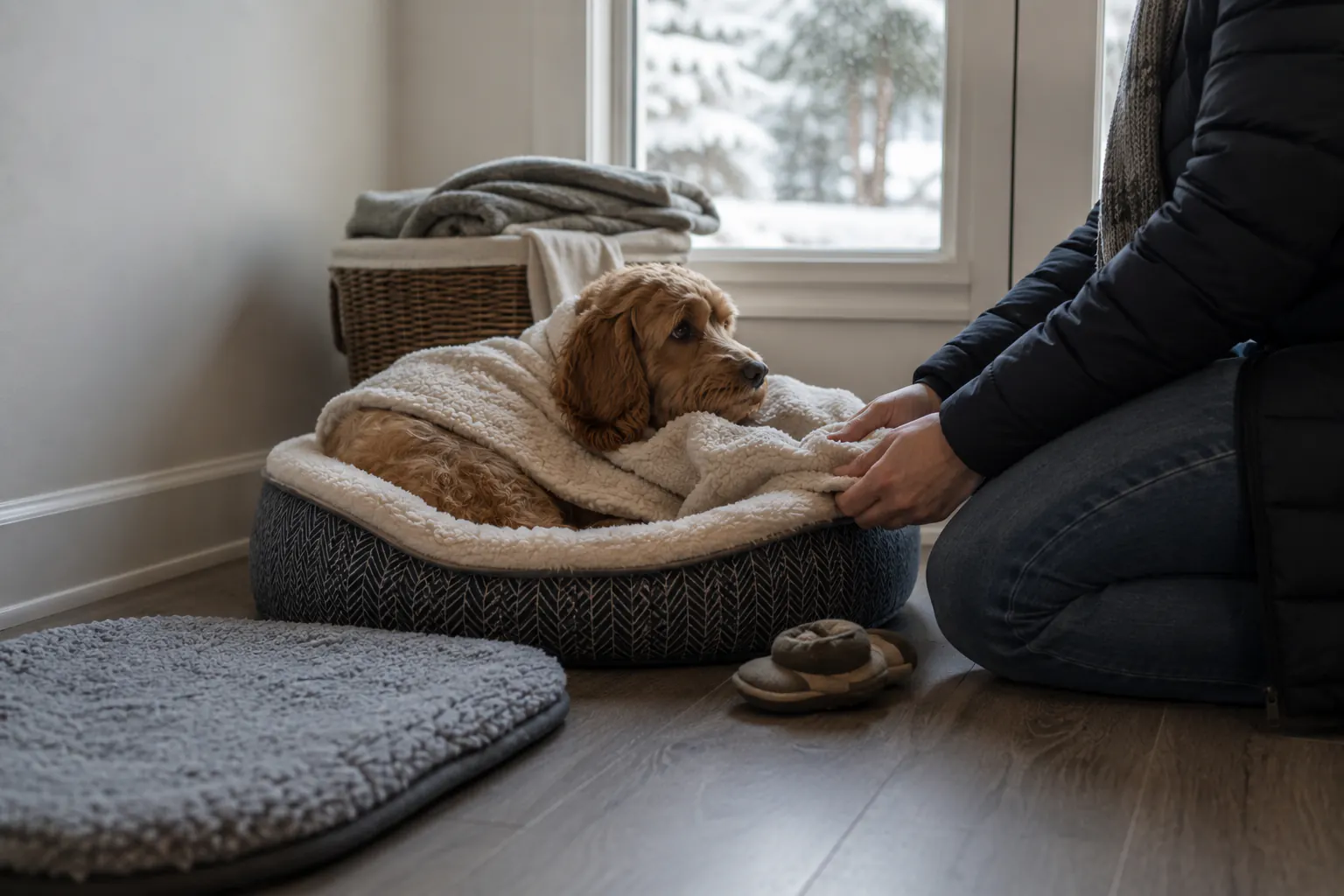
Establish the animal-specific winter plan
Before winter, ask the veterinarian how the animal’s species, age, size, coat, body condition, mobility, heart or lung health, endocrine disease, pregnancy, medication, and prior cold injury change exposure and travel decisions.
Record verified answers:
| Planning question | Decision to obtain |
|---|---|
| Indoor environment | Temperature and monitoring guidance for this animal |
| Outdoor movement | Conditions, duration, paw, coat, supervision, and activity limits |
| Warning path | Observations requiring a call, urgent visit, or emergency care |
| Medication and diet | Storage, refrigeration, administration, food, and water requirements |
| Powered care | Equipment, tolerated interruption, backup, and relocation trigger |
| Transport | Carrier environment, vehicle preparation, and destination timing |
Do not apply a rule for a healthy adult dog to a cat, puppy, older animal, bird, reptile, aquarium, service animal, livestock animal, or animal with a medical condition. Date the plan and update it after any relevant change.
Keep household pets indoors and dry
Keep household dogs and cats indoors in a dry, draft-managed area under veterinary guidance, except for necessary supervised outdoor movement. Provide normal bedding that is dry, safe from chewing or entanglement, and clear of heaters, flames, cords, and exits.
Do not use a garage, porch, shed, balcony, vehicle, crawlspace, barn aisle, or improvised enclosure as proof of safe winter shelter. Those spaces may have freezing surfaces, exhaust, chemicals, antifreeze, sharp tools, poor ventilation, or no reliable heat.
Livestock and outdoor animals require species-specific shelter, ventilation, water, feed, bedding, transport, and agricultural planning. Do not move them into a human living area or seal a barn based on a household-pet article. Work with a veterinarian, agricultural extension or authority, and experienced facility operator.
Monitor the occupied space
Use a reliable indoor temperature monitor where the animal rests, not only at the household thermostat. Upper floors, exterior rooms, floors near doors, aquariums, terrariums, and closed bedrooms can differ materially.
Record time, room conditions, outdoor conditions, utility status, heat source, fuel or battery state, water availability, and animal observations. Connect monitoring to an action: continue the established safe setup, consolidate into the planned room, call the veterinarian, or relocate.
Do not wait for severe symptoms to decide. For suspected cold injury, poisoning, breathing difficulty, collapse, severe weakness, altered responsiveness, or another urgent condition, contact an emergency veterinarian and follow their instructions. This guide intentionally omits treatment and rewarming procedures.
Protect water from freezing and contamination
Maintain confirmed-safe liquid water according to veterinary guidance. Check bowls and containers because a room that feels tolerable to a clothed adult may still allow water near a door, floor, vehicle, or outdoor shelter to freeze.
Plan a portable animal supply and a separate home reserve. Keep containers manageable and protect them from road salt, fuel, antifreeze, cleaners, pests, and floodwater. Do not use snow or ice as a routine substitute for confirmed-safe water, and do not force water or alter a clinical hydration plan.
The Emergency Water Storage guide owns household container, storage, and advisory practices. The veterinarian owns the animal’s quantity and health requirements.
Control heater, flame, and carbon-monoxide hazards
Use only heating equipment permitted for the space and follow its listing, clearances, electrical limits, supervision, and building rules. Keep carriers, bedding, tails, leashes, toys, bowls, and animals away from hot surfaces, open flame, cords, fuel, and tip zones.
Never use an outdoor grill, camp stove, charcoal device, unvented combustion appliance not approved for the occupied space, or vehicle engine to heat a home or animal area. Never operate a portable generator in a home, garage, basement, shed, barn, porch, vehicle, or partially enclosed space. Carbon monoxide can injure people and animals without warning.
Maintain working smoke and carbon-monoxide alarms under the household fire plan. An animal’s behavior is not a carbon-monoxide detector. Leave and call emergency services when the alarm or current authority requires it.
Remove winter poisons and paw hazards
Antifreeze and other vehicle fluids can be dangerous to animals. Store products closed and inaccessible, clean spills through the product and local hazardous-material process, and contact an emergency veterinarian or appropriate poison resource immediately for suspected exposure. Do not induce vomiting or give a home remedy from an article.
Road salt, deicers, ice, sharp crust, and chemicals can affect paws or be ingested during grooming. Use veterinary guidance for paw protection and cleaning appropriate to the animal. Check the planned bathroom route in daylight when possible and avoid downed lines, unstable branches, ice, snow-removal equipment, traffic, and treated puddles.
Do not use an unfamiliar coat, boot, warming pad, or chemical product for the first time during an emergency without checking fit, supervision, and professional guidance.
Treat loss of power as a relocation problem
Inventory every animal need affected by electricity:
- central or room heat, fans, and ventilation;
- well pump or building water system;
- refrigerated veterinary medication;
- prescribed veterinary or mobility equipment;
- aquarium aeration, circulation, filtration, and heat;
- terrarium heat, lighting, humidity, and ventilation;
- powered doors, gates, lifts, fencing, or communication equipment.
For each essential load, record the responsible veterinarian or specialist, equipment input, approved backup, measured runtime, monitoring method, tolerated interruption, and departure trigger. A generic battery estimate cannot establish biological safety.
The safe winter-outage heat guide owns household heating constraints. Do not overload circuits, daisy-chain power strips, run cords through snow or standing water, or improvise equipment connections around animals.
Write observable departure triggers
Use triggers the household can recognize before conditions become desperate:
- an evacuation, building, fire, or road authority directs movement;
- the veterinarian’s environmental limit is reached or forecast before support arrives;
- safe heat, ventilation, water, sanitation, medication storage, or supervision cannot continue;
- essential powered husbandry cannot remain within the specialist plan;
- carbon monoxide, fire, smoke, flooding, structural damage, or another hazard affects the location;
- the animal meets a veterinary call, urgent, or emergency criterion;
- the verified route or destination is likely to close before a safe departure.
Do not delay a required evacuation to warm the building, retrieve optional gear, wait for power restoration, or test how long the animal tolerates the cold. Current authorities control movement.
Prepare winter transport
Keep the correct carrier or crate accessible inside the safe area. Stage the portable pet emergency kit, records, veterinary-directed medication, water, normal food, sanitation, and dry bedding without blocking the exit.
Use the animal’s established secure vehicle position. Clear snow and inspect the route before loading when safe, but never run a vehicle in a garage or enclosed space. Do not leave an animal unattended in a parked vehicle; a vehicle can become dangerously cold, lose heat, be struck, or become stranded.
Plan a no-car route and two approved pickup contacts. Verify whether emergency transport accepts the species and carrier. The pet evacuation guide owns handler, loading, route, and separation planning.
Verify two heated destinations
Ask the actual shelter, hotel, clinic, boarding facility, friend, or relative whether it currently accepts the animal and can maintain the required environment. Confirm species, number, carrier, records, medication, service-animal process, check-in, accessibility, cost, supervision, sanitation, parking, and backup-power or relocation procedure.
Do not assume that “pet friendly” means heated animal accommodation during an outage. Ask where the animal stays and what happens if the site loses power or water. Reconfirm during the incident because capacity and road access change.
Use the pet shelter and hotel planning guide for the verification record. Select options outside the same likely outage or road-closure area when possible.
Practise without creating cold exposure
On a calm mild day, test the notification, carrier access, equipment shutdown, medication transfer, loading order, pickup contact, route, and destination call. Do not leave an animal in cold conditions, turn off safe heat, or create slippery surfaces for a drill.
Correct the gaps: inaccessible carrier, frozen outdoor faucet, oversized water container, dead vehicle battery, unsafe extension cord, expired record, missing helper, or destination that cannot answer the animal questions.
Review after a move, new animal, diagnosis, medication, equipment, vehicle, caregiver, destination, building rule, or previous winter outage. Preparedness means leaving before the plan loses its margin, not proving that the household can endure longer.
Sources reviewed
- American Red Cross: cold-weather safety prevention for pets
- Centers for Disease Control and Prevention: pet emergency preparedness
- Ready.gov: Pets and Animals
Sources reviewed July 15, 2026. Veterinarians, emergency authorities, utilities, equipment providers, facilities, agricultural specialists, and current conditions control actual decisions.