
Start with one animal’s current veterinary summary, a recent photo and the clinic’s phone number. Ask the clinic which records a receiving veterinarian or agreed caregiver would need. You can add destination and identification details as you confirm them; an unfinished folder must not delay necessary veterinary help or an evacuation order.
CDC’s Build a Pet Disaster Preparedness Kit includes veterinary records, prescriptions, identification, photographs and contacts. Keep one clearly labeled record set per animal, with a portable paper copy and protected digital fallback. The veterinarian and pharmacy define medication details. This checklist organizes information; it does not prescribe care or determine whether an animal is healthy enough to travel.
The Pet Emergency Preparedness hub connects the record to carriers, supplies, destinations, heat, cold, and evacuation.
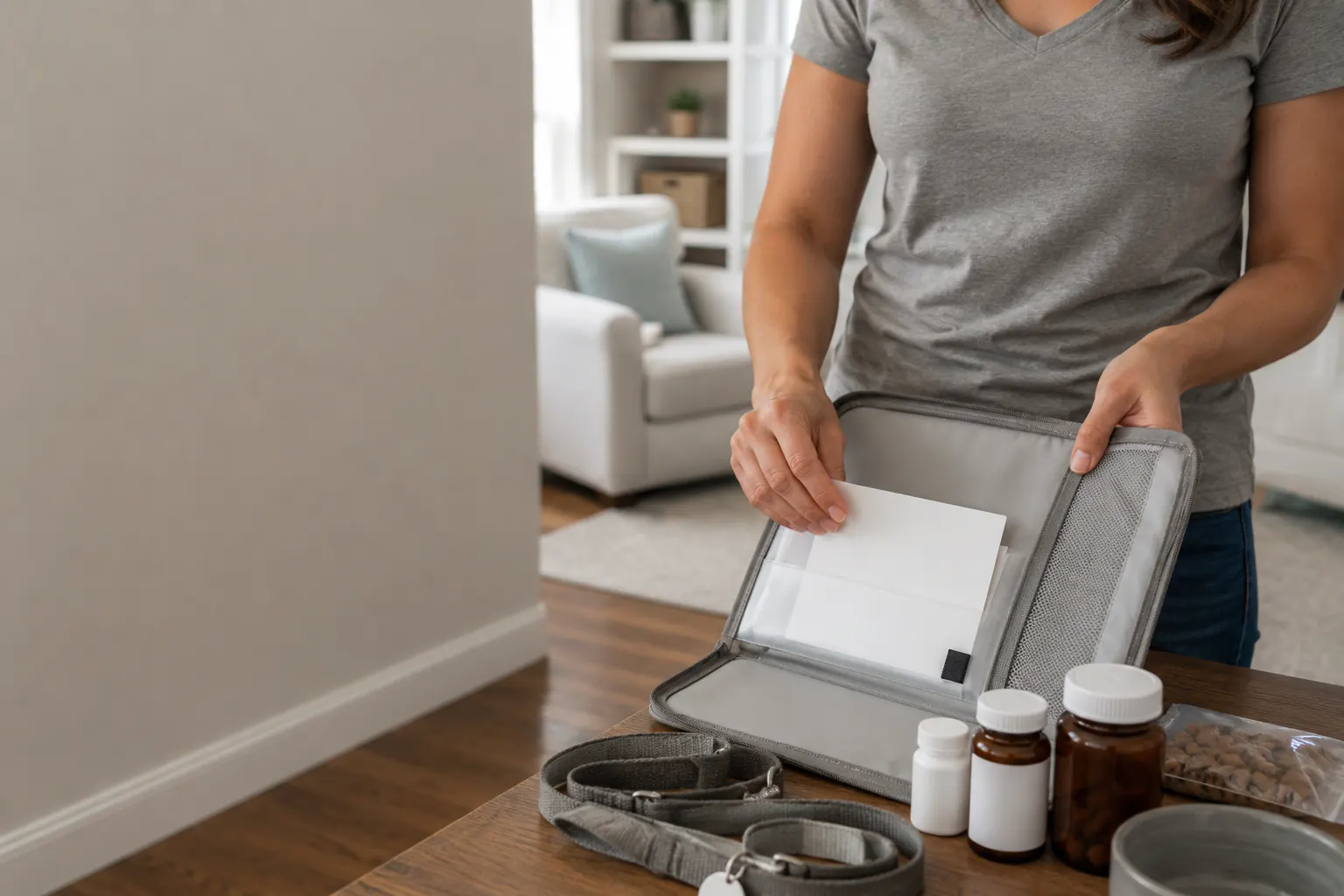
Create a one-page identity sheet
Put the information a backup handler or receiving facility must find quickly on one page:
- animal’s call name and full registered name when relevant;
- species, breed or physical description, sex, age, color, markings, and current weight;
- recent clear face and full-body photographs;
- a separate recent photograph of the animal with the owner or handler;
- tag, license, and microchip information with registration-company contact;
- owner, approved local backup, and out-of-area contact;
- regular veterinarian and emergency veterinary clinic;
- primary and backup destination;
- carrier, crate, leash, harness, or transport assignment.
Do not put the full sheet on the outside of a carrier. Use a minimal visible label with the contact needed for reunion, while keeping microchip number, detailed address, medical history, and itinerary inside the protected record.
Keep microchip registration current
A microchip does not update itself after a move or phone change. Record the chip number, registry, account contact, and last verification date. Confirm the owner name, phone, email, alternate contact, and veterinarian through the registry’s official process.
Ask the veterinarian or qualified scanner to confirm the chip can be detected during an ordinary appointment when appropriate. Do not try to implant, remove, repair, or diagnose a chip problem yourself.
Keep a collar and current visible identification when safe and appropriate for the animal, because a finder may not have immediate scanner access. Tags and chips are complementary. Follow veterinary guidance if ordinary collar use creates a snag, skin, behavior, or medical concern.
Request a veterinary continuity summary
Ask the veterinarian which record a receiving clinic or caregiver should have during disruption. A concise continuity summary may include:
| Category | Veterinary record to request |
|---|---|
| Baseline | Species, age, weight, diagnoses, allergies, relevant history |
| Medication | Current prescription, strength, dose, route, schedule, purpose, prescriber |
| Monitoring | Required observations, equipment, laboratory or follow-up needs |
| Diet | Prescription or medically necessary food and substitution boundary |
| Handling | Mobility, behavior, restraint, temperature, transport, or isolation needs |
| Prevention | Current vaccination, rabies, parasite, license, or jurisdictional records |
| Escalation | Symptoms or interruptions requiring a call, urgent visit, or emergency care |
Do not rewrite technical instructions from memory. Use the veterinarian’s current document and preserve its date. Mark old copies obsolete so a caregiver cannot follow a superseded dose or diet.
Build the medication continuity record
For every current medication, record only verified label and professional information:
- medication name, formulation, strength, and prescription number;
- exact veterinarian-directed dose, route, and schedule;
- prescribing clinic and dispensing pharmacy;
- refill date, remaining authorized refills, and after-hours process;
- storage range, light or moisture protection, and refrigeration requirement;
- administration equipment approved for that prescription;
- missed-dose, spill, vomiting, contamination, or temperature-excursion contact path;
- destination pharmacy or clinic process when travel is likely.
Keep medication in original labeled packaging when practical and protect it from heat, freezing, moisture, children, theft, and other animals. Do not put tablets from different prescriptions into an unlabeled emergency bag.
Never start, stop, split, crush, share, ration, substitute, or change a dose from this page. If supply, storage, refrigeration, or administration fails, contact the veterinarian or pharmacy using the established path.
Plan refrigerated and powered needs separately
Ask the veterinarian and pharmacy for the allowed storage conditions, what temperature monitoring is required, what packaging is appropriate, and what to do after an excursion. A household cooler or power station does not validate a medication.
List powered animal needs such as refrigerated medication, prescribed oxygen, nebulization, aquarium circulation, terrarium heat, environmental controls, or monitoring. Ask the responsible professional for the equipment supplier, documented input, approved backup method, interruption limits and relocation trigger. Leave unconfirmed limits as questions to resolve; do not choose a tolerance from household runtime arithmetic.
The medical-device continuity hub provides a household power framework, but it cannot establish veterinary or species-specific limits. Keep animal and human prescriptions clearly separated.
Carry destination-ready records
Ask both planned destinations what they currently require. Possible requirements include vaccination, rabies, ownership, license, health, prescription, carrier, or registration records. The answer varies by operator, animal, jurisdiction, and incident.
Create a destination packet containing only the accepted current documents. Note the facility, requirement, verification date, staff or official channel, and renewal date. Use the pet-friendly shelter and hotel guide for the questions to ask. Reconfirm when feasible, but do not delay current evacuation instructions or necessary assistance to complete the packet.
Do not assume that a phone photograph of a record will be accepted. Do not send sensitive documents to a directory listing, personal address, or unverified form.
Prepare a caregiver handoff sheet
A backup handler needs permission and a bounded assignment. Record:
- who may take custody and under which trigger;
- how that person safely accesses and contains the animal;
- where the carrier, supply bag and protected record are located, without obstructing exits;
- the veterinarian-approved food, medication, and routine instructions;
- the primary and backup destinations;
- who may authorize ordinary and emergency veterinary care;
- spending, transport, and communication limits established by the owner;
- the stop rule for fire, flood, smoke, violence, structural danger, or a closed zone.
Use the legal authorization appropriate to the jurisdiction and veterinarian; this article cannot create consent or agency. Give the backup only the access and private information needed for the agreed role. Revoke and replace copies when the role ends.
Once the receiving person is confirmed and it is safe to make a note, record the animal, time, supplies, documents, destination and next contact. Share any care information through the approved veterinary instructions. These private notes must not delay departure, assistance or necessary treatment, and they do not replace consent or authorization.
Protect the digital copy
Store a protected digital fallback that authorized household members can reach if the paper pouch is lost. Use the household’s established device, password, encryption, backup, and recovery practices. Test access without posting the record to a public link.
Avoid filenames that expose diagnoses or an empty-home address on a lock screen. Do not store card numbers, door codes, identity documents, and pet records in one unprotected note. Limit shared access and remove former caregivers.
Keep an offline contact card because cellular data, email, cloud storage, or authentication can fail. The Family Communication Plan helps you choose backup ways to reach household contacts.
Prepare for a missing animal
Keep current photographs and a plain description that can be given to animal control, shelters, veterinarians, the microchip registry, and the responsible local recovery channel. Record where and when the animal was last seen, carrier or collar information, identifying features, and behavior relevant to safe handling.
Do not enter a closed or dangerous area, chase into traffic, or ask an untrained person to capture an animal. Follow authority instructions. Share only the minimum public contact information needed and avoid disclosing access codes, detailed absence dates, or unverified claims about a finder.
When reunited, verify identity and contact a veterinarian for injury, exposure, illness, unusual behavior, or interrupted medication.
Review on meaningful triggers
Review the complete record at the household’s scheduled emergency check and after:
- a move, phone, email, veterinarian, pharmacy, or caregiver change;
- a new diagnosis, medication, dose, diet, allergy, behavior, or mobility need;
- vaccination, rabies, license, microchip, or destination renewal;
- a new animal, death, adoption, or ownership change;
- a carrier, vehicle, route, shelter, hotel, or transport change;
- a failed access test, evacuation, separation, or medication disruption.
Date every review and correction. Destroy obsolete paper copies securely and remove outdated shared digital access. A record marked complete but carrying an old phone number or prescription is a hazard, not continuity.
Sources reviewed
- Centers for Disease Control and Prevention: pet emergency preparedness and disaster-kit planning
- Ready.gov: Pets and Animals
Sources reviewed July 15, 2026. Veterinarians, pharmacies, facilities, microchip registries, emergency authorities, and applicable law control actual medical, identification, access, and custody decisions.