
Extreme heat becomes an animal emergency when the household relies on one air conditioner, one vehicle, or one vague promise to “keep an eye on the pets.” A power outage can remove cooling, ventilation, water pumping, refrigeration, and powered husbandry at the same time that roads and destinations become crowded.
Build the plan around prevention and early relocation. A general article cannot set a safe indoor temperature for every dog, cat, service animal, bird, reptile, aquarium, or medically complex animal. Ask the veterinarian for individual limits and urgent signs before the season.
The Pet Emergency Preparedness hub owns the complete animal record, kit, transport, and destination system. The Extreme Heat Preparedness hub owns household-wide heat decisions.
Start with the animal’s individual risk plan
Ask the veterinarian how species, breed, age, body condition, coat, airway, heart or lung disease, pregnancy, mobility, medication, behavior, and prior heat illness change the plan. Flat-faced animals, very young or older animals, and animals with chronic conditions may need different constraints, but only the responsible professional can apply them to an individual.
Record:
| Question | Verified answer to obtain |
|---|---|
| Normal conditions | Animal’s ordinary environment, hydration, activity, and rest pattern |
| Prevention limits | Veterinary temperature, humidity, activity, sun, and travel guidance |
| Warning path | Changes that require a call, urgent visit, or emergency care |
| Medication | Heat, storage, refrigeration, administration, and refill requirements |
| Powered care | Equipment, tolerated interruption, backup, and relocation trigger |
| Destination | Clinic and two cooling locations able to accept this animal |
Do not copy a universal temperature threshold from social media or apply a dog rule to another species. Date the veterinary plan and update it when the animal changes.
Monitor the room and the animal
Place a reliable indoor temperature and, when relevant, humidity monitor where the animal actually rests, away from direct sun or a misleading appliance draft. Check more than one room when upper floors, closed rooms, aquariums, terrariums, or sun exposure create different conditions.
Record the time, room conditions, utility status, cooling available, water access, and animal observations. Monitoring is useful only when it connects to a prewritten action: continue the safe plan, move to the prepared cooler room, call the veterinarian, or relocate.
Do not wait for an animal to demonstrate severe distress before acting. If suspected heat illness or another urgent condition is present, contact an emergency veterinarian immediately and follow their instructions. This page intentionally does not provide treatment steps.
Preserve shade, airflow, and confirmed-safe water
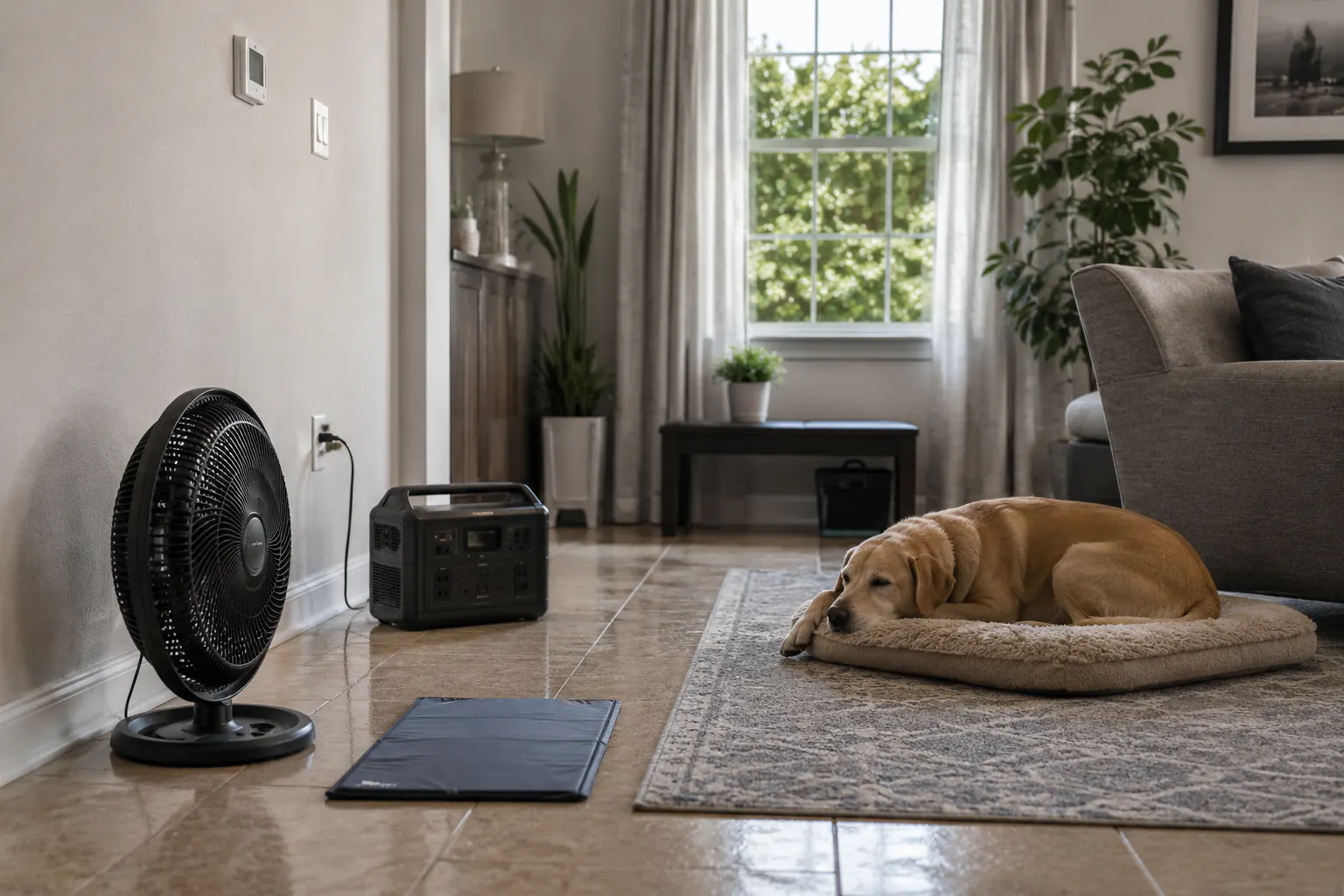
Keep animals out of direct sun and hot enclosed spaces. Maintain the ventilation and cooling method approved for the home and animal while preserving fire and carbon-monoxide safety. A fan moves air; it does not guarantee safe cooling for an animal or room.
Provide access to confirmed-safe water according to veterinary guidance. Plan animal water separately from human minimums and account for bowls, spills, sanitation, and transport. Never force water or change a medically directed hydration plan from an article.
The Emergency Water Storage guide owns container, advisory, and storage practices. Store the animal portion where heat, chemicals, pests, and floodwater cannot compromise it.
Never use a parked vehicle as shelter
Never leave an animal unattended in a parked vehicle, even with windows partly open or during a short stop. Vehicle conditions can become dangerous rapidly, and an idling vehicle adds mechanical, exhaust, theft, and failure risks.
During evacuation, use the secured carrier or restraint method selected for the animal and keep a capable adult responsible for conditions. Plan stops and destination check-in so the animal does not wait in a parking area. If the destination cannot receive the animal on arrival, use the verified backup rather than treating the vehicle as accommodation.
Do not place an animal in an open truck bed, closed cargo compartment without suitable environmental control, garage, shed, balcony, attic, unconditioned sunroom, or sealed carrier in heat.
Treat a power outage as a countdown
List what stops when power fails:
- room air conditioning, heat pump, fans, and ventilation;
- well pump or building water pressure;
- refrigerated veterinary medication;
- prescribed oxygen or other veterinary equipment;
- aquarium aeration, circulation, filtration, chilling, or heating;
- terrarium heat, lighting, humidity, or ventilation;
- powered doors, gates, lifts, fencing, or access systems;
- communication and transport charging.
For each essential load, record the responsible veterinarian or specialist, equipment label input, approved backup, tested runtime, monitoring method, tolerated interruption, and relocation trigger. The medical-device continuity framework can organize power dependencies, but it cannot validate animal care.
Do not connect improvised batteries, inverters, extension cords, or generators to animal equipment without the electrical and equipment guidance required for that setup. Never run a fuel-burning generator in a home, garage, basement, shed, barn, porch, vehicle, or partially enclosed animal area.
Decide when sheltering at home ends
Write observable triggers before the outage:
- an evacuation or building order applies;
- the veterinarian’s individual environmental limit is reached or expected before backup arrives;
- required animal equipment cannot continue safely;
- medication storage cannot remain within professional instructions;
- confirmed-safe water, sanitation, ventilation, or supervision cannot continue;
- smoke, fire, flood, structural damage, carbon monoxide, or another hazard makes the location unsafe;
- the animal develops a sign covered by the veterinary urgent or emergency plan;
- the verified destination or route may soon become unavailable.
Departure timing belongs to current authorities and the household plan. Do not delay a required evacuation to cool a room, charge a battery, collect optional supplies, or wait for an animal to look ill.
Verify two cooling destinations
Ask each shelter, hotel, clinic, boarding facility, friend, or relative whether it currently accepts the species, number, carrier, records, medication, and powered-care needs. Confirm that the site actually has functioning cooling and whether animals remain with the household or in a separate area.
Record power-outage procedure, backup generation relevant to the animal area, check-in window, parking, transport, cost, supervision, sanitation, and what happens if the property loses cooling. Reconfirm during the incident.
The pet shelter and hotel guide supplies the full verification record. A public cooling center that helps people is not automatically authorized or equipped for household pets.
Resolve smoke and heat together
Wildfire smoke can make open-window ventilation unsafe while heat makes a closed home untenable. Particle filtration does not provide cooling, and an ordinary fan does not remove smoke particles. Use current air-quality, fire, heat, and evacuation instructions together.
If the home cannot remain both cool enough and protected from smoke under the veterinary and household plans, relocate early to a verified cleaner-air cooling destination outside the threat. The wildfire smoke and pets guide owns respiratory exposure and veterinary escalation.
Do not put a human respirator or improvised covering on an animal. Do not operate combustion equipment for cooling or electricity indoors.
Adjust outdoor movement without losing containment
Follow veterinary guidance for activity and bathroom trips. Use shade and the coolest safer planned time when conditions and authorities permit. Check surfaces before allowing paws to contact them, and avoid hot pavement, ash, floodwater, chemical residue, and uncontrolled water.
Keep the animal leashed or contained according to its established plan. Heat is not a reason to open a carrier in an unsecured place. Bring water and the portable module on any relocation, but do not force exercise or use unfamiliar cooling products.
Service-animal handlers need an accessible route that preserves the working team and the handler’s own heat plan. Do not send a service animal to a pet-only location as a default.
Practise the relocation before summer
On a mild day, test the notification, carrier access, equipment shutdown, medication transfer, loading sequence, route, and destination contact. Do not create heat exposure or withhold cooling as a drill.
Measure how long the safe administrative sequence takes, not how long the animal can tolerate worsening conditions. Correct inaccessible carriers, dead batteries, heavy water containers, expired records, failed contacts, and destinations that cannot answer the animal questions.
Review after a move, new animal, diagnosis, medication, equipment, vehicle, caregiver, destination, utility plan, or previous outage. The useful outcome is an earlier safe decision, not a claimed endurance time.
Sources reviewed
- American Red Cross: extreme-heat prevention for pets
- Centers for Disease Control and Prevention: pet emergency preparedness
- Ready.gov: Pets and Animals
Sources reviewed July 15, 2026. Veterinarians, emergency authorities, utilities, equipment providers, facilities, and current conditions control actual decisions.