
Choose one place where you need access to first-aid supplies: a small apartment, a carry bag, or a vehicle. Start with a kit you already have and check its opening, labels, and storage instructions in ordinary, safe conditions. A smaller case is useful only if the person helping can find it and its contents suit that location and their training.
You do not need to finish a whole household plan before making this check. Finding a kit, completing a card, or contacting a routine caregiver must never delay emergency help or a necessary departure. Prescribed supplies and devices remain under their individual professional plans.
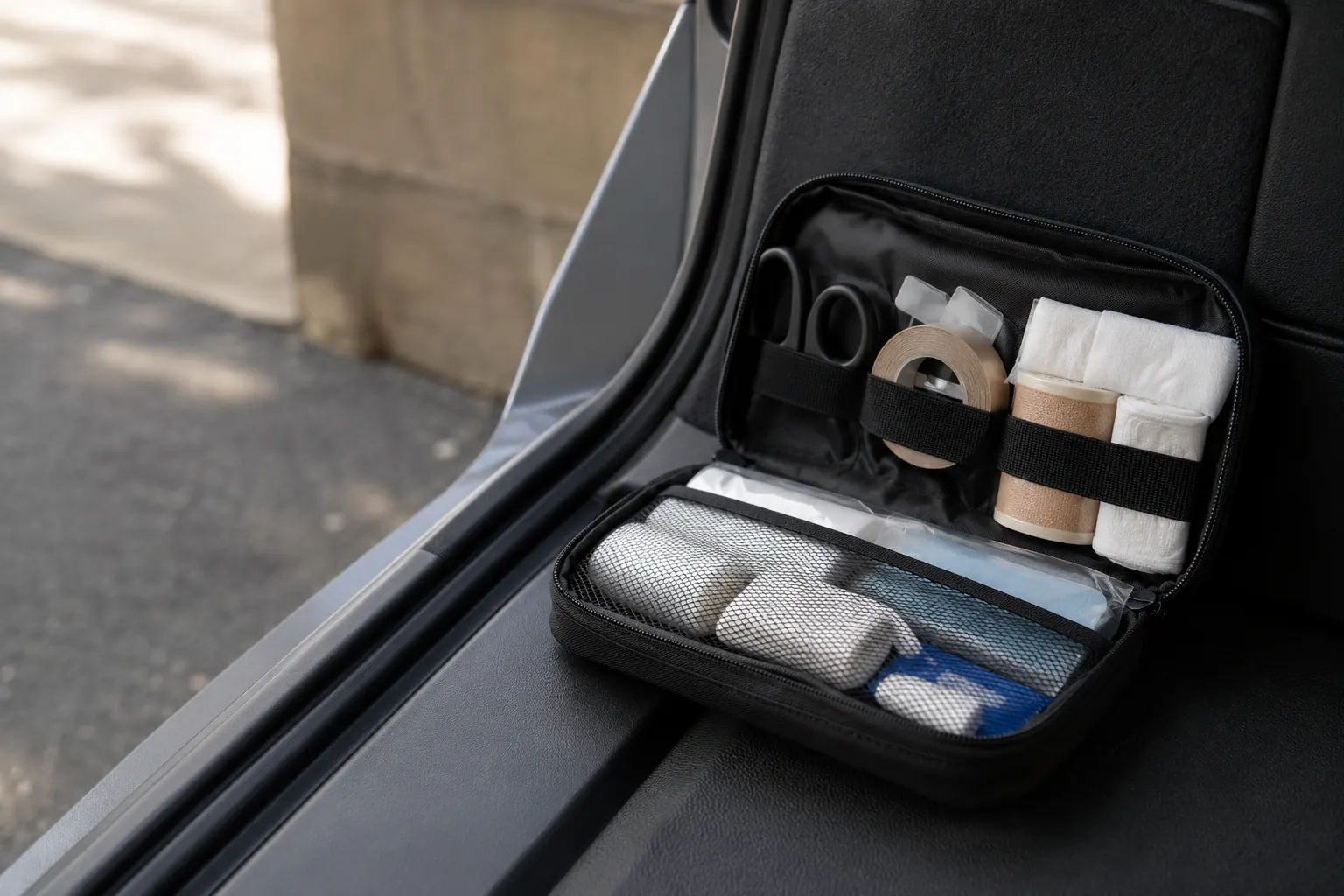
Decide what the compact kit must do
For an apartment, the kit may support a clear route from a bedroom, living area, or kitchen to the primary kit and phone. For a vehicle, it may support safe waiting after a breakdown, detour, or weather delay. It should never become the sole place for personal medication, prescription supplies, oxygen, powered devices, or private clinical plans.
| Location | What to check | Avoid |
|---|---|---|
| Small apartment | Accessible without moving furniture or blocking an exit. | Heavy storage hiding the case, or conditions outside product instructions. |
| Carry bag | A load the intended person can manage, with identifiable supplies. | Unfamiliar specialty equipment added merely to fill the bag. |
| Vehicle | Secure storage consistent with vehicle and product instructions. | A loose case, blocked equipment, or supplies stored outside their limits. |
| Work or caregiver handoff | Who can access it, who replaces supplies, and what help is available. | Assuming someone else’s kit or permission is always available. |
The home first-aid kit guide remains the anchor. This compact kit is its complement, not its replacement.
Keep the module small enough to inspect
Choose a case that opens without scattering contents, closes securely, and protects supplies from dirt and crushing. It should be recognizable in low light but not advertise private health information. Use a short inventory with categories and a replacement note rather than trying to pack every possible item.
Prioritize sealed, identifiable basic supplies, barrier and hygiene materials, a simple instruction or emergency-contact card, and items that the household can use within its current training. The American Red Cross provides a kit checklist that can serve as a reference. Adapt it to the location rather than copying a commercial item count.
Do not transfer supplies from a protected individual medical plan into the compact kit merely to save space. Medical Device and Medication Continuity owns clinical supplies, medication storage, and contacts.
Create a compact-kit boundary card
An optional short card inside the case can note emergency contacts and where a responsible helper can find the home kit or protected care plan. Keep home-address details on a private home copy if needed; a carry bag may be lost or shared. Do not include prescription details, diagnoses, access codes, or unnecessary personal identifiers. During a roadside emergency, give dispatch the actual incident location, not an address copied from a home card.
The card helps a neighbor, caregiver, or family member see that the compact kit has limits. A small pouch can support access and communication; it cannot replace the larger household system or a clinician-led plan.
Apartment constraints are safety constraints
Keep a compact kit away from food, cleaning chemicals, heat sources, leaks, and places that can become inaccessible if water enters the home. Do not block a door, stair, hallway, fire extinguisher, electrical panel, or clear exit with a tote or wall-mounted container. If children are present, balance quick adult access with safe storage of potentially hazardous contents.
Apartment residents may depend on elevators, electronic entry, shared lighting, and building staff during an outage. Place the kit where it is reachable if those systems fail. Coordinate it with a flashlight, contact card, and the family communication plan, without turning it into a miscellaneous emergency box.
Vehicle constraints are different
A vehicle kit must stay secured. Loose items can become projectiles, interfere with pedals or seats, obstruct visibility, or disappear under cargo. Check the vehicle manual and applicable case or restraint instructions for storage; looking stable is not enough. Do not improvise a mount or place supplies where they conflict with airbags, child restraints, spare-tire access, vehicle tools, or emergency exits. If the storage or securing method is unclear, ask the vehicle manufacturer or a qualified service professional before using it.
Cars experience heat, cold, vibration, humidity, and long periods without inspection. Check accessible supplies after use or relevant storage changes, as well as during a routine vehicle check. A product suited to a climate-controlled home may not tolerate a vehicle’s conditions; follow its label. A flooded, overheated, contaminated, or otherwise unsafe vehicle is not a place to conduct an inspection. Seek appropriate help rather than retrieving or handling suspect contents, and do not interrupt prescribed care to move or replace supplies.
The practical vehicle emergency kit owns vehicle-specific visibility, communication, waiting, and maintenance modules. It intentionally says first aid should match household training, rather than turning a car kit into a medical guide.
Do not use the kit to solve a traffic hazard
When a vehicle stops in an unsafe location, traffic, weather, fire, floodwater, downed lines, or visibility may be the immediate risk. The first task can be reaching a safer position, calling for help, and following emergency or roadside instructions, not opening a bag at the side of the road. Keep the case from becoming a reason to stand near moving traffic or re-enter an unsafe vehicle.
The roadside breakdown stop-rules guide owns those vehicle-scene decisions. A compact first-aid kit should remain accessible after the safety decision, not compete with it.
Make the transfer decision in advance
When leaving home, take the compact kit only if it is safe and does not delay evacuation. Do not search for it while a fire, flood, severe weather order, medical deterioration, or unsafe building condition requires immediate departure. Keep the primary home kit in place for those who remain, unless the household’s written plan says otherwise.
For a caregiver handoff, agree who replaces general supplies, who can access the kit, and how the responsible person can find private health records. A note does not create clinical consent or treatment authority, and unfinished paperwork does not delay necessary help. The case should not be the only source of essential information.
Inspect without overcomplicating it
At each check, look for an intact case, readable labels, sealed and undamaged packaging, used supplies, and conditions such as heat, moisture, dirt, or crushing. Replace items under their individual instructions. The inspection schedule gives the routine, while planning for children, older adults, and pets covers household-specific access questions.
For a vehicle, tie the check to a service appointment, tire-pressure check, seasonal transition, or long trip. For an apartment, tie it to the main kit inspection. If the compact kit is never checked because it is “only a backup,” it is not a dependable backup.
Coordinate the kit with a departure plan
The compact kit should fit into a written departure plan, not compete with it. Decide where it is picked up, who carries it when a caregiver needs assistance, and which other essentials have priority. For an evacuation, official direction, safe routes, and the needs of people and pets control the decision. A compact kit may be left behind when an immediate exit is necessary.
Use the vehicle and transportation hub for road, car, and transit continuity; use the First Aid and Compact Medical Kits hub for the household supply system. Keeping those roles distinct prevents a vehicle pouch from silently becoming the only emergency plan.
If the compact case is damaged, soaked, contaminated, or cannot be reached safely, do not enter a hazardous area or handle suspect contents to inspect it. Seek necessary emergency help immediately; another accessible kit may be useful, but finding one must not delay that help. Finish ordinary preparation with one resolved access or storage question, not a larger bag of unfamiliar supplies.
Sources reviewed
ReadyLience reviewed American Red Cross home and vehicle kit guidance and Ready.gov emergency-kit guidance. This guide contains no diagnosis, dosing, or treatment procedure; current product instructions, clinician guidance, and emergency services control actual care.