
Call 911 for injury, fire, rising water, downed lines, a vehicle in live traffic or immediate danger. Report road, direction, position and occupants without stepping into danger. There is no universal rule to stay inside or get out; follow dispatch and on-scene instructions.
The vehicle and transportation resilience hub covers preparation before the breakdown; this page begins when movement has already failed.
There is no universal instruction to “always stay in the car” or “always get out.” A vehicle stopped well beyond a quiet road is different from one disabled in a travel lane, beside a concrete barrier, over dry grass, in rising water, or with smoke from a battery. Emergency dispatch and on-scene responders make the incident-specific decision.
Call 911 immediately when
- anyone is injured, trapped, ill, disoriented, or cannot move safely;
- the vehicle is in or partly in a live travel lane;
- there is fire, smoke, hissing, fuel odor, electrical odor, or hazardous material;
- water is rising or moving around the vehicle;
- a line, tree, sign, structure, slope, or barrier is damaged or unstable;
- visibility is poor enough that approaching traffic may not see the vehicle;
- the vehicle was struck, is at risk of another collision, or occupants face a threat;
- carbon monoxide exposure, extreme heat, severe cold, or medical deterioration is possible;
- an EV or hybrid has crash, flood, underbody, charging, or high-voltage damage.
Roadside assistance is not a substitute for emergency services when the position or condition threatens life.
Report the scene precisely
Give dispatch or the assistance provider:
- road name or number and direction of travel;
- nearest exit, intersection, mile marker, bridge, business, or landmark;
- lane, shoulder, median, ramp, parking area, or other position;
- vehicle type, color, plate, and hazard-light status;
- number and condition of occupants, including children, disability, medical needs, and animals;
- crash, smoke, fire, water, lines, debris, steep drop, barrier, or traffic exposure;
- fuel type or that the vehicle is electric or hybrid;
- phone battery and reliable callback method.
Use coordinates only when the device has a reliable fix and you can read them without moving into danger. A screenshot or shared pin can supplement, but not replace, road and direction details.
If the vehicle can still move
Emergency authorities may direct a drivable vehicle out of a travel lane to reduce secondary-collision risk. If no crash, mechanical warning, fire, tire failure, steering or braking problem, water, debris, or official direction makes movement unsafe, use the vehicle’s normal controls to reach the nearest genuinely safer legal location.
Do not:
- reverse on a freeway or shoulder;
- cross lanes, a median, gore area, or emergency crossover to reach a preferred exit;
- drive on a destroyed tire, through floodwater, beneath lines, or toward smoke or fire;
- push a vehicle by hand in traffic;
- continue far enough to convert a minor problem into loss of control or fire.
If movement is uncertain, stop operating the vehicle and tell 911 or roadside assistance exactly where it is.
Decide whether remaining inside is safer
Remaining belted may reduce exposure to moving traffic when the vehicle is in a relatively protected location and there is no fire, smoke, water, hazardous material, dangerous heat, carbon monoxide concern, or instruction to exit.
Stay aware that a shoulder is not a protected room. Keep seat belts fastened, doors locked as appropriate, and occupants away from the traffic-facing side. Do not let children or animals out to wait beside the road.
Do not remain merely because leaving is inconvenient when:
- fire, smoke, hissing, or rapid heat is present;
- water is rising or the vehicle is unstable;
- the vehicle is in a travel lane with an imminent collision threat;
- exhaust may be entering the cabin;
- extreme cabin temperature is becoming medically unsafe;
- emergency dispatch or responders order evacuation.
Follow instructions about where and how to move. The safest refuge may be behind a substantial barrier, far from traffic and the vehicle, but the route to it can itself be dangerous.
If responders direct occupants to exit
Before opening a door, tell every occupant what will happen and where to go. Use the side away from traffic when responders and conditions identify it as safer. Take only essential medication, mobility equipment, communication, and child or animal control items that are immediately accessible.
Never:
- stand in front of, behind, or between vehicles;
- remain beside the traffic-facing door or wheel;
- cross high-speed traffic for convenience;
- sit on a guardrail with a drop, live roadway, or hazard behind it;
- shelter beneath a bridge during flood, beside a leaking vehicle, or on dry vegetation near a fire risk;
- return to the vehicle for replaceable property against responder direction.
People using wheelchairs, walkers, service animals, child restraints, or medical equipment may need emergency assistance. Tell dispatch before attempting a transfer in a dangerous location.
Make the vehicle visible without entering traffic
Use hazard flashers when appropriate and preserve enough battery for communication and required lighting. If safely reachable from inside, display a bright cloth or help sign in a window. Follow emergency instructions.
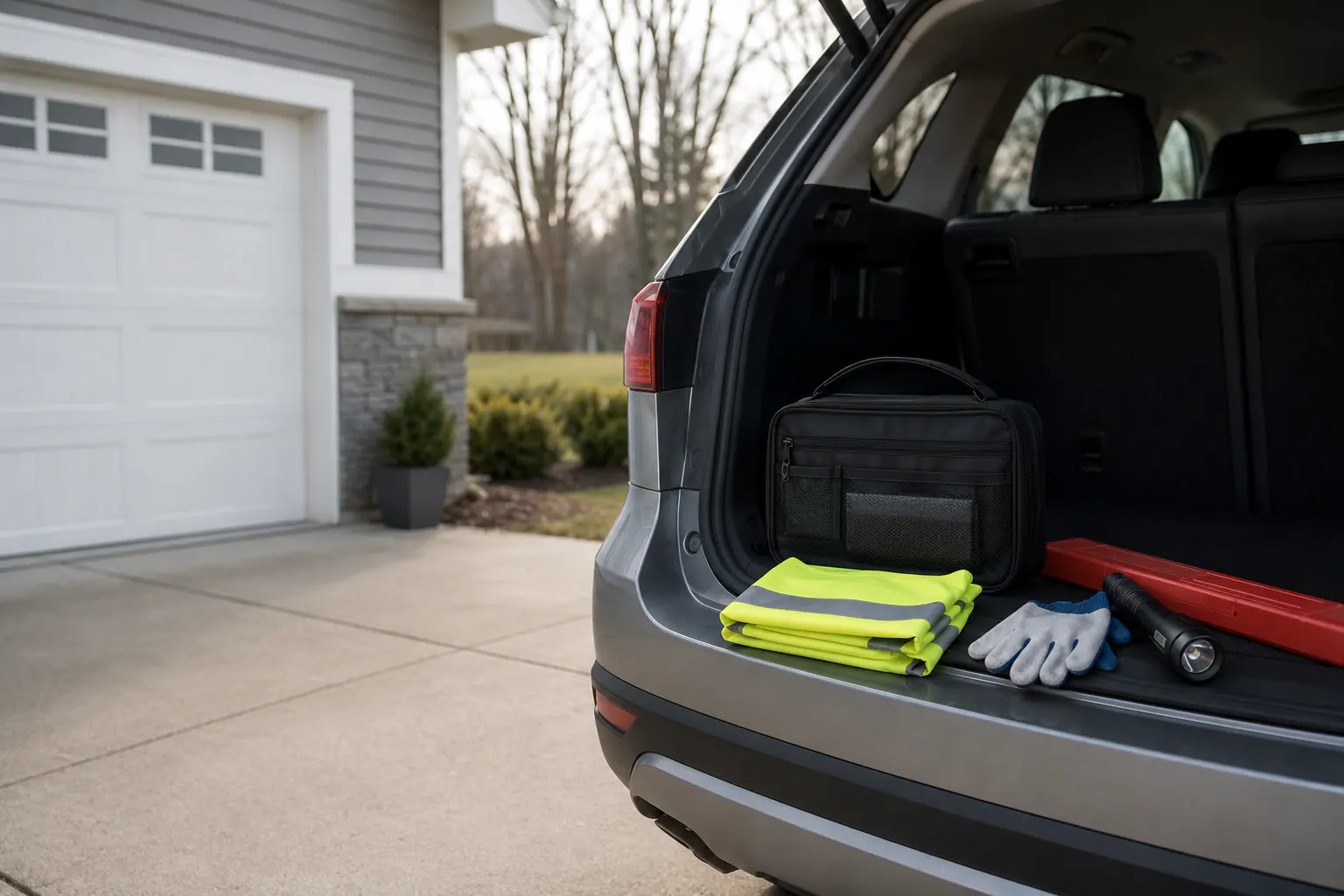
Warning triangles, flares, strobes, and beacons have different visibility, legal, battery, fire, and placement constraints. Never walk into a travel lane or remain exposed to place one. Flares can ignite dry vegetation, spilled fuel, or other material. A product in the trunk is not useful when access requires stepping into traffic.
NHTSA states that all states have Move Over laws for emergency vehicles; coverage of disabled vehicles and exact driver duties vary. Those laws reduce risk but do not create a protected work zone around your vehicle.
Do not repair in an unsafe location
Tire changing, jump-starting, inflation, fuse replacement, under-hood inspection, and retrieval of tools can expose a person to traffic, electrical energy, heat, pressure, unstable support, and weather.
Request trained roadside help when the vehicle is not in a genuinely safe work location or the task is outside the manual and the user’s training. Highway service patrols in some regions are specifically equipped and trained to relocate disabled vehicles, manage traffic, and perform limited assistance.
Never:
- work on the traffic-facing side of a vehicle;
- crawl under a vehicle supported by a jack;
- open a hot cooling system;
- touch orange high-voltage cables, a damaged EV battery, or flooded electrical equipment;
- transfer fuel at roadside or use an open flame;
- attach a tow strap to an unknown point or allow an unqualified person to tow;
- repair beside floodwater, wildfire, lightning, downed lines, or unstable terrain.
The preventive vehicle checklist reduces breakdown likelihood without turning the roadside into a maintenance site.
Account for heat, cold, and exhaust
Cabin temperature can become dangerous quickly. Never leave a child, dependent adult, or animal unattended in a stopped vehicle. Call 911 for severe heat or cold symptoms and follow medical instructions.
Do not use a grill, camp stove, charcoal device, candle, or fuel-burning heater inside the vehicle. Never idle in a garage, tunnel, enclosed loading area, beside blocked exhaust, or where exhaust can enter an occupied space.
In snow, the exhaust outlet can become blocked and carbon monoxide can enter the cabin. The winter stranding guide addresses limited engine use under NHTSA and CDC guidance. If the exhaust cannot be checked without dangerous exposure, do not risk going outside to inspect it; tell emergency dispatch.
For headache, dizziness, weakness, nausea, chest pain, confusion, or unusual sleepiness where exhaust is possible, move to fresh air only if it can be done safely and call 911.
Treat water, fire, and EV damage as escalation events
Do not drive into floodwater or remain as water rises around the vehicle. Water depth, current, road condition, and debris cannot be judged reliably from the seat. Follow 911 instructions; specialized rescue may be needed.
If an EV or hybrid is damaged, NHTSA warns that high-voltage components may remain energized and that battery damage can release toxic or flammable gases immediately or later. Do not park a suspect damaged vehicle in or near a building without manufacturer and emergency guidance.
The EV outage planning guide covers charging continuity but does not authorize damaged-vehicle handling.
Prepare the assistance record in advance
Keep offline:
- insurer and roadside-assistance numbers;
- vehicle year, make, model, plate, and fuel type;
- manufacturer towing and emergency notes;
- accessibility, child, animal, or medical assistance needs;
- local highway patrol or service-patrol information where officially available;
- preferred repair destination and trusted contact;
- a method to verify the identity of the arriving provider.
Do not share payment credentials, a home alarm code, or unnecessary identity information with an unverified caller. If someone approaches and the interaction feels unsafe, keep doors locked, call 911, and follow dispatch.
After leaving the roadside
Have the vehicle inspected for the cause of the breakdown and any damage from moving or towing. Replace used kit items, update assistance records, and document the location, response time, communications, occupant needs, and decisions that worked poorly.
Do not return to a vehicle impounded, closed inside an incident scene, flood damaged, fire damaged, or tagged unsafe until the controlling authority releases it.
Sources reviewed
- NHTSA: Driving in Severe Weather; Move Over; Electric and Hybrid Vehicle Safety
- Texas DOT and New York State DOT: Highway service-patrol functions
- Florida Highway Safety and Motor Vehicles: Move Over coverage of disabled vehicles
- Ready.gov: Car Safety and Emergency Preparedness
Sources reviewed July 14, 2026. Emergency dispatch, on-scene responders, road authorities, vehicle manufacturers, qualified recovery services, and state law control actual roadside movement and assistance.