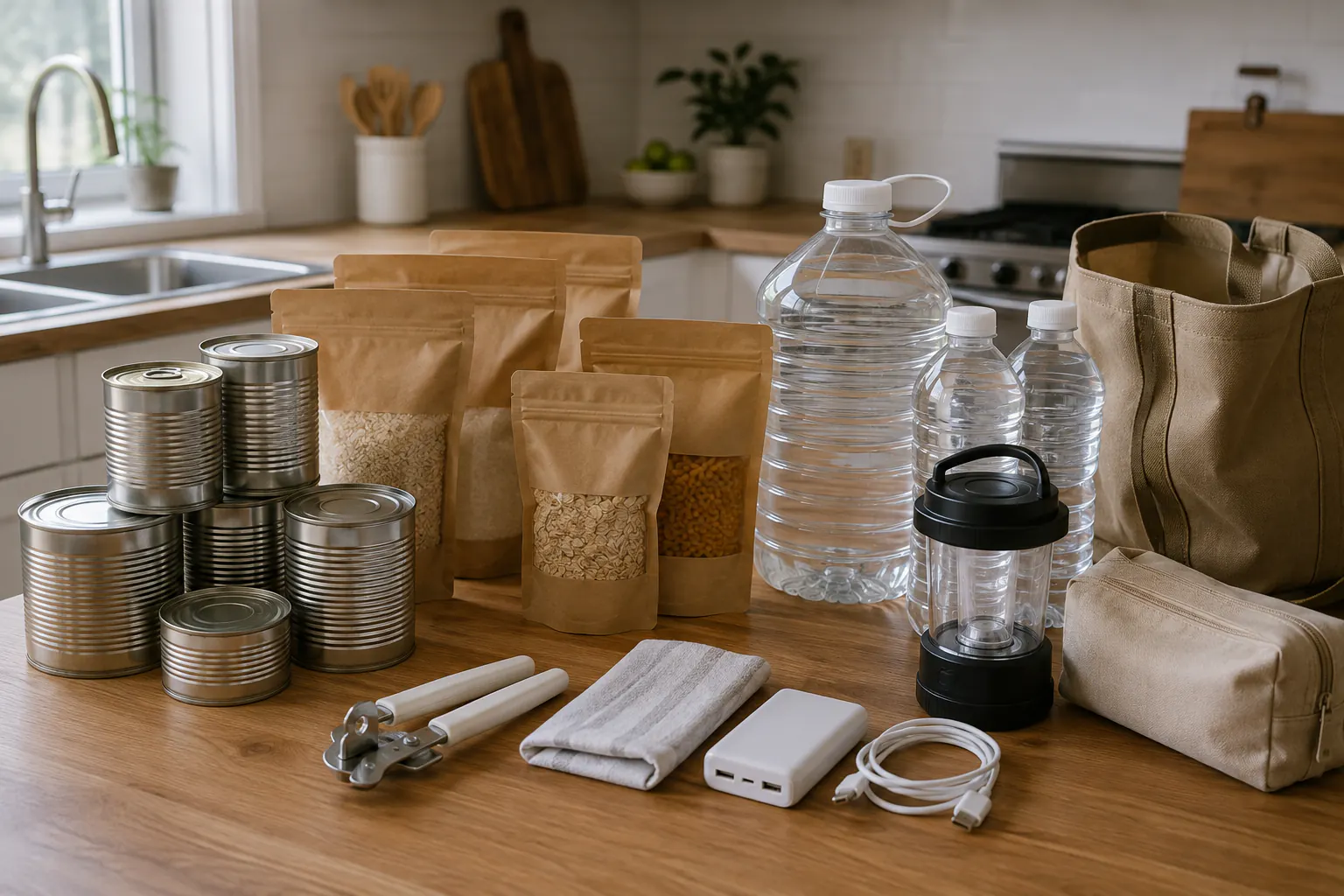
Build practical household emergency kits by job: home, water, vehicle, go-bag, and first aid, without a generic shopping list.
A useful kit has a job, a place, a person who can use it, and a review rhythm. This route helps distinguish what stays at home from what belongs in a vehicle or leave-now bag, then connects each kit to the household system it supports.
A simple route
Begin with the part of the household that needs a clearer plan
1Build the ordinary home baseline first
2Separate the car kit and go-bag from home supplies
3Add context-specific kits only when they have a job
01
Build the ordinary home baseline first
Start with the first hours at home: water, food, light, communication, sanitation, and the records that let the household make a clear next decision.
Separate the car kit and go-bag from home supplies
A vehicle kit supports roadside or travel disruption. A go-bag supports a fast departure. Neither works well when it is overloaded with everything stored at home.
Add context-specific kits only when they have a job
First aid, sanitation, and small-space supplies work better when they are tailored to access, storage, and the person expected to use them rather than assembled as a generic pile.