
Before hazardous weather arrives, find your task light and the number for emergency maintenance or the responsible utility. Those are more useful first steps than buying repair tools. If the event is already underway, follow warnings and shelter or evacuation instructions; do not begin an inspection or repair. The severe storm preparedness hub covers that sequence.
This checklist prepares tools for inspection, documentation, normal household assembly, known shutoff access, and minor authorized recovery. It does not teach roof work, tree cutting, generator connection, electrical repair, flood entry, structural bracing, or debris removal under tension.
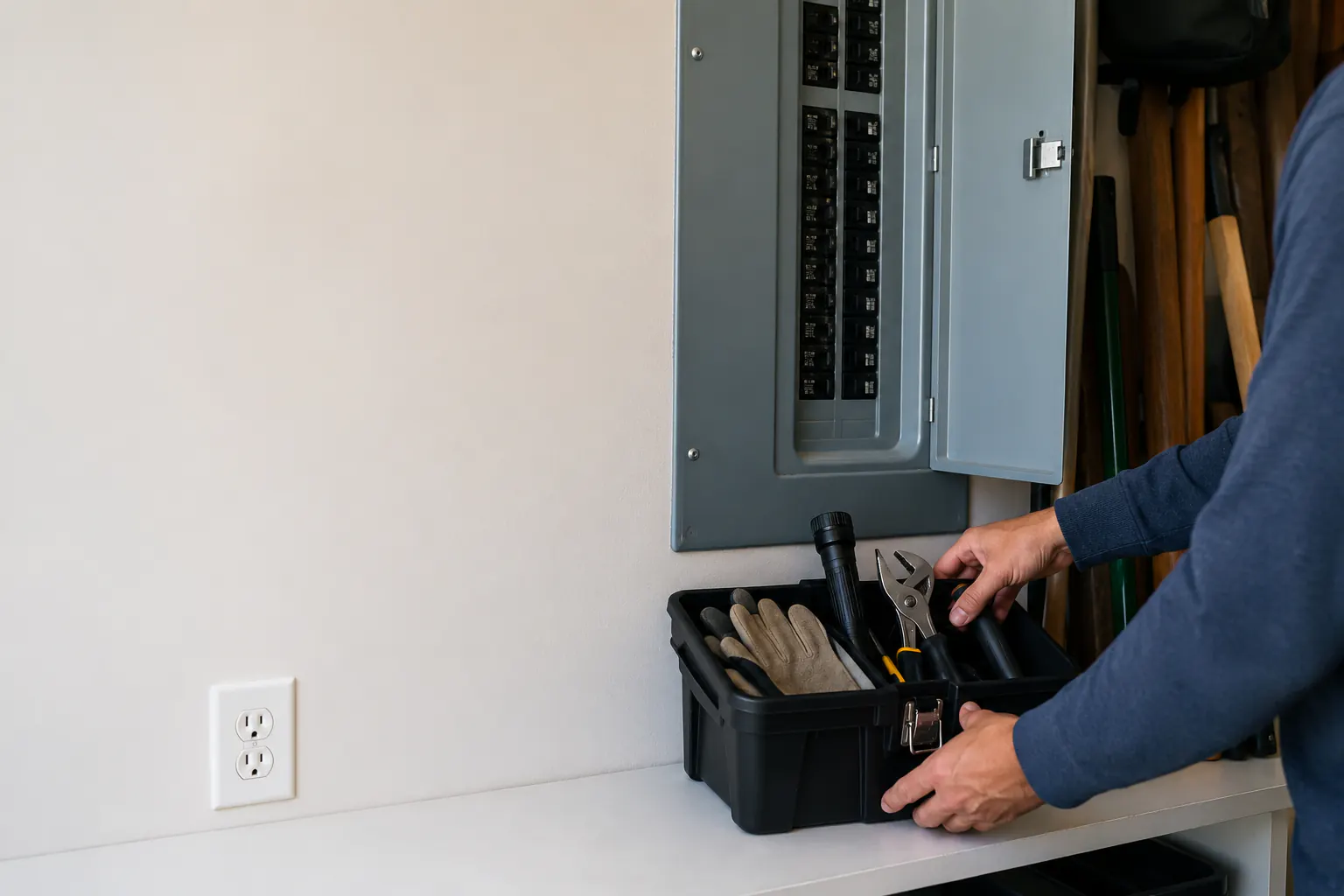
Stop before reaching for tools
Call 911 or the responsible service and stay away from:
- downed or sagging lines and anything touching them;
- gas odor, fire, smoke, carbon monoxide alarm, or active sparking;
- standing water near electricity or a flooded basement;
- moving water, washed-out ground, damaged road, or unstable slope;
- cracked, leaning, displaced, burned, flooded, or partly collapsed structure;
- loaded branches, bent doors, broken glazing, or debris that can move suddenly;
- roof edges, ladders, icy surfaces, lightning, active wind, and falling ice;
- sewage, chemical containers, unknown dust, ash, asbestos, or lead debris.
Tools and PPE do not make these conditions safe. Photograph only from a safe authorized location and follow utility, fire, emergency-management, landlord, insurer, and contractor direction.
Module 1: light and observation
Prepare:
- headlamp for hands-free movement;
- handheld flashlight as an independent backup;
- area lantern for a stable occupied room;
- common spare batteries or charged manufacturer-approved packs;
- inspection mirror;
- phone or camera with a charged power bank;
- notebook, pencil, removable labels, and waterproof pouch.
Keep lighting in known locations outside the bottom of the tool box. Do not use candles for repair light, and do not enter an unsafe area because a light is available. Inspect battery compartments for corrosion, swelling, heat, odor, leakage, or damage. Quarantine suspect batteries without handling them more than necessary and follow manufacturer and local waste guidance.
The emergency lighting guide covers placement and fire limits.
Module 2: measurement and documentation
Include:
- tape measure;
- compact level;
- straightedge or ruler;
- removable tape or chalk suited to the surface;
- blank room and damage log;
- ruler or scale card for photographs when safe;
- copies of insurer and contractor contact information.
Measurements help document change but do not diagnose structural safety. Do not place a ruler beside an unstable crack, touch a burned component, or enter a posted area. The flood damage documentation guide explains evidence collection without premature disposal.
Module 3: known shutoff access
Record and label only controls the household is authorized to operate:
- unit or home main water shutoff;
- appliance isolation valve where the manual and property plan permit it;
- electrical main or branch controls for observation and emergency reporting, not energized work;
- fuel or gas emergency procedure provided by the utility.
Store the exact approved water key or wrench near the written plan. Do not use one generic wrench on an unmarked valve. Do not force a corroded, frozen, leaking, or inaccessible control. Do not turn gas back on; utility rules govern service and relighting. Do not open a panel cover or stand in water to operate electrical equipment.
The frozen-pipe outage guide includes plumbing stop rules. Use the existing main water shutoff guide for calm-day identification and authority checks, not first-time operation during an emergency.
Module 4: basic hand tools
Keep a compact, inspected set:
- matching full-size and ratcheting drivers;
- adjustable wrench and a few known sizes;
- general and needle-nose pliers for non-energized tasks;
- balanced hammer;
- controlled utility knife and scissors;
- compact socket set only for documented household equipment;
- manufacturer-specific keys and bits in labeled pouches;
- suitable eye protection and task-specific gloves.
These support approved indoor tasks such as opening packaging, assembling replacement supplies, removing ordinary loose hardware after clearance, or making a documented minor adjustment. They do not authorize prying a jammed exit, cutting a live cable, dismantling an appliance, opening a utility enclosure, or forcing a damaged window.
Module 5: temporary weather protection supplies
Tools for manufacturer-approved temporary work may include:
- shears or scissors matched to sheet material;
- removable or specified tapes for dry clean surfaces;
- measuring and marking tools;
- tarps or sheeting sized and rated for the intended non-elevated use;
- soft ties or fasteners specified by the system;
- clean cloths and absorbent material for a small controlled clean-water drip.
Do not install tarps on a roof, work outside in active wind, cover combustion vents, block egress, seal a room without considering ventilation and heat, or fasten through unknown walls. Temporary protection can trap moisture or hide damage. Obtain qualified repair and document the temporary measure.
Module 6: communication and access
Keep paper copies of:
- emergency and utility numbers;
- landlord, association, insurer, and trusted contractor contacts;
- exact property address and unit;
- household communication roles;
- equipment manuals and model records;
- safe meeting place and alternate access plan.
Do not publish tool locations, vacant-home status, security weaknesses, keys, alarm details, or access codes. Align this module with the family communication plan and vehicle transportation hub.
Power tools are not the emergency default
A cordless drill or reciprocating saw can look useful after a storm, but damaged construction may conceal utilities, load, glass, nails, contaminants, and structural movement. Cutting can release stored energy or eliminate evidence. Battery charging adds fire and power dependencies.
Keep power tools only for trained, authorized, post-clearance work under exact instructions. Before the season:
- inspect tool, guard, handle, battery, charger, bits, and case;
- confirm the exact model is not recalled;
- charge under supervision in the manufacturer’s permitted environment;
- remove packs for storage where instructed;
- keep accessories organized and protected;
- retire damaged cords, packs, switches, guards, or housings;
- plan eye, hearing, dust, and workpiece controls for the specific future task.
Do not buy a saw as a substitute for a tree professional, utility crew, structural contractor, or rescue service.
Run a forecast-based tool check
While conditions are still safe
There may not be five days of warning. Use the safe time actually available, with official protective instructions ahead of equipment checks.
- Review hazard and local instructions.
- Test task lights and power banks.
- Inspect the core hand tools.
- Locate approved shutoff tools and instructions.
- charge supported batteries under supervision;
- check CPSC recalls by exact model;
- bring ordinary loose outdoor tools inside before wind arrives;
- stage documentation supplies and contact cards.
One day before
- Stop optional projects and clean the work area.
- Return every tool to its slot.
- Move the kit away from possible flood entry while keeping it accessible.
- Secure sharp tools and batteries from children.
- unplug charged equipment as instructed;
- place lighting, shoes, eyewear, and communication equipment by the safe occupied area;
- preserve exits and clear floor paths.
During the event
Use tools only for safe indoor ordinary functions: light, communication, opening supplies, labeling, and an authorized known control when official guidance calls for it. Do not begin repairs merely because power is out.
After the event
Wait for clearance. Survey from a safe location, record hazards, call responsible services, and separate tasks into emergency, qualified trade, and low-risk household work. Quarantine any tool exposed to water, impact, heat, chemicals, sewage, or unknown contamination until its manufacturer or qualified professional determines the correct action.
Check again when conditions or equipment change
Use the annual toolkit inspection before storm seasons and after every deployment. Record missing items, battery age, recalls, rust, damaged handles, incomplete sets, and unauthorized additions. The essential toolkit hub keeps storm modules connected to everyday use.
Sources reviewed
- Ready.gov: Power Outages; Winter Weather; Hurricanes
- U.S. Consumer Product Safety Commission: Home Power Tool Safety; Recalls
- OSHA: Hand and Power Tools
Sources reviewed July 14, 2026. Current alerts, evacuation orders, utilities, fire and building authorities, manufacturers, insurers, landlords, and qualified trades control actual storm response and repair.