
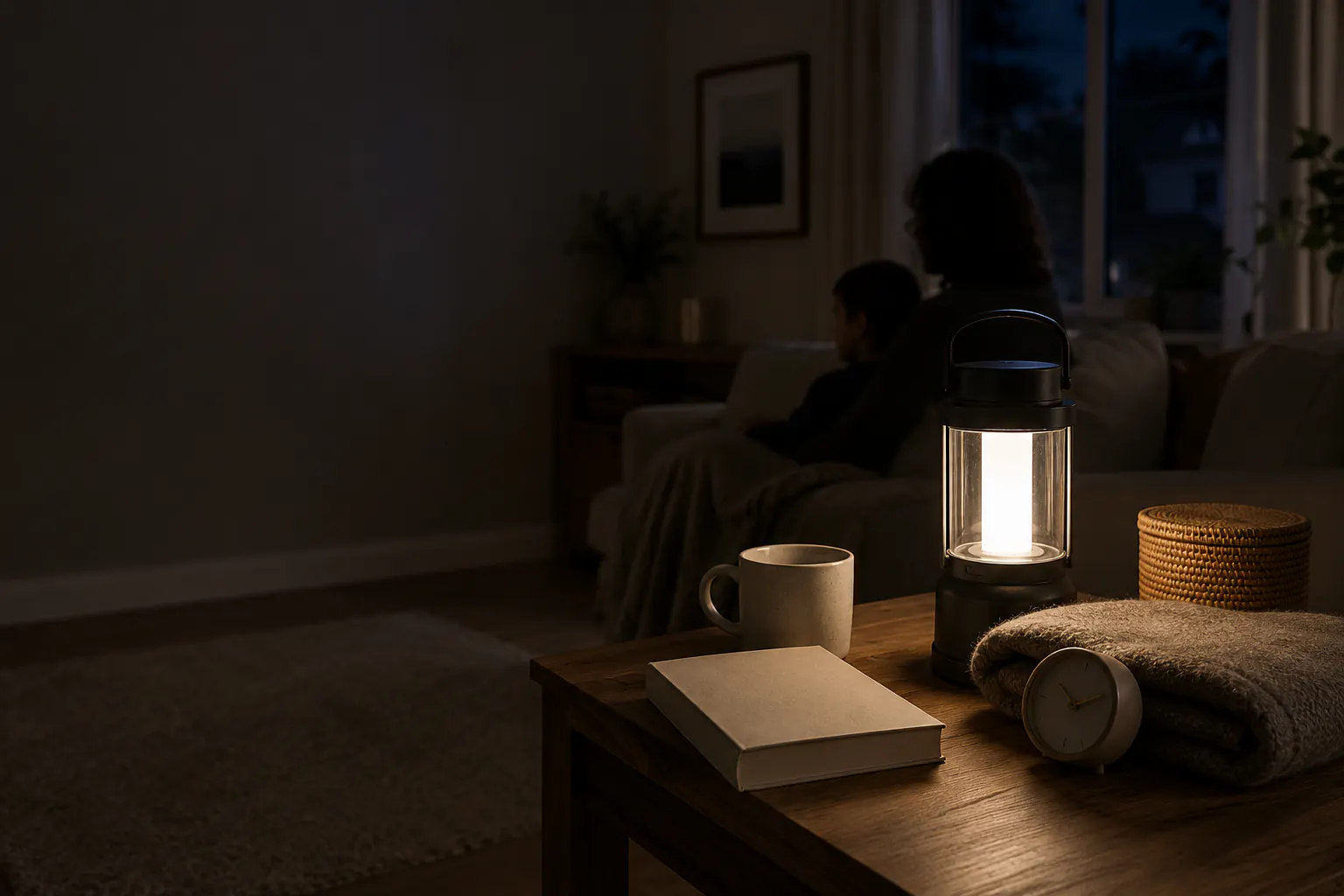
When it is safe to pause, start with one short conversation: what needs doing next, and who can help with it? It might be checking the utility update, making a meal or taking over one care task so someone can rest. You do not need a complete support plan before asking for help. Immediate danger, required care and necessary departure come before any household conversation or note.
Emotional preparedness is not a requirement to stay cheerful. It is making room for honest updates, manageable tasks and help when ordinary routines are disrupted.
This guide is a household planning framework, not mental-health treatment or a way to judge another person. It cannot diagnose trauma, depression, anxiety, substance use, or suicide risk. A person in immediate danger needs emergency help, not a better family checklist. The practical routines this page assumes — light, food, communication, a plan people trust — are the ones built in the power outage preparedness hub.
Begin with safety and current authority
Before trying to calm the room, address immediate danger. Follow evacuation, shelter, fire, weather, medical, law-enforcement, building, or utility instructions that apply to the event. Do not use breathing exercises, a family meeting, a comfort item, or a media break to delay leaving an unsafe area, calling for help, or following a controlling order.
Once the household is physically safe enough to pause, name the next short window: the next hour, meal, sleep period, check-in, or official update. A limited horizon is easier to hold than a vague promise that everything will be fine.
Use the Family Communication Plan for contacts, meeting places and check-in timing, and the evacuate-or-shelter guide for movement decisions. If someone depends on powered care, use the medical-device outage plan with their clinician and supplier. The routines below support those plans; they do not replace them.
Give the household a simple operating rhythm
A long emergency schedule is fragile. Use a short repeating rhythm instead:
| Moment | One useful household action |
|---|---|
| Start of the day or outage period | Check official information, physical safety and the next practical decision. |
| Meals and hydration | Follow individual care needs and name the next check-in without forcing conversation. |
| Between essential tasks | Choose one manageable job or a rest, according to what people can safely do. |
| Before sleep | Confirm required care, alerts, accessible lighting and who can help overnight. |
These are optional prompts, not a schedule to finish before help or care. Choose the one that fits now. If a short note helps, keep it private; do not display health, conflict, account or location details where visitors or neighbors can see them. This page does not collect household notes.
Assign roles by capacity, not hierarchy. One person may check official alerts, another may keep children occupied, and another may prepare food. A person who is overwhelmed, ill, exhausted, injured, or caring for someone else may not be the right person to coordinate. Roles can change without becoming a failure.
Make updates truthful and digestible
People often fill silence with frightening guesses. A useful update has four parts:
- What is known from an official or directly observed source.
- What is not yet known.
- What the household is doing next.
- When the next update will be checked.
For example: “The utility says the outage affects this area. We do not have a restoration time. We are keeping the phone charged and using the kitchen lantern. We will check official updates again after dinner.” This is steadier than either pretending certainty or repeating every rumor.
Limit repeated news and social-media exposure when it no longer changes an action, while keeping the official alerts you need available. If another capable adult can cover monitoring, agree who does so while someone rests; a person living alone does not need a second adult to use the plan. Do not circulate unverified neighborhood reports, images of injured people, private camera clips, or a household member’s distress. The local-alert guide explains how to maintain more than one reliable alert path.
Support children without inventing reassurance
Children may need simpler language, more repetition, extra comfort, or a familiar routine. They do not need adult speculation, graphic media, or a promise nobody can keep. Tell them what is happening in age-appropriate terms, what adults are doing, and what they can do now: stay together, help with a small safe task, use the planned light, or ask questions.
CDC advises parents and caregivers to make space for children to talk, answer truthfully and understandably, correct misinformation, recreate routines where possible, and limit distressing media exposure. A child who becomes quieter, clingier, angry, tired, restless, or worried is not automatically being difficult. Notice the change, maintain safety, and seek qualified guidance when it persists, worsens, or meaningfully disrupts daily life, school, relationships, or care.
The children-and-uncertainty guide has more specific household prompts. Do not make a child responsible for adult monitoring, younger siblings, household security or crisis communication.
Protect sleep and basic maintenance
Sleep will not be perfect during a disruption, but it is a planning concern. Low light, noise, temperature, an unfamiliar room, alert monitoring, and caregiving shifts can all erode judgment. Before the sleep period, decide who checks alerts, which light stays available, how a child or dependent person gets help, and what event would wake the household.
Use normal supports where feasible: food, hydration, safe movement, quiet activity, clean clothing, a familiar blanket, a short conversation, or a break from screens. Avoid using alcohol, unprescribed drugs, or a risky improvisation to force rest or blunt distress. These are not universal remedies; they are ordinary conditions that make the next decision less chaotic.
Do not let comfort arrangements block exits, cover heaters, create a trip hazard, consume power reserved for essential needs, or interfere with a medical plan. The sleep guide covers the physical arrangements and their limits.
Plan for caregiver load before it becomes invisible
Start with one essential care task that needs cover. Ask who is willing and able to take it, and follow the person’s established care instructions. A short private note can clarify an agreed handoff, but do not delay needed assistance to write a full roster. If nobody can safely cover the task, contact the relevant professional or support service rather than assuming a neighbor can take over.
“I am reaching my limit” is actionable information, not a moral failure. Change the plan: reduce optional tasks, ask a trusted person for a narrow verified task, use a professional service, or move to a safer setting when the controlling conditions require it. Do not pressure a neighbor, child, employee, or family member into a care role they cannot safely perform.
Decide in advance how to get more help
You can ask for support without completing a plan or diagnosing yourself or someone else. In the United States and territories, SAMHSA’s Disaster Distress Helpline provides 24/7 disaster-related crisis counseling and support by call or text at 1-800-985-5990. SAMHSA also identifies 988 as a call or text route for suicide, mental-health or substance-use crisis support in the United States. Call 911 for immediate danger or an emergency response. Keep any household contact notes private; a missing list should not delay a call.
Those resources are not a replacement for following local authorities, a clinician, a pediatrician, a school counselor, a victim advocate, or an established care plan. Do not ask a household member to diagnose another person’s condition. Instead, state what you observe, preserve safety and privacy, and contact the appropriate qualified support.
Use the focused household guides
Use the page that owns the practical gap instead of turning one conversation into a diagnosis:
- Simple Stress-Regulation Routines During an Emergency
- How to Protect Sleep During Blackouts and Disruptions
- Helping Children Handle Uncertainty During a Disaster
- Managing Caregiver Load During a Prolonged Outage
- Household Comfort, Routine, and Morale Supplies
- How to Share Difficult Emergency Updates Without Spreading Panic
- Household Stress and Support Check-In Plan
Each page stays within practical household preparedness. None is a screening instrument, diagnosis, treatment plan, or substitute for qualified support.
For your next step, choose one task that needs help and ask a willing, capable person about it. If the gap is rest, updates or support for a child, use the focused guide above. You can leave the other planning for later; required care and timely help still come first.
Sources reviewed
- Substance Abuse and Mental Health Services Administration: Disaster Distress Helpline and 988 Key Messages
- Centers for Disease Control and Prevention: coping with disasters, healthy stress responses, and helping children cope
Original source review: July 15, 2026. The helpline contact details and CDC children’s guidance were checked again on October 3, 2026. This page is non-clinical household preparedness guidance, not medical, psychological, crisis-intervention, or emergency-response advice.