
Keep required care and immediate safety first. Then choose one ordinary task that a willing, capable adult can actually take off the caregiver’s hands, such as preparing a meal or making a utility call. If nobody can take over, remove optional work and seek outside help when care cannot continue safely. You do not need a completed schedule before asking for help or leaving an unsafe setting.
This guide covers household workload and handoffs. It does not teach clinical care, lifting, transfer, medication changes, medical-device operation, crisis assessment, or a substitute for qualified support.
For the wider household plan, use the Mental and Emotional Preparedness hub.
Put safety before a care rotation
Follow evacuation, shelter, fire, utility, building, medical, and emergency instructions before reorganizing a care schedule. A rest rotation cannot make an unsafe temperature, failed medical device, inaccessible exit, violence, smoke, flooding, or carbon monoxide safe.
The Medical Device and Medication Continuity plan helps organize contacts, equipment, medication and relocation questions under the established care plan and exact professional or manufacturer instructions. Use the evacuate-or-shelter framework alongside current official instructions. A household rota never overrides either.
List essential care by time, not by memory
If a reminder would help, keep a short private note of what is due next. Use the timing already provided by the care plan, clinician, school, service, manufacturer, or household routine. Do not invent a new clinical schedule, delay care to fill out a list, or leave necessary care information out of a handoff.
| Task | What to check |
|---|---|
| Immediate safety | Who receives essential alerts and follows current emergency instructions? |
| Established care | What is due under the existing clinician or qualified provider’s care plan? |
| Continuity | Which required contact, device, supply, transport or accessible route must remain available? |
| Ordinary household work | Which food, water, hygiene, pet or charging task can a willing, capable person take? |
| Work that can wait | Which nonessential chore can simply be left until later? |
Choose what must happen, what can be handed over and what can wait; you do not need an inventory of every chore. Optional cleaning, perfect meals, repeated news checks, nonessential messages, and routine household projects may be deferred.
Agree on the next handoff
Fit the handoff around actual care requirements and available help, not a fixed number of hours. These questions can help when another person is available:
- Who remains responsible for required care?
- What is due next under the established plan?
- What ordinary task has someone actually agreed to take?
- When does that person’s availability end?
- What condition requires outside help, relocation or emergency action?
For example: “I can prepare dinner; you stay with the children. After dinner, we will check what help is still available.” Do not promise coverage that does not exist or combine duties that leave someone without required supervision. The handoff does not authorize an untrained person to perform skilled care.
Transfer context without oversharing
A useful handoff explains the current official instruction, what has been completed, what is due next under the established plan, where required supplies are, how to reach the responsible contact, and what condition requires escalation. Use conversation or an accessible private reminder, whichever works for the people involved.
Do not put diagnoses, account credentials, full medical records, custody details, access codes, or a person’s emotional reaction on a public board. Share necessary care information privately with the person authorized to receive it. The Family Communication Plan helps organize contacts and check-ins. This page does not collect household or care records.
Confirm the task in a format the person can use, without making it a test. If it requires training, authorization, strength, clinical judgment, or equipment they do not have, it cannot be transferred through a note.
Protect real rest windows
A break is only feasible when required care and supervision are actually covered by a willing, capable person authorized for that role. Agree who receives essential alerts, handles ordinary household questions and contacts the resting person when needed. Keep essential alerts available; a promised handoff is not coverage.
Even a short quiet period can remove avoidable demand. Use the blackout sleep guide to plan safe lighting, alerts, exits, and wake triggers. Do not use alcohol, unprescribed drugs, unsafe heating or cooling, a blocked door, or a silenced required alert to force rest.
If only one caregiver is present, reduce optional work and seek a narrow outside task rather than pretending a full rotation exists. A trusted person might collect the exact requested supplies, make a verified call or prepare ordinary food. Supervision or transport also requires the appropriate consent, authorization and capability; presence alone is not permission to take over care.
Give children and other household members bounded roles
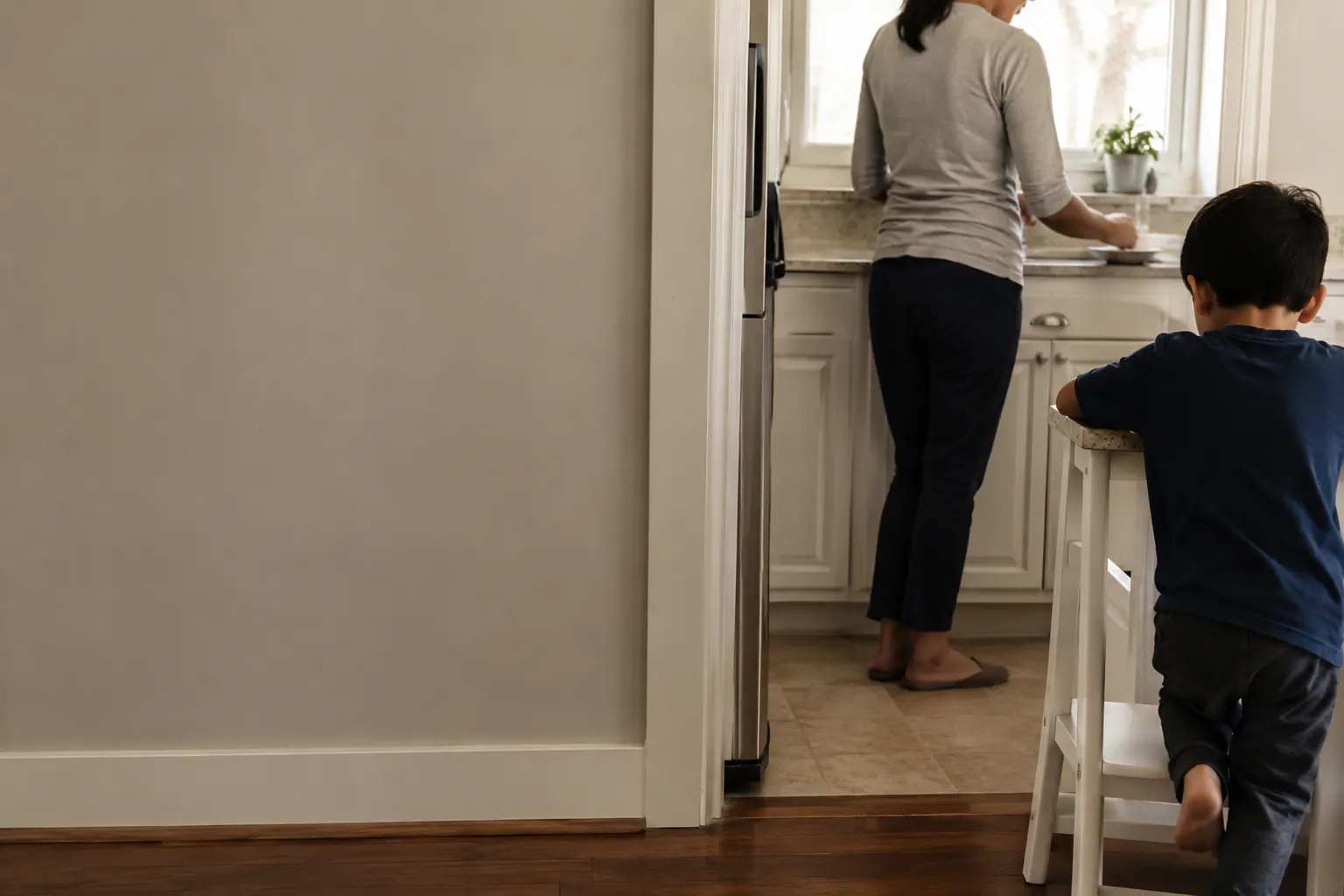
A role must fit age, ability, consent and safety. A child may choose a quiet activity or carry a familiar object, and may decline. Another willing, capable adult may handle official updates or food. A neighbor may complete one agreed errand. Keep children’s activities in a suitable accessible place, away from elevated stools and cooking work.
Do not make a child responsible for an adult’s safety, medication, device, emotional state, younger siblings, confidential information, or crisis communication. Do not pressure an older adult, disabled person, guest, employee, or neighbor to perform care because they are physically present. The children and uncertainty guide keeps adult responsibility explicit.
Watch the plan, not a personality
The household does not need to label a caregiver as strong, burned out, anxious, or failing. Look for observable plan failures: required tasks are being missed, nobody can explain the next handoff, the caregiver cannot take food or rest, unsafe shortcuts are appearing, conflict is blocking care, or the responsible person says they cannot continue safely.
Treat those facts as a reason to change the plan. Reduce tasks, activate the support network, contact the relevant service, use the established clinical or accessibility contact, or move to the safer setting identified by the controlling plan. Do not use a checklist to diagnose the caregiver or decide that a crisis service is unnecessary.
Prepare the support network before an event
Ready.gov’s preparedness guide for people with disabilities advises creating a personal support network and sharing the emergency plan. For any caregiving household, confirm consent before listing someone. If a private record helps, note only what each person has actually agreed and is able to do, how they will receive an update and whether they have authorized access. An unavailable contact is not backup coverage.
During ordinary conditions, try one agreed non-clinical handoff if someone is available. Check that the person can reach the necessary contacts and supplies without requiring a new paper plan. Correct unclear language, inaccessible storage or missing permission. Do not cut power, interrupt care, remove child-safety or security safeguards, conceal information, or improvise a medical scenario as a drill.
Review the network after a move, new diagnosis, changed device, school transition, work-schedule change, separation, new child, new pet, accessibility change, or loss of a support person. A name on an old list is not current coverage.
Know when household coordination is no longer enough
Call 911 for immediate danger, fire, violence, medical emergency, or a person who cannot be kept safe. Follow the established clinician, provider, emergency, utility, building, or relocation path when care can no longer continue safely at home.
For crisis support in the United States and territories, call or text 988. SAMHSA’s Disaster Distress Helpline is available by call or text at 1-800-985-5990 for disaster-related emotional distress. A household should describe observable facts and request the appropriate help, not attempt to assess or diagnose another person.
For the next step, confirm one handoff that is genuinely available and remove one optional task. If required care cannot continue safely, use the established help or relocation path now; another list will not provide the missing coverage.
Sources reviewed
- Ready.gov: preparedness and support-network planning for people with disabilities
- Centers for Disease Control and Prevention: disaster coping context
- Substance Abuse and Mental Health Services Administration: Disaster Distress Helpline and 988 crisis-support contacts
Sources reviewed July 15, 2026. This is non-clinical household workload planning, not medical, mental-health, crisis-assessment, lifting, transfer, or emergency-response advice.