
HVAC equipment changes sound, airflow, temperature, humidity, and cycle length as weather and load change. A warning sign is therefore not “the system sounds different” in isolation. It is a new, repeated, progressive, unsafe, or performance-affecting change compared with the same system’s documented normal operation.
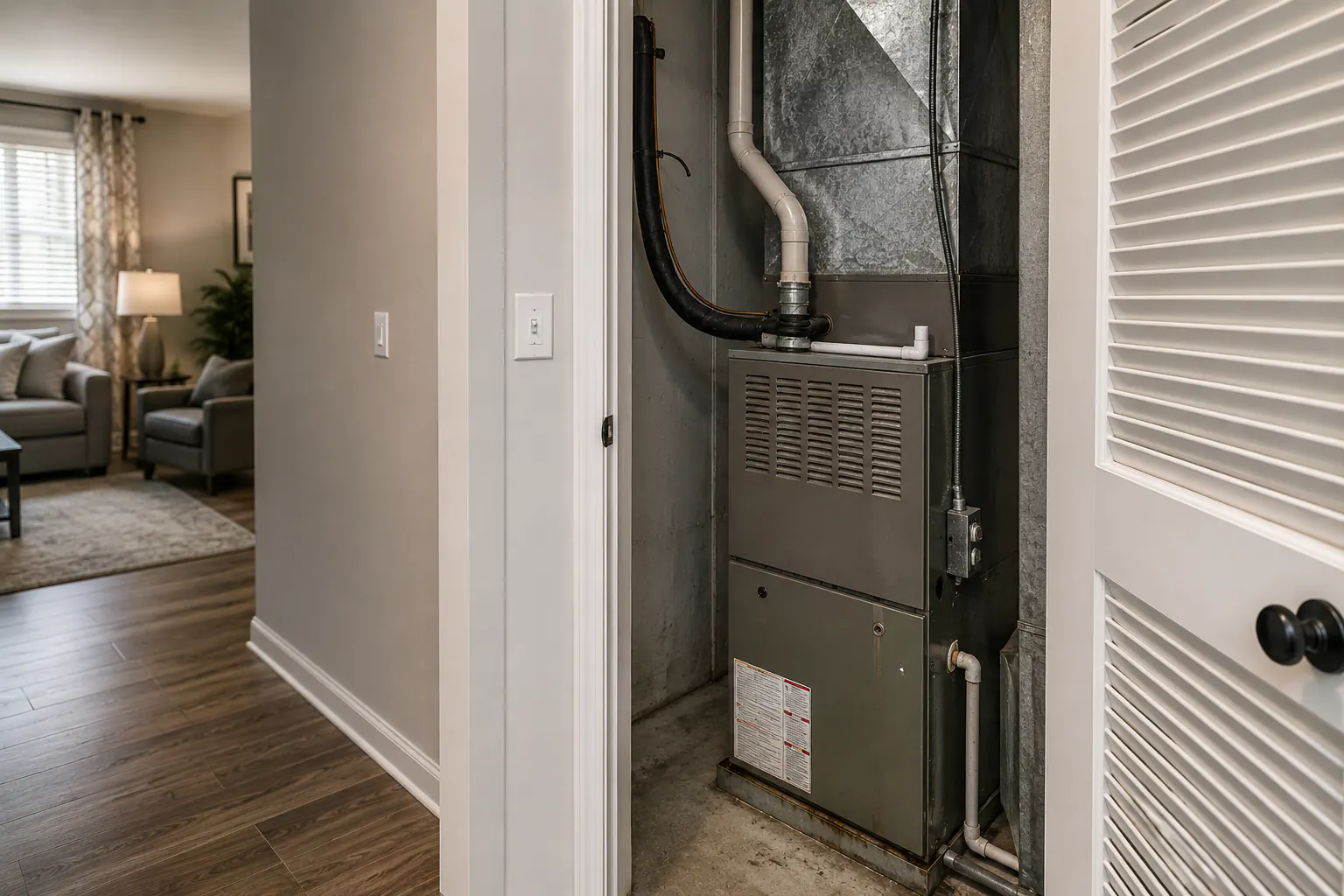
The safe household role is observation through normal controls and exterior surfaces. Do not open equipment, defeat a switch, expose wiring, handle refrigerant, adjust gas, measure combustion, clear a safety fault, or reach into a blower or fan.
For routine care rather than diagnosis, use the HVAC and climate-control hub and seasonal maintenance checklist. This page begins where normal maintenance stops.
Act on life-safety warnings first
Move to fresh air and call 911 according to current alarm and emergency instructions for:
- a carbon monoxide alarm or possible CO symptoms such as headache, dizziness, weakness, nausea, confusion, chest pain, or loss of consciousness;
- fire, smoke, active arcing, explosion, or severe injury;
- strong burning odor with heat or smoke;
- a gas odor under current utility instructions;
- electrical equipment affected by water or flooding;
- a damaged structure, fallen line, or incident that makes the equipment area unsafe.
Do not search for the source, silence the alarm as a diagnosis, reopen the building, or re-enter because symptoms improve outdoors. Emergency responders and the utility control reentry.
Stop normal operation for abnormal conditions
Use only the normal user control if it is safely accessible and current instructions authorize it. Then call qualified service for:
- grinding, scraping, banging, squealing, repeated clicking, or impact noise;
- smoke, burning, hot-plastic, fuel, chemical, or persistent musty odor;
- visible sparks, damaged cord or disconnect, repeated breaker trips, or melted material;
- water, overflowing condensate, ice, oil-like residue, or unknown fluid;
- outdoor or indoor fan that is not turning normally, is obstructed, or has damaged guarding;
- equipment that starts and stops rapidly, will not stop, or repeatedly faults;
- loss of heat or cooling during dangerous weather or for medically vulnerable residents;
- a display or alarm that current instructions direct to service.
Do not reset protection repeatedly. Do not move the load to another circuit, bypass a float switch, thaw equipment, break ice, or clear an internal blockage.
Record six categories of change
Air delivery
Record weak, uneven, absent, unusually hot, or unusually cold air at normal occupied locations. Note which rooms and whether doors, registers, and returns are visibly obstructed by ordinary belongings.
Do not remove grilles, insert a camera or object, adjust internal dampers, or seal ducts. A filter, blower, duct, control, coil, equipment capacity, room pressure, envelope, or zoning issue can produce similar symptoms.
Cycling
Record start and stop times during comparable weather without forcing a test. Short cycles, unusually long runs, failure to reach the normal setting, or frequent backup-heat indication can deserve service.
Do not change extreme thermostat settings to “make it work harder.” A thermostat reading and one cycle do not diagnose charge, sizing, airflow, or equipment health.
Sound and vibration
Record the sound from a safe normal position and note whether it occurs at startup, shutdown, fan operation, compressor operation, or throughout the cycle. Keep people away from shaking, loose, or impact-damaged equipment.
Do not hold a loose panel, reach through a guard, lubricate a motor, or tighten a moving assembly while it can start.
Odor and air quality
Burning, fuel, chemical, sewage, strong musty, or persistent unusual odor needs the appropriate professional route. Odor alone cannot identify mold, refrigerant, wiring, gas, or combustion.
Do not sniff closely, use a flame, spray fragrance, run ozone, or open a cabinet to locate it. EPA emphasizes source control, ventilation, and appropriate professional assessment rather than masking pollutants.
Moisture and ice
Record condensate overflow, wet floor, ceiling stain, drain-pan alarm, ice on accessible exterior surfaces, and humidity change. Keep electricity and occupants away from active water.
Do not chip ice, heat a coil, open a drain, add chemicals, or run a wet system. The condensation-or-leak guide helps distinguish timing without touching HVAC internals.
Energy and comfort
A higher bill can reflect rates, weather, occupancy, thermostat settings, equipment, duct losses, envelope changes, or another load. Pair consumption with degree-day or weather context, operating schedule, and service history before claiming failure.
Do not promise savings from one repair or product without normalized evidence.
Check only household-authorized items
The equipment manual and property authority define the user scope. Commonly authorized observations may include:
- thermostat display and current schedule;
- exterior filter location, size, orientation, and replacement interval;
- visible supply and return blockage by furniture or belongings;
- clear space around an outdoor unit from stable ground;
- exterior condensate discharge location without handling it;
- exact model, serial, service label, and fault message where safely visible;
- smoke and carbon monoxide alarm status under their instructions.
Even filter replacement is not universal. Stop if access requires a panel, ladder, electrical exposure, sharp edges, contaminated material, unusual force, or work inside equipment. Use the exact filter and instructions; a higher resistance filter is not automatically compatible.
Compare patterns in context
| Pattern | Context to record | Do not conclude |
|---|---|---|
| Weak airflow in one room | door position, visible register, season, prior balance | blocked duct or failed blower |
| System runs longer in extreme weather | outdoor temperature, sun, occupancy, setpoint | refrigerant loss from runtime alone |
| Rapid starts and stops | time, weather, mode, display, recent service | thermostat or sizing diagnosis |
| Water appears during cooling | humidity, location, drain history, ice, weather | condensate source without assessment |
| Musty odor when fan starts | duration, rooms, moisture history, filter date | mold species or duct contamination |
| Auxiliary heat indicator | outdoor temperature, system design, manual | failure merely because backup heat operates |
Patterns help the technician prepare. They do not authorize refrigerant gauges, electrical testing, combustion analysis, or cabinet access.
Protect heat and cooling continuity
Loss of HVAC can become an emergency before equipment is repaired. Record household members who depend on safe temperature, powered medical devices, refrigeration, medication storage, or cleaner air.
Use the extreme-heat hub or winter-storm hub to set relocation thresholds. Do not use an oven, grill, generator, or unvented combustion device to heat or power the home. The generator CO warning remains controlling.
Give the service professional a useful packet
Provide:
- exact symptom and first occurrence;
- mode, setpoint, room temperature, humidity, and outdoor weather;
- start, stop, and recurrence times;
- fault code copied exactly without clearing it;
- sound or video from a safe position;
- filter and service history;
- prior repair, warranty, permit, and recall records;
- water, electrical, combustion, health, and access constraints.
Ask the technician to document cause, alternatives considered, measured evidence, repair scope, safety checks, commissioning result, and follow-up. Do not request a refrigerant “top-off” or part swap without leak, cause, and system evidence appropriate to the equipment.
Check current recalls
Use the exact manufacturer, model, serial range, and date to search CPSC recalls. Follow stop-use and remedy instructions. A service sticker, marketplace listing, or similar-looking photograph is not enough to identify a recalled unit.
Do not sell, donate, or continue using recalled equipment contrary to the notice. A missing recall does not prove safety or condition.
Verify after service
Compare the same normal conditions: sound, cycle, airflow, temperature, humidity, condensate, odor, display, and alarm state. Keep the technician’s readings and completion record rather than substituting subjective comfort.
Reopen the issue if the symptom returns or a new one appears. The early warning hub keeps HVAC changes connected to electricity, moisture, structure, weather, and household continuity.
Sources reviewed
- U.S. Department of Energy: Consumer Guide to Home Heating and Cooling
- U.S. Environmental Protection Agency: Care for Your Air; Indoor Environmental Concerns During Remodeling
- U.S. Consumer Product Safety Commission: Carbon Monoxide Safety; Recalls
Sources reviewed July 14, 2026. Current emergency services, utilities, equipment instructions, property authority, recalls, code, weather, clinicians, and qualified HVAC, combustion, electrical, plumbing, refrigeration, indoor-air, and remediation professionals control actual action.