
Check current local instructions and earliest likely effects before the next task. If departure is required, leave; if preparation is still safe, resolve the transport or care need that takes longest. This timeline is an organizing aid, not five guaranteed days or permission to wait for a milestone.
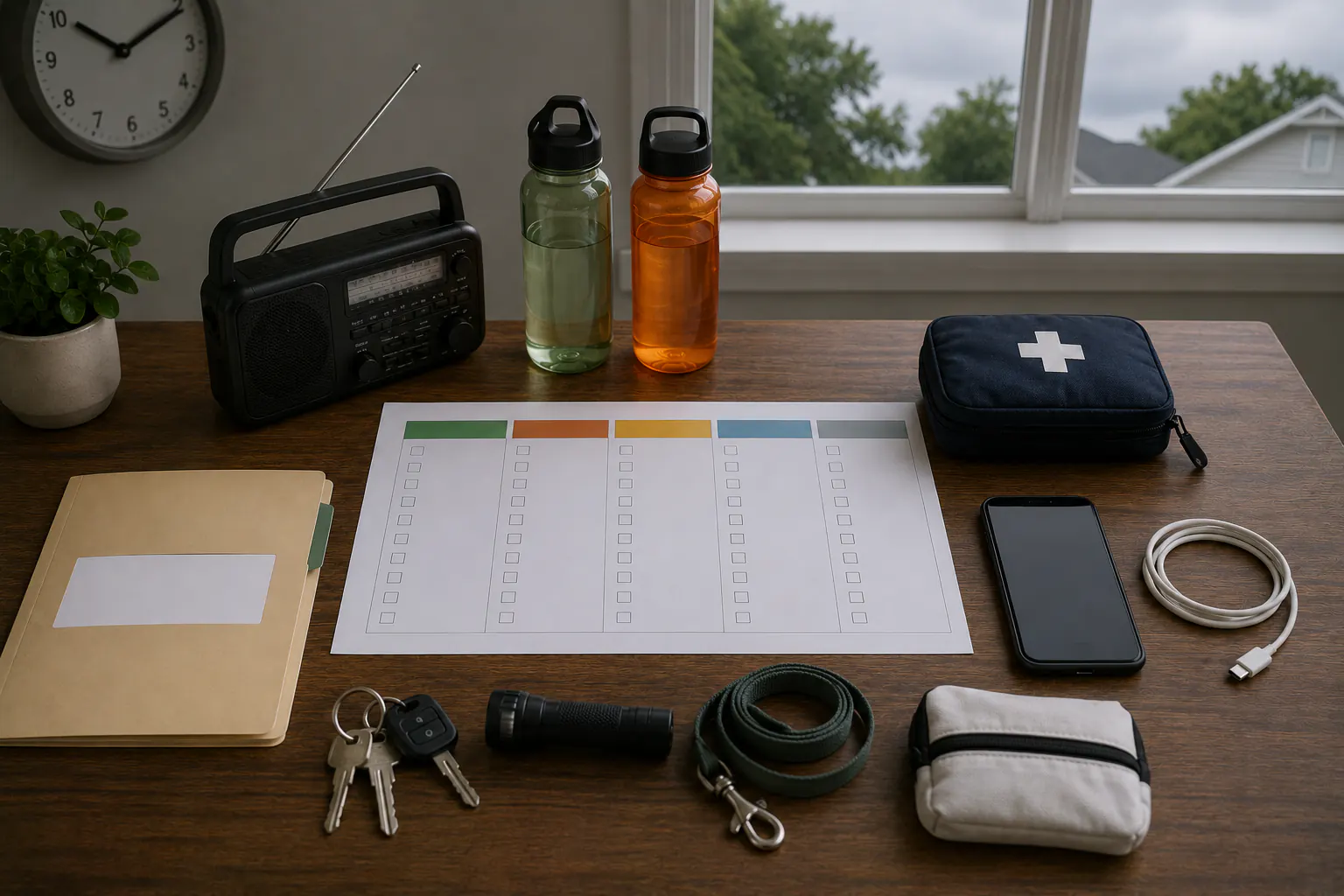
The most important deadline is not landfall. It is the expected arrival of tropical-storm-force winds, when driving, ladder work, shutter installation, moving large objects, and other preparations become more difficult or unsafe. The timeline sequences the work; the hurricane preparedness hub explains each task and its limits.
Use the latest National Hurricane Center advisory, local National Weather Service hurricane statement, evacuation authority, and building instructions. Start earlier for mobility, medical, transportation, pet, or language needs.
Before hurricane season
Finish the work that cannot be done safely after a storm is forecast.
Know the address-specific risk
- Find the locally designated evacuation zone.
- Review storm-surge, river, flash-flood, wind, and tornado exposure.
- Identify road, bridge, island, low-ground, and drainage points that could isolate the home.
- Know whether the structure is a mobile or manufactured home, high-rise, flood-prone first floor, or otherwise subject to special local instructions.
Do not infer an evacuation decision from the Saffir-Simpson wind category alone. Storm surge, rainfall, tornadoes, size, and local vulnerability are separate hazards — hurricane categories and storm surge explained covers why the category number is the wrong thing to wait for.
Establish the movement plan
Choose two destinations outside the threatened area or as directed by authorities. Record designated routes, fuel or charging stops, shelter rules, pet acceptance, accessibility, and a no-car transport option. Practice packing and leaving.
The hurricane evacuation guide covers this in detail.
Inspect household systems
- Test smoke and carbon-monoxide alarms.
- Service the generator and vehicle according to their manuals.
- Test batteries, radios, lighting, and approved medical-device backup.
- Locate utility shutoffs without assuming they should be operated in every storm.
- Inspect approved shutters and fastening hardware.
- Arrange roof, tree, drainage, garage-door, electrical, and structural work with qualified professionals.
- Photograph the home and update the contents inventory.
Never use a portable generator indoors, in a garage, on a porch, in a carport, or near doors, windows, and vents.
About five days before possible local effects
At this stage, the forecast may still have substantial uncertainty. Prepare for your address without presenting one model run as a final track.
Review the plan
- Confirm who is present and who may join the household.
- Call both destinations and the out-of-area contact.
- Check evacuation-zone and shelter information from local authorities.
- Identify who makes the final movement call if no order applies.
- Review work, school, care-facility, and building plans.
- Set twice-daily official forecast check times.
Check supplies by function
Inventory water, food, medication, hygiene, sanitation, lighting, communication, first aid, pet needs, and backup power. Buy only identified gaps. Avoid clearing shelves of items the household already owns.
Use the emergency water storage guide and existing power outage preparedness guide rather than creating a disconnected storm kit. For what a hurricane adds to a basic kit — and how much to scale water, food, and cleanup supplies — see hurricane supply kit essentials.
Protect records
Update paper and encrypted digital copies of identification, insurance, prescriptions, medical information, lease or ownership records, pet records, contacts, and the home inventory. Check that everyone can access what they will actually need.
About 72 hours before possible local effects
The priority shifts from inventory to execution.
Transportation
- Fuel the vehicle or charge it according to the evacuation plan.
- Check tires, fluids, wipers, lights, and the spare or repair kit.
- Load essential accessibility and pet equipment.
- Move the vehicle only where local flood, garage, and evacuation guidance supports it.
- Confirm the pickup time for anyone without a vehicle.
Do not store filled gasoline containers in the passenger space or living area. Follow local fire code and approved-container requirements.
Medication and care
Request permitted refills early. Confirm cold-storage instructions, approved device batteries, oxygen-related restrictions, and the point at which the care team or facility recommends relocation. Put written instructions and manufacturer contacts with the equipment.
Property documentation
Photograph rooms, important contents, exterior elevations, vehicles, and preexisting damage. Upload or store copies where a lost phone will not erase the only record. Keep receipts for protective materials and evacuation expenses.
Home tasks
Begin bringing in outdoor objects and complete preplanned window protection while weather is calm. Renters and condominium residents should follow management rules for balconies, windows, parking, and common areas.
Do not climb onto a roof or perform tree, electrical, gas, or structural work. The home hurricane preparation guide separates household tasks from professional scope.
When a hurricane or storm-surge watch is issued
The National Hurricane Center generally issues a hurricane watch when hurricane conditions are possible and tropical-storm-force winds may begin within about 48 hours. A storm-surge watch generally signals the possibility of life-threatening inundation within about 48 hours, sometimes earlier when winds would reduce evacuation time.
These definitions do not guarantee 48 usable hours at your address. Local orders may precede them.
Make the evacuation decision operational
- Follow any order or local direction immediately.
- Confirm the destination is still open and outside the relevant hazard area.
- Select the designated route and one authority-supported alternative.
- Pack the vehicle or stage carryable bags.
- Tell the out-of-area contact the planned departure and next check-in.
- Move earlier when disability, medical needs, pets, distance, traffic, or limited transport require it.
Finish exterior protection
Complete only tasks that can end well before local tropical-storm-force winds. Bring in furniture, tools, planters, decorations, trash cans, and loose equipment. Secure approved shutters using the known system. Move chemicals, batteries, and fuels according to product and local fire-safety rules.
Set a written stop-work time based on the earliest reasonable wind arrival, not landfall.
When a hurricane or storm-surge warning is issued
A hurricane warning generally means hurricane conditions are expected and tropical-storm-force winds may begin within about 36 hours. A storm-surge warning generally means life-threatening inundation is expected within about 36 hours, or earlier when action time is limited.
At this point the household should be moving or entering its shelter plan, not beginning major property work.
If evacuating
- Load people, pets, medication, documents, water, communication gear, and required accessibility equipment.
- Use designated routes and do not take shortcuts around barricades.
- Send departure and arrival messages to the out-of-area contact.
- Keep listening for route, shelter, and hazard changes.
- Do not return until local authorities authorize re-entry.
If sheltering under local guidance
- Move supplies into the selected sturdy interior area away from windows.
- Keep the safe area on the lowest level that is not threatened by flooding, following local guidance.
- Charge devices and put the refrigerator/freezer plan into effect.
- Fill approved water containers and follow the utility’s instructions.
- Keep shoes, flashlight, radio, keys, medication, helmets if locally recommended, and a fire extinguisher accessible.
- Remain ready to move if an order changes or the structure is damaged.
Never shelter from rising floodwater in a closed attic where escape could be cut off. Follow local instructions on vertical evacuation and rooftop rescue signaling.
Before tropical-storm-force winds arrive
This is the hard stop for outdoor preparation.
- Bring every person and pet inside the designated safe structure or complete evacuation.
- Close and secure doors and approved protection without making last-minute modifications.
- Stay away from windows and glass doors.
- Keep official alerts available through at least two methods.
- Preserve phone batteries and send one final status message.
- Do not go outside to retrieve an object once conditions deteriorate.
CDC advises remaining inside and waiting for an official message that the storm is over. A calm eye can be followed by a rapid return of dangerous wind from another direction. (Source: CDC, Preparing for Hurricanes or Other Tropical Storms, updated May 28, 2026.)
During the storm
Monitor warnings for wind, flash flooding, tornadoes, and surge. Stay in the chosen safe area unless officials direct movement or rising water creates an immediate need to reach a safer level.
Do not use candles when battery lighting is available. Do not use a generator, grill, pressure washer, camp stove, or other combustion device inside or near openings. Do not walk, swim, or drive through floodwater.
If the structure is damaged, call 911 for immediate danger and follow emergency instructions. Do not attempt exterior repairs in the storm.
After the storm
Wait for official all-clear and re-entry guidance. Continue monitoring flooding, tornadoes, heat, downed lines, road closures, water advisories, and utility conditions.
Before approaching the home, use the returning home after a hurricane guide. Obvious structural damage, downed lines, gas odor, fire, active flooding, or an official closure means stay out and contact the appropriate authority or professional.
Record what happened: decision times, route delays, indoor conditions, supplies used, battery and fuel performance, damage, and communication failures. Update the plan while the details are still clear.
One-page responsibility list
Assign names rather than leaving tasks to “someone”:
| Function | Primary person | Backup person | Completion trigger |
|---|---|---|---|
| Official alerts and forecast log | Named | Named | Each scheduled update |
| Evacuation order and zone check | Named | Named | Watch/local notice |
| Medication and care continuity | Named | Named | 72-hour milestone |
| Pet transport and destination | Named | Named | 72-hour milestone |
| Home protection and stop-work call | Named | Named | Before wind deadline |
| Documents and inventory | Named | Named | Five-day milestone |
| Out-of-area communication | Named | Named | Departure/arrival/check-ins |
The timeline succeeds when it removes work from the final hours. Property tasks should become less important as dangerous weather approaches; moving and protecting people becomes the whole plan.
Sources reviewed
- CDC: Preparing for Hurricanes or Other Tropical Storms
- NOAA National Hurricane Center: Glossary of NHC Terms
- NOAA National Hurricane Center: Hurricane Hazards
- Ready.gov: Hurricane Hazard Information Sheet
Sources reviewed July 14, 2026.