
A hurricane is not a one-night power outage, and a hurricane kit is not a basic emergency kit with a different label. The storm brings a longer outage, contaminated water, days of heat, and a dangerous cleanup — so the kit needs more of some things and a few items a basic kit skips. This is a research-based comparison of what to add, not a hands-on product ranking. It is one branch of the hurricane preparation timeline.
The rule that comes before any kit: a kit is for staying only when staying is safe. If evacuation is ordered, the kit goes with you and you leave — no supply is worth riding out a storm you were told to leave.
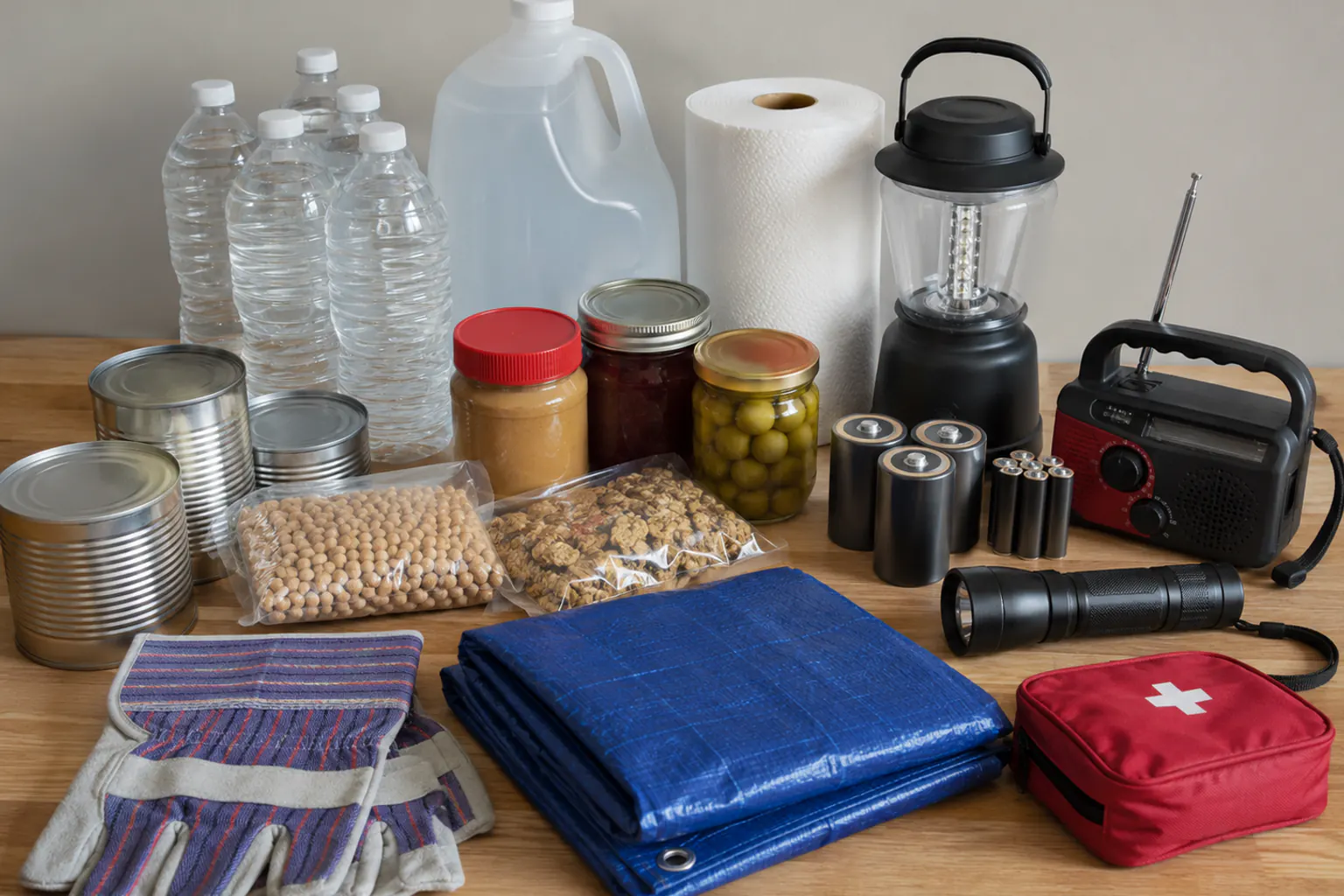
Start from the basic kit, then scale it up
Ready.gov’s basic disaster kit — water, non-perishable food, flashlight, first aid, batteries, medications, documents, cash — is the foundation. (Source: Ready.gov, Build a Kit.) A hurricane changes it in four ways: more water, longer food, storm-specific gear, and cleanup safety.
What a hurricane adds
| Category | Basic kit | Hurricane kit adds |
|---|---|---|
| Water | 3 days, 1 gal/person/day | 7+ days; outages and boil-water advisories run long — see emergency water storage |
| Food | 3 days non-perishable | 7+ days no-cook food; manual can opener; cooler and ice for the fridge transition |
| Power/light | Flashlight, batteries | Extra batteries, power banks, battery lanterns; a safely used generator with outdoor-only operation |
| Documents | Copies | Waterproof document protection; photos of the home before the storm |
| Storm-specific | — | Tarps, plastic sheeting, duct tape for post-storm leaks; work gloves; sturdy shoes |
| Cleanup/health | Basic first aid | Insect repellent, extra prescriptions, N95s, wet-cleanup supplies, a battery/hand-crank NOAA radio |
The two biggest under-buys are water (a hurricane outage lasts days, not one night) and cooling comfort (no power in summer heat is a real health risk, especially for vulnerable household members).
Do not improvise the dangerous parts
- Generators run outdoors only, far from windows and doors — carbon monoxide kills quickly. This is not a kit item to wing.
- Water beyond your stored supply must be treated correctly; storage and treatment belong to the water storage guidance, not a guess.
- Medication and medical-device needs (refrigeration, power) are planned with a clinician, not stocked from a checklist.
Buying and comparing hurricane supplies
Where the kit fits
The kit is the supply layer; the hurricane preparation timeline says when to build and stage it, home hurricane preparation hardens the building, and returning home after a hurricane covers using the kit safely once the storm passes. Understanding hurricane categories and storm surge is what tells you how big to build it. Build it before the season, scale it for a week, and keep it ready to travel.
Sources reviewed
- Ready.gov: Hurricanes
- Ready.gov: Build a Kit
- Centers for Disease Control and Prevention: Hurricane safety
- National Hurricane Center: Be prepared
Sources reviewed July 29, 2026. Ready.gov, CDC, NOAA/NHC, and product and medication instructions control real supply, water, and safety decisions.