
Emergency shelter advice often begins with a shape: lean-to, A-frame, tent, tarp, or bivy. Real weather protection begins one step earlier, with a location and a hazard decision. A perfectly pitched tarp in a drainage channel, under a dead branch, beside a fire, across an exit, or miles from safe lightning shelter is a poor system.
This guide covers low-consequence practice for ordinary rain, sun, breeze, ground moisture, and short-term comfort. It does not teach wilderness survival construction, tree cutting, snow caves, debris shelters, technical anchors, or severe-weather refuge.
Separate weather cover from emergency refuge
Use two different phrases in the household plan:
- Weather cover means a tent, tarp, canopy, bivy, groundsheet, bedding, or clothing layer used within its instructions for ordinary expected conditions.
- Emergency refuge means the substantial building, hard-topped vehicle, designated storm area, cooling or warming location, evacuation destination, or authority-directed shelter appropriate to the actual hazard.
The National Weather Service says tents and open shelters are not safe lightning shelters. A tarp also provides no reliable protection from tornado debris, wildfire, flash flooding, a falling tree, dangerous heat or cold, or structural failure. If the site lacks timely access to the right refuge, fabric does not close the gap.
The off-grid site go/no-go checklist owns current permission, weather, access, fire restrictions, water, sanitation, and exit. Complete that decision before shelter practice.
Choose the practice location
Start beside a substantial building in a maintained yard or designated site, in daylight and benign weather, with owner or land-manager permission. Keep the practice empty: nobody sleeps beneath the cover and no critical gear depends on it.
Walk the full area and reject locations with:
- a low point, drainage path, dry wash, ravine, flood history, tide exposure, or water that could isolate the exit;
- dead, damaged, leaning, or visibly unstable trees and branches;
- cliffs, rockfall, avalanche, unstable soil, erosion, holes, or steep ground;
- overhead or underground utilities, buried irrigation, fuel, septic, or other protected systems;
- roads, driveways, rail lines, equipment routes, falling-object zones, or public paths;
- fire rings, grills, generators, exhaust, cooking areas, hot equipment, or fuel storage;
- wildlife food-storage conflicts, insect nests, animal paths, or prohibited vegetation disturbance;
- a route that a child, older adult, animal, or person with a mobility, sensory, or medical need cannot use safely.
NPS campsite guidance favors level ground that is not a low place and identifies flood channels, dead trees, cliff edges, food separation, and fire distance as site decisions. The exact site rules can be stricter and may prohibit stakes, ropes on trees, hammocks, or any setup outside a designated pad.
Build seven layers of ordinary protection
Think of the setup as interacting layers rather than one piece of fabric.
Overhead cover
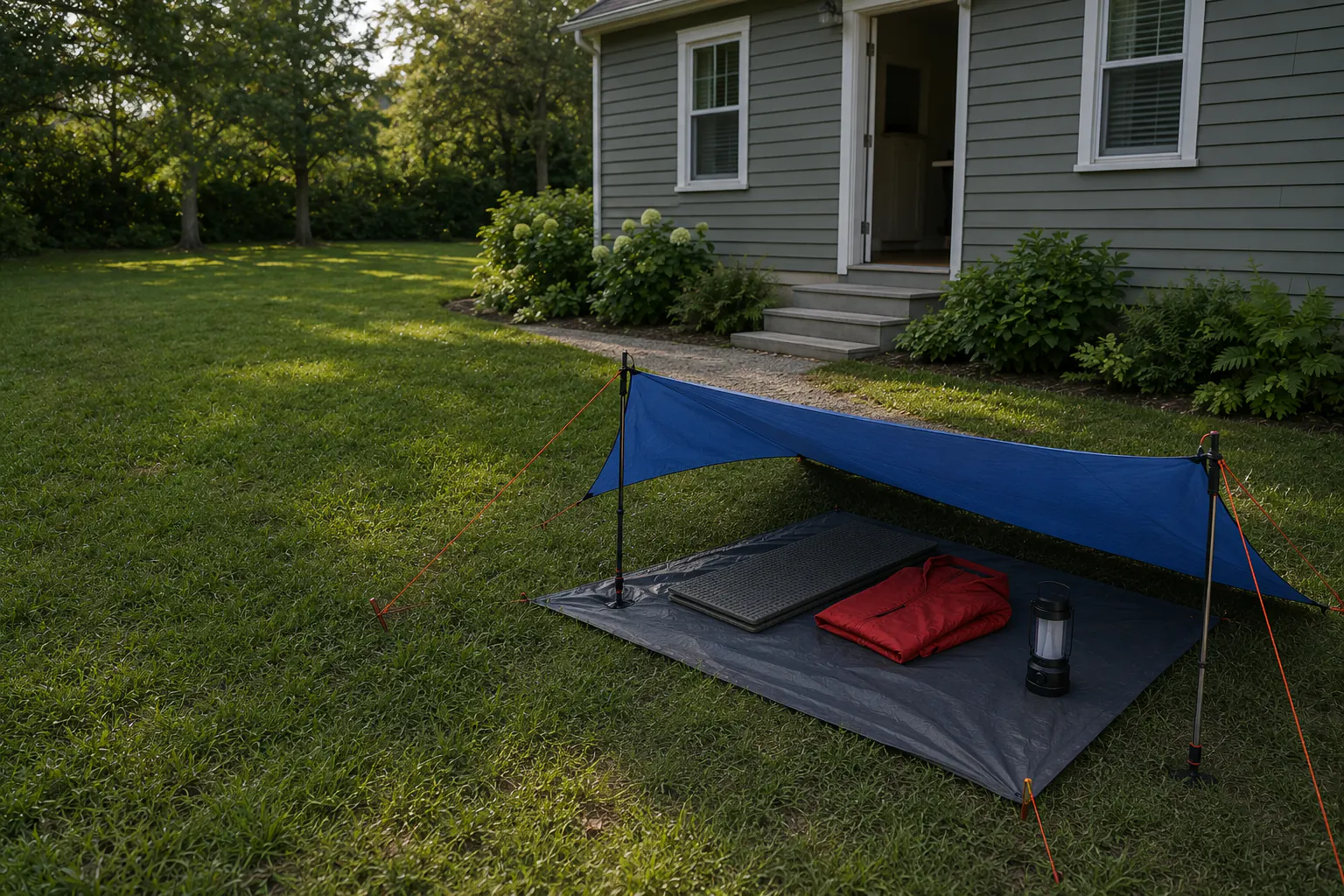
Use a manufactured tent, tarp, or canopy only within its instructions. Inspect seams, attachment points, poles, hardware, coating, and repairs. The cover should shed ordinary expected rain away from the occupied or storage area without collecting a heavy pool.
Do not assume “waterproof” means suitable for wind, snow load, hail, prolonged exposure, or every pitch. Do not stretch fabric until seams and grommets distort.
Ground separation
A groundsheet or footprint reduces contact with soil moisture and protects a floor. Fold excess material beneath the tent or protected area so it does not collect runoff, consistent with NPS guidance. Water should drain away from the setup without a trench, ditch, or landscape modification unless the owner expressly authorizes it.
A foam or manufacturer-approved sleeping pad adds insulation from the ground. An air mattress may improve comfort but can lose air and may provide different insulation. Match the actual sleep system to the product rating, user, weather, and qualified advice.
Wind management
Present the smallest suitable profile to ordinary expected wind according to the shelter instructions. Use all required poles, clips, stakes, and guylines. Keep doors and vents oriented as the manufacturer directs rather than improvising a universal wind rule.
Wind loads change quickly around buildings, ridges, gaps, and trees. Flapping, pole deformation, stake movement, line vibration, fabric stretch, or worsening forecast is a stop signal, not a reason to add more tension and remain outside.
Dry insulation
Clothing and bedding must stay dry and match the actual temperature range and user. NPS advises a sleeping bag suited to the location and conditions and a pad to reduce ground moisture and heat loss. Keep one dry layer protected independently in case the shelter leaks.
Children, older adults, people with health conditions, and animals may lose safe temperature margin before another participant feels uncomfortable. The winter outage heating hub and passive cooling guide own household temperature decisions. An outdoor cover does not replace them.
Ventilation and condensation
Follow the shelter’s ventilation instructions. Closing every opening can increase condensation and wet bedding; opening the wrong side can admit wind-driven rain. Keep fabric and bedding away from heaters, stoves, lanterns, generators, candles, and other combustion sources.
Never use a grill, charcoal device, camp stove, generator, or unapproved fuel-burning heater in or near a tent, tarp, vehicle, cabin, garage, porch, or improvised enclosure. The carbon monoxide safety hub controls combustion boundaries.
Visibility and paths
Use bright cord and visible markers. Keep guylines outside the normal route. Maintain a clear path to the building, vehicle, toilet, water, and emergency exit. Do not tie to a handrail, door, gate, fire escape, hydrant, utility, or accessibility feature.
At night, use safe battery lighting that does not blind the route or create wet electrical connections. The setup should be findable by a returning household member without crossing a hidden line.
Exit and reset
Every participant should know the stop word, the path to substantial shelter, who accounts for people and animals, and who calls for help. Store footwear, light, communication, and essential medication where they remain immediately accessible.
Practice taking the cover down without a knife. A jammed knot or bent stake should not force someone to cut a loaded line. The low-consequence knot guide explains the cordage boundary.
Pitch a low-risk practice tarp
Use a small manufacturer-approved tarp, freestanding practice poles or authorized anchors, bright cord, blunt suitable stakes, an empty groundsheet, and a nearby building. Do not tie to trees, structures, or fixtures unless the owner and product instructions expressly allow it.
- Recheck forecast, alerts, permission, surface, overhead hazards, and the exit.
- Lay every component on the ground and inspect it before tensioning anything.
- Mark the protected rectangle and all paths.
- Assemble poles and fabric according to the instructions with no occupant beneath.
- Add guylines one at a time, keeping them visible and outside the route.
- Apply modest even tension. Stop if fabric, seams, poles, stakes, or anchors distort.
- Place the empty groundsheet so runoff cannot collect on it.
- Test with a small amount of clean water from outside only if the product and site allow it; never create a slippery path or soak the ground.
- Wait, recheck movement and drainage, then fully dismantle the setup.
- Dry, clean, inspect, and record damaged or missing parts before storage.
The useful result is not “the tarp survived.” Record whether one person could find the parts, another could follow the instructions, the path remained open, water moved away, and the setup returned dry and complete to storage.
Handle weather as a stop system
Before practice, name exact thresholds and actions:
| Change | Action |
|---|---|
| Thunder or lightning | Stop immediately and move to the preidentified substantial building or hard-topped vehicle; follow current NWS guidance |
| Severe thunderstorm or tornado watch/warning | Follow the current authority plan and use designated shelter; do not rely on fabric |
| Rising water, flash-flood concern, changing tide, or blocked drainage | Leave the low area early and follow current authority instructions |
| Smoke, fire report, closure, or changing fire order | End the activity, preserve a clear exit, and follow land-manager and emergency instructions |
| Increasing wind, damaged branch, moving stake, bent pole, or torn fabric | Clear the area and move to the substantial fallback without standing in line with tensioned parts |
| Dangerous heat, cold, illness, medical-device concern, or animal distress | Move to the approved temperature and care plan; contact qualified or emergency help as needed |
| Darkness beyond the lighting plan or lost communication | End the practice and account for everyone |
NWS campground guidance uses plan, practice, monitor, and act as one system. A designated weather watcher, multiple alert methods, known shelter, timed movement, and an authority-controlled all-clear matter more than a stronger tarp.
Include accessibility and household needs
Test the actual path width, slope, surface, thresholds, lighting, and line visibility with the people who will use it. Do not place a stake where a cane, wheelchair, walker, or child can catch it. Use larger hardware and color contrast where grip or vision requires it. Keep service animals and pets out of cord and stake zones.
Medication, medical devices, refrigerated supplies, allergies, and temperature limits belong with the medical continuity plan. Animal containment and relocation belong with the pet preparedness hub. Do not test either dependency by exposing a person or animal beneath a practice shelter.
Inspect after every session
Dry the shelter completely according to its instructions. Look for fabric tears, coating failure, seam separation, bent poles, cracked ferrules, damaged grommets, pulled webbing, worn cord, deformed stakes, missing hardware, mold, contamination, and storage damage. Do not repair a load-bearing or fire-affected component from guesswork.
Record the exact product, date, conditions, setup, observed movement, water path, damage, and next action. A calm successful practice does not extend the product’s published range.
Return to the Transferable Outdoor Skills hub and schedule the next setup through the family practice plan. The core shelter skill is choosing the right location and the right fallback before fabric goes up.