
A 72-hour off-grid trial should not begin by switching off the main breaker and improvising. That can disable smoke or carbon monoxide alarms, medical equipment, sump pumps, well or sewage pumps, security, refrigeration, building systems, safe heating or cooling, and communication. It can also affect neighbors or violate a lease, campground rule, insurance condition, or equipment instruction.
Build evidence in layers: test one dependency, run one controlled operating block, complete a 24-hour trial, review it, and only then consider 72 hours. Every stage needs a normal-service fallback and a person authorized to stop it.
Start from the short-term hub
Use Off-Grid Living Basics to define the location, people, animals, missing utilities, permission, weather shelter, and exit. Use the daily dependency planner to expose water, energy, sanitation-duration, and rule-check gaps before practice begins.
The federal emergency-kit baseline is a planning floor for emergencies, not permission to create one. Ready.gov materials call for at least three days of water, food, and basic supplies, adapted to household needs. A controlled trial also requires the capacity to restore ordinary services or leave before any reserve reaches its limit.
Do not test these systems casually
Get the responsible person or professional involved before a practice affects:
- oxygen, CPAP, dialysis, mobility charging, medication refrigeration, or another medical need;
- elevators, access control, fire alarms, sprinklers, smoke control, shared pumps, or common-area systems;
- a well, septic pump, grinder pump, sewer lift, sump pump, heat cable, or freeze-protection system;
- refrigeration containing medically necessary products or food that cannot be monitored safely;
- heating or cooling when a household member, animal, or building can be harmed by temperature;
- an alarm, camera, lock, powered gate, garage door, or emergency communication path;
- any panel, transfer switch, inlet, fixed generator, solar system, fuel system, or household wiring;
- a rental, condominium, campsite, public-land site, or private property subject to another party’s rules.
Do not simulate water loss by contaminating a supply, sanitation failure by disabling working plumbing, or a blackout by opening energized equipment. Practice the substitute system while normal service remains available as a controlled fallback.
Stage 1: test one dependency for one operating cycle
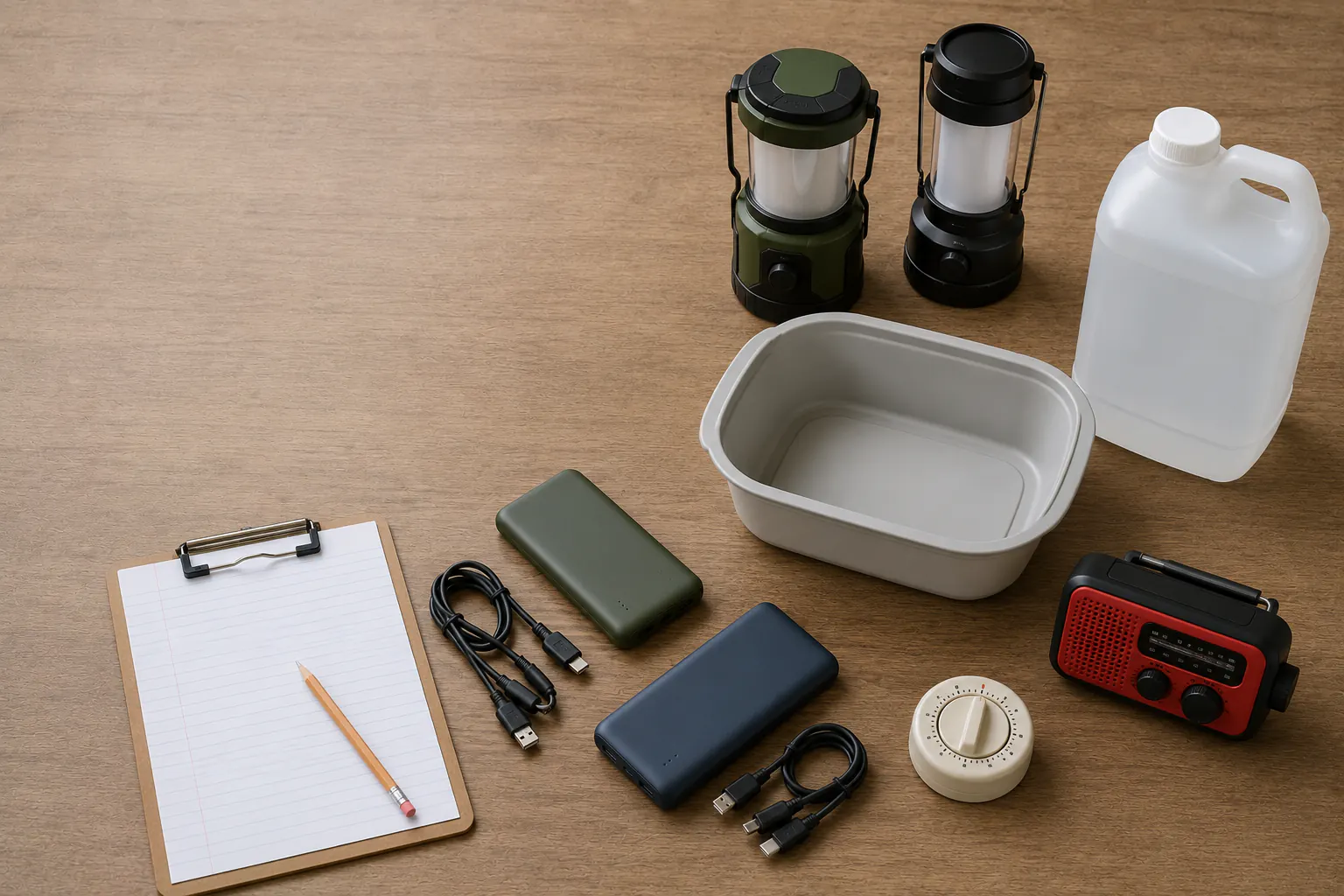
Choose a low-consequence task with a measurable endpoint. Examples include lighting one evening from charged lanterns, charging the household communication devices once, dispensing a planned amount of stored water, preparing one shelf-stable meal with the approved appliance and ventilation, or setting up a hand-hygiene station without using it as the only household sink.
Write down:
- the task and why it matters;
- the normal system that remains available;
- the exact equipment and instructions;
- starting quantity or charge;
- measured use;
- time required, including setup and cleanup;
- waste created;
- person responsible for stopping;
- stop condition;
- what must be restored afterward.
One cycle often reveals missing cables, awkward containers, poor lighting, inaccessible storage, excessive water use, noise, or a task that depends on a phone app. Fix those details before adding duration.
Stage 2: run a four- to six-hour operating block
Choose a calm period with normal weather, no active warnings, no expected guests, no critical appointment, and enough daylight to recover. Tell every participant when the block starts and ends. Keep ordinary utilities available but agree which approved alternatives will be used.
Include only a few functions:
- safe light in active rooms and along exits;
- communication and official-alert monitoring;
- one meal and its water, fuel, food-safety, wildlife, and cleanup plan;
- drinking water dispensing and hand hygiene;
- one planned toilet route that remains within current authority rules;
- a small measured energy budget;
- medication and animal routines unchanged unless their professionals approved the test.
Record consumption at the beginning, midpoint, and end. Do not infer a full day by multiplying one unusually quiet hour. Evening light, overnight temperature, morning hygiene, breakfast, device charging, and sleep can change the system substantially.
Stage 3: build the 24-hour plan on paper
List every recurring time block from wake-up to wake-up:
| Time block | Water | Energy | Food | Sanitation/waste | Communication | Person or animal need |
|---|---|---|---|---|---|---|
| Morning | drinking, medication, hygiene | lights, phone, device | breakfast and cleanup | toilet and handwashing | forecast and check-in | mobility, infant, pet |
| Day | heat/activity allowance | work, fan, pump, recharge | lunch | trash and wastewater | alerts | caregiver handoff |
| Evening | meal and hygiene | lights, cooking if approved | dinner | food waste | family update | medication |
| Overnight | accessible reserve | critical loads only | none or planned snack | safe toilet access | alert receiver | temperature and sleep |
Use the Emergency Water Storage plan, Emergency Sanitation plan, Emergency Food Storage plan, and Backup Power plan for the actual quantities and boundaries. A trial worksheet does not overrule them.
Keep at least one independent light and communication method outside the trial energy budget. Preserve the normal exit route. Do not block a door, window, aisle, stair, alarm, extinguisher, panel, shutoff, or accessible transfer space with temporary equipment.
Stage 4: choose explicit 24-hour stop rules
Stop and restore normal service or relocate when:
- any smoke, carbon monoxide, gas, sewage, medical, equipment, or building alarm activates;
- anyone is ill, confused, unusually drowsy, too hot, too cold, unable to complete a necessary task, or asks to stop;
- current weather, fire restriction, road, utility, public-health, or emergency instruction changes;
- the safe-water reserve falls below the protected amount for drinking, medication, infant, animal, or exit needs;
- sanitation cannot remain stable, private, separated from food and water, and disposable through an approved route;
- energy approaches the reserve protected for alerts, safe lighting, medical equipment, refrigeration, or exit;
- a cord, plug, battery, power source, container, fuel device, shelter, or appliance becomes hot, wet, damaged, unstable, odorous, noisy in a new way, or inconsistent with its instructions;
- the household loses a working phone/radio path, safe shelter, competent driver, viable vehicle, or exit route.
No score is required. A single stop condition is enough.
Stage 5: conduct and observe the 24-hour trial
Assign roles before starting: system lead, weather and alerts, water and food, sanitation, people and animals, and independent stop authority. One person may hold several roles in a small household, but the responsibilities must remain visible.
Log actual quantities rather than impressions. Note gallons dispensed, watt-hours used where equipment reports them, recharge obtained, packages of waste, meals prepared, temperature, forecast updates, communication checks, and task time. Keep private medical details out of a shared log; record only whether the agreed continuity step occurred.
Do not chase a target by restricting drinking, delaying medication, skipping handwashing, keeping unsafe food, accepting dangerous temperature, or silencing an alarm. The purpose is to measure the plan, not force reality to match it.
Review before extending to 72 hours
Restore ordinary service and complete cleanup first. Then ask:
- Which reserve had the narrowest margin?
- Which estimate differed most from measured use?
- Which task depended on one person?
- Which item was inaccessible, heavy, confusing, or unsafe at night?
- What waste or wastewater lacked a complete disposal route?
- Which alert, weather, or exit assumption was unverified?
- Did the trial preserve sleep, medication, care, privacy, accessibility, and animal welfare?
- What changed when participants were tired?
Do not extend a plan with unresolved red items. Correct one system and repeat the shorter block if needed.
Build 72 hours as three changing days
Three days are not one day copied three times. Batteries begin partially discharged. Solar weather changes. Containers empty and become waste. Cold food warms if the plan is weak. Clothing, bedding, hygiene, sleep, and caregiver load accumulate. A toilet or trash arrangement that works for one day may fail on the second. Forecast confidence changes, and an exit road may deteriorate.
Create a separate beginning and end inventory for each day. Protect an exit reserve that is not consumed merely to complete the exercise. Schedule a daily decision point when the household can stop in daylight, restore service, or leave before weather or fatigue worsens.
Practice at a permitted site only
At a campground, cabin, or public-land site, complete the site rules and seasonal checklist. Verify current permission, access, stay limit, parking, fire, generator, quiet-hour, food-storage, animal, water, toilet, wastewater, trash, and closure rules. The presence of a fire ring, stream, vault toilet, outlet, or road on an old map does not confirm current availability.
The National Weather Service recommends a named weather watcher, multiple warning methods, practiced shelter movement, and action thresholds. A tent or open picnic shelter is not safe lightning shelter. Postpone when no safe response is reachable in time.
Sources reviewed
ReadyLience reviewed federal emergency-kit guidance, National Weather Service campground planning, and current CDC carbon monoxide guidance on July 15, 2026. Current authorities, site rules, forecasts, product instructions, and qualified medical, accessibility, electrical, water, and sanitation decisions control every trial.