
A two-week hygiene plan is a stress test, not a promise to remain home for fourteen days. It asks whether the household can maintain safe toilets, clean hands, drinking water, food handling, personal care, waste storage, medication routines, and a livable environment while utilities or collection are disrupted.
The correct answer may be early relocation. No supply count makes a home safe when sewage is backing up, temperature is dangerous, medical care fails, waste cannot be secured, or authorities direct evacuation.
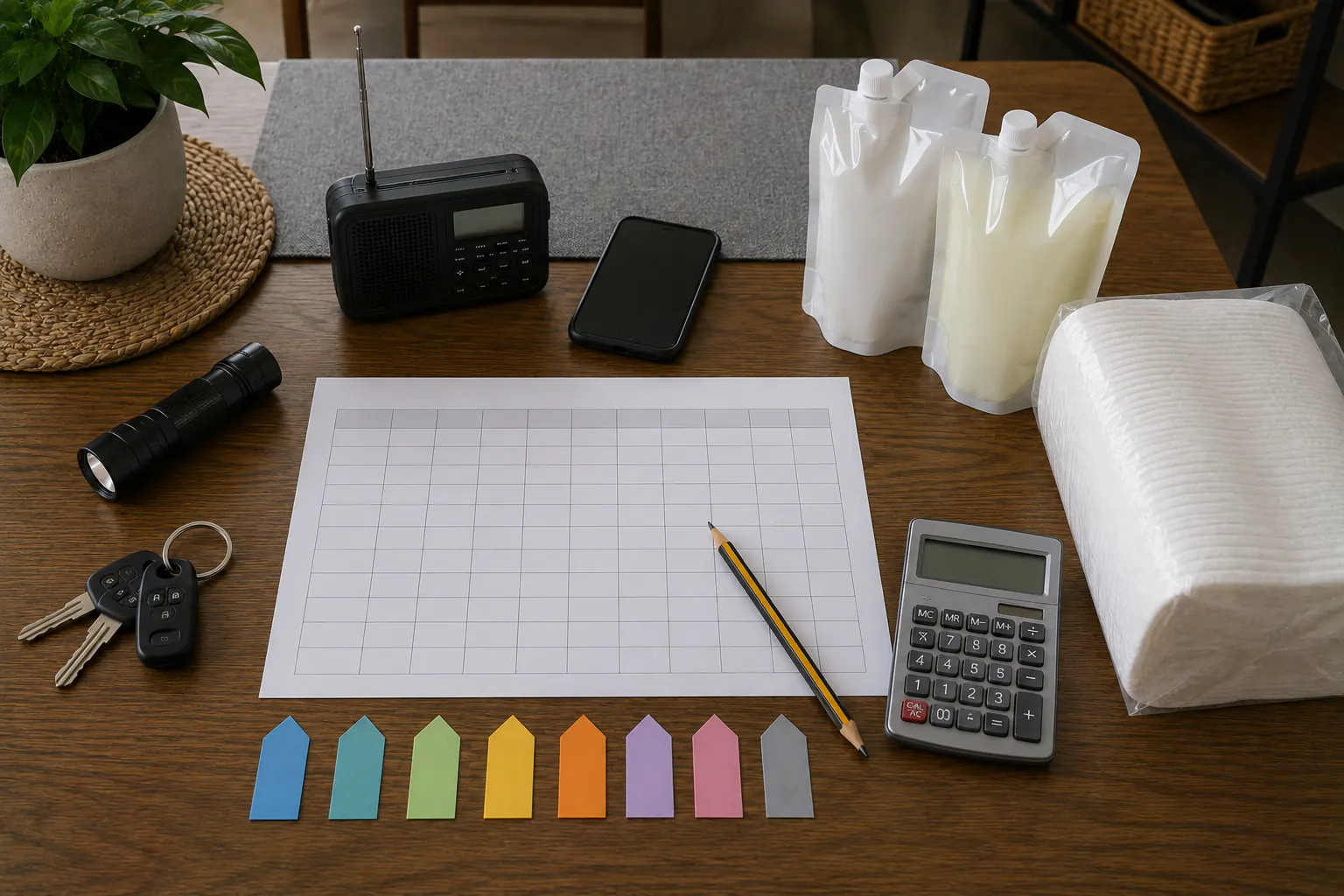
Define the scenario before counting supplies
Write the assumed failure:
- no running water but wastewater service confirmed available;
- water unsafe for selected uses under a named advisory;
- wastewater unavailable, requiring temporary toilet collection;
- trash collection delayed;
- power outage affecting pumps, lighting, refrigeration, heat, or elevators;
- winter access or storm damage delaying resupply;
- shelter-in-place instruction limiting movement;
- apartment building with shared pumps, drains, and waste rooms.
Then record what still works. A plan for water loss is different from a plan for sewer failure, flood contamination, chemical release, or complete building closure.
Count people by care task
Do not use only a head count. List:
- adults and children;
- diapers and toilet training;
- menstruation and incontinence;
- older adults or people needing transfer help;
- mobility, grip, vision, hearing, or cognitive needs;
- ostomy, catheter, wound, respiratory, feeding, or other clinician-directed care;
- pregnancy and infant feeding;
- people prone to dehydration or skin breakdown;
- pets and service animals;
- expected caregivers or guests.
For each person, identify toilet support, hand hygiene, bathing, oral care, laundry, waste, clean water, privacy, and assistance. Follow medical product and clinician instructions rather than creating a generic care method.
Build the dependency worksheet
| System | Daily question | Failure trigger |
|---|---|---|
| Water | How much confirmed-safe water remains by task? | priority drinking and hygiene cannot be maintained |
| Toilet | Is flushing permitted or temporary collection operational? | backup sign, no approved storage, inaccessible setup |
| Hands | Are soap, clean flow, drying, and catch capacity available? | no clean station after toilet or care tasks |
| Waste | Can every category be contained and collected? | leak, pests, heat, full capacity, no authorized disposal |
| Food | Can preparation and dishes remain safe? | unsafe water, refrigeration loss, cross-contamination |
| Personal care | Can skin, diapers, menstruation, continence, and oral care continue? | infection, skin injury, insufficient supplies or help |
| Cleaning | Is one label-directed product sufficient for the defined task? | unknown contamination, chemical reaction, inadequate PPE |
| Environment | Are temperature, air, lighting, access, and privacy acceptable? | dangerous heat/cold/smoke, blocked exit, no ventilation |
| Communication | Are official updates and help contacts available? | no reliable status or emergency contact path |
Assign one owner and one backup for each system.
Protect water by use category
CDC recommends at least one gallon per person per day for three days and trying to store a two-week supply when possible, with more for heat, pregnancy, illness, pets, and activity. That broad baseline includes drinking and sanitation, but actual use varies.
Separate the plan into:
- drinking and medications;
- food and infant feeding;
- brushing teeth and oral care;
- handwashing;
- wound and clinician-directed care;
- dishes and food-contact surfaces;
- bathing and personal care;
- toilet flushing when explicitly permitted;
- cleaning and laundry.
Use the safest known water for high-consequence tasks. A water source permitted for flushing is not automatically safe for hands, food, wounds, or teeth. Review the emergency water storage guide.
Record container size, weight, location, opening date, and remaining amount. Do not ask one person to lift a container beyond their ability or carry heavy water down dark stairs.
Calculate toilet and bag capacity from actual use
For each day, estimate:
- number of users;
- expected toilet uses;
- liner replacement frequency before unsafe weight or volume;
- absorbent material under the approved local method;
- secondary containment;
- toilet paper and personal products;
- gloves for designated handling tasks;
- secure storage capacity;
- collection or drop-off schedule.
Do not extend bag use merely to reach day fourteen. Capacity must preserve closure and safe movement. The toilet sanitation guide explains why disposal requires current local authorization.
Identify at least one functioning approved toilet destination and how the household will reach it if the home setup fails.
Schedule hand hygiene around critical moments
The limited-water hand hygiene guide prioritizes soap and clean running water for at least 20 seconds, especially after toilet, diaper, garbage, animal-waste, or caregiving tasks and before food, eating, wound care, or medication handling.
Estimate daily:
- clean water for handwashing;
- soap;
- clean drying material;
- catch-container capacity;
- alcohol-based sanitizer containing at least 60 percent alcohol as a backup;
- gloves required by task or product label;
- skin-care products used after clean and dry hands.
Sanitizer does not reliably replace washing on visibly dirty or greasy hands and does not remove harmful chemicals. Gloves do not replace handwashing.
Plan personal hygiene by consequence
Prioritize:
- hands;
- toileting, diapers, continence, and menstrual care;
- wounds and clinician-directed care;
- oral care with confirmed-safe water;
- infant feeding and equipment cleaning;
- skin folds, pressure areas, and areas at risk of irritation;
- clean clothes and bedding needed for health and temperature;
- comfort bathing when water and advisory rules allow.
No-rinse products and wipes can reduce water use for selected personal-care tasks, but they create waste and do not replace handwashing or wound instructions. Never apply surface disinfectant, bleach, or household cleaner to skin.
CDC says bathing water must follow local guidance and should not be sewage- or toxic-chemical-contaminated. Use only clean water for brushing teeth after a water emergency.
Include infants and children explicitly
Maintain enough diapers, wipes, changing liners, clean clothes, bags, rash care, soap, safe water, and feeding supplies for the child’s current size and method. Check the kit frequently because needs change quickly.
CDC identifies ready-to-feed formula in sterile single-use containers as the safest formula option during an emergency. Reusable feeding items require safe water, soap, and a clean process. Follow current CDC and clinician instructions.
Keep children away from waste containers, sanitizer, cleaners, medications, sharps, and contaminated areas. Give them simple roles such as using the correct clean-hand station, not handling waste.
Keep waste categories separate
Use the household waste isolation guide for:
- human sanitation waste;
- diapers and personal-care waste;
- food garbage;
- ordinary dry trash;
- sharps and medical waste;
- medicines;
- batteries and electronics;
- chemicals and hazardous household waste;
- pet waste;
- disaster debris.
Track sealed units and remaining container capacity each day. Do not wait for odor or pests before requesting collection information.
Avoid generating unnecessary waste, but do not reuse a contaminated disposable or keep unsafe food to conserve bags. Health protection outranks a day-count target.
Use a restrained cleaning schedule
Clean visible soil and high-contact surfaces with the appropriate soap or detergent. Disinfect only when the situation and product label call for it.
Daily or task-based priorities may include:
- toilet and diapering surfaces;
- handwashing controls;
- food preparation and eating surfaces;
- frequently touched handles used during care;
- spills handled under their actual hazard category;
- pet sanitation areas.
Use one product at a time. Follow surface, dilution, PPE, ventilation, contact-time, rinse, storage, and disposal instructions. Never mix cleaners or add bleach to another product. Read the cleaning-products warning.
Sewage, floodwater, chemical, extensive mold, asbestos, lead, structural, electrical, and HVAC contamination require higher-level assessment.
Reduce laundry without creating skin or food risks
Reserve clean laundry for underwear, socks, infant items, wound and personal care, food tasks, bedding needed for temperature, and clothes contaminated by waste.
Separate clean, ordinarily worn, and contaminated items. Do not shake contaminated laundry. Store it in a closed, identified container until a safe washing method is available. Do not wash sewage- or chemical-contaminated material with ordinary household laundry unless authoritative remediation guidance permits it.
Rewearing a clean outer layer may be reasonable; reusing a wet, fecally contaminated, chemically contaminated, or skin-irritating item is not.
Run a short morning and evening review
Morning
- Check official water, wastewater, weather, building, and collection updates.
- Inspect toilet and handwashing stations without opening waste.
- Record clean water, soap, bags, personal-care items, and storage capacity.
- Confirm vulnerable residents, symptoms, wounds, and care tasks.
- Assign resupply, cleaning, waste, and communication roles.
- Reconfirm the relocation threshold.
Evening
- Close and isolate waste under the approved method.
- Restore clean supplies to the clean zone.
- Review actual use against the next three days, not just day fourteen.
- Charge communication and lighting devices if possible.
- Record utility updates and next check time.
- Decide whether staying remains safer than the route and destination.
Keep the log factual. Do not record private diagnoses or medication details where others can see them.
Stage resupply before the last unit
Use thresholds such as:
- request water when the protected reserve reaches the next confirmed delivery interval plus margin;
- request sanitation collection before the final approved storage container;
- replace soap, sanitizer, bags, diapers, and personal-care products before opening the last package;
- relocate before a critical medical or accessibility supply reaches its no-fail reserve.
Confirm the supplier, route, payment, access, elevator or stair limitations, and receiving location. Do not depend on one store, one vehicle, one phone, or one caregiver.
Use the family communication plan to share status without exposing household vulnerabilities publicly.
Define non-negotiable relocation triggers
Move to a safer destination when:
- authorities order evacuation or close the building;
- sewage backs up or wastewater status is unknown and cannot be resolved;
- safe drinking water or priority handwashing cannot continue;
- temporary human waste has no approved secure storage or disposal path;
- heat, cold, smoke, carbon monoxide, or ventilation becomes unsafe;
- a resident’s medical, infant, disability, or caregiver needs exceed the setup;
- pests, leaks, or chemicals reach the occupied area;
- diarrhea, vomiting, dehydration, wound infection, or other illness cannot be safely managed;
- safe food preparation is no longer possible;
- the route is becoming less safe and an earlier departure is available.
Do not let a goal of “making it fourteen days” trap the household. The plan succeeds when it reveals the departure decision early.
Two-week readiness checklist
- Exact failure scenarios and official contacts recorded.
- Every person and animal mapped by care task.
- Safe water separated by use and manageable container weight.
- Toilet method and local waste route confirmed.
- Handwashing station tested with clean water and catch capacity.
- Waste categories and secondary containers assigned.
- Infant, menstrual, continence, medical, and accessibility supplies sized.
- Cleaning products limited, labeled, and never mixed.
- Daily review and resupply thresholds written.
- Backup sanitation destination confirmed.
- Relocation route, transport, and communication plan ready.
- Stop conditions understood by every appropriate household member.
Return to the Emergency Sanitation and Hygiene hub for each detailed module.
Sources reviewed
- CDC: WASH Emergencies; Personal Hygiene; Preventing Diarrheal Illness; 2026 Child and Family Emergency Kit
- Ready.gov: Build a Kit
- EPA: Managing Disaster Debris
Sources reviewed July 14, 2026. Current local utilities, health and waste authorities, building management, clinician plans, and product labels control actual household operation.