
Choose one upcoming local season or planned absence, then set a reminder for the safe observation or professional appointment it actually needs. You do not need a complete year of tasks to start. Equipment instructions, property requirements, and current warnings take priority over a general calendar.
Use this calendar to schedule safe observations and professional appointments before demand peaks. It does not authorize roof, ladder, electrical, combustion, pressure, structural, tree, chimney, confined-space, or hazardous-material work. What each walk-through is actually looking for is defined in the early warning signs of expensive home repairs hub.
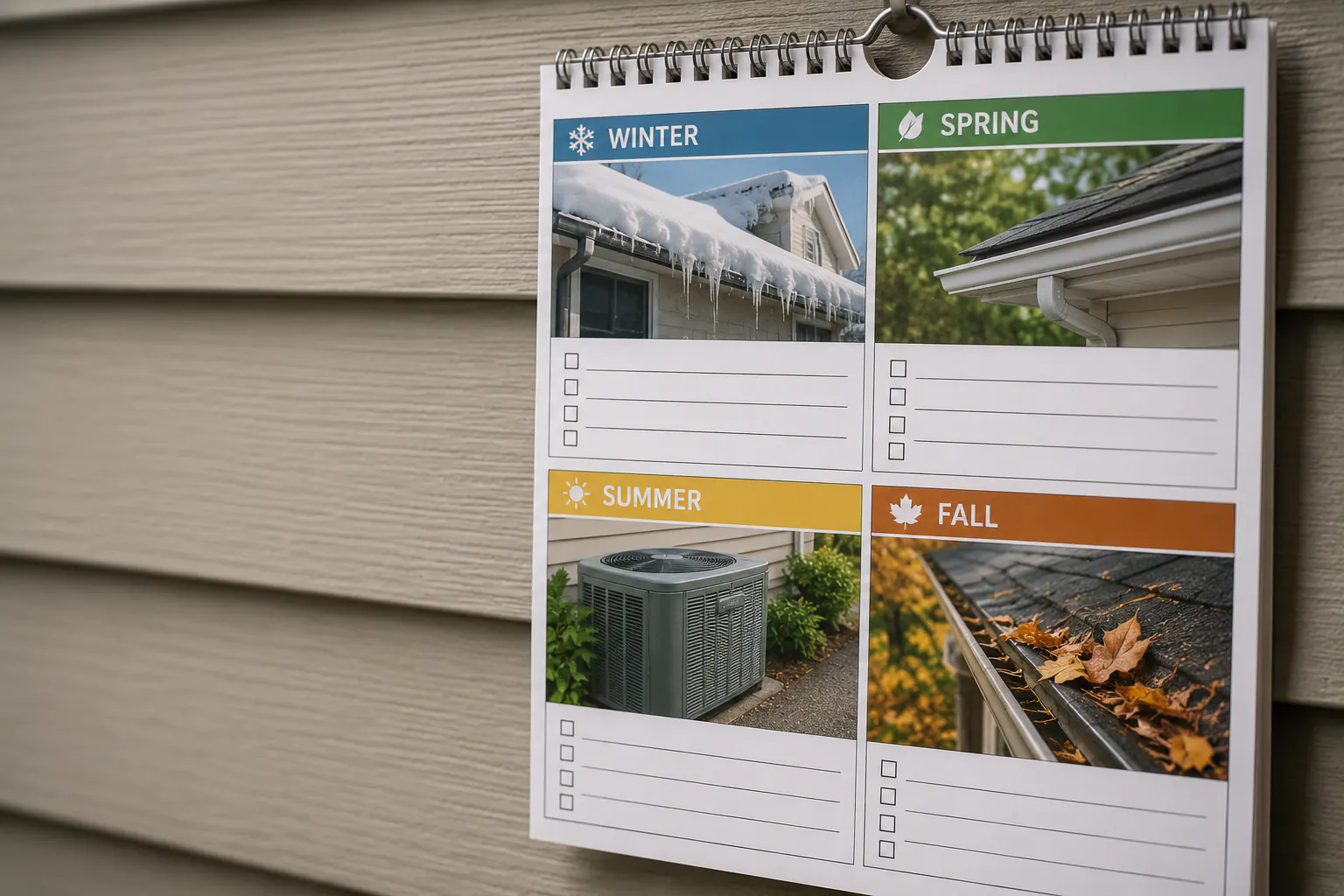
Make the calendar repeatable
Local hazard seasons, equipment instructions, and property obligations set the dates; the calendar keeps ordinary observations from disappearing.
Set local checkpoints
Choose safe observation windows before the weather or absence conditions that matter to this home.
Record visible changes
Compare occupied rooms and stable-ground observations with a prior baseline rather than relying on memory.
Route and revisit
Assign each finding to household follow-up or qualified service, then carry unresolved items into the next checkpoint.
Build the calendar around local deadlines
Start with official local hazard seasons, property requirements, equipment manuals, and contractor lead times. Choose relevant checkpoints from these examples, rather than assigning every household six required visits:
- before the primary wet or storm season;
- before the hottest expected period;
- before the coldest expected period;
- after the highest-risk season;
- before a long absence or property closure;
- after any significant event, renovation, or system change.
Add manufacturer maintenance intervals and code-required inspections separately. A generic calendar never overrides them.
Stop the inspection for danger
Call 911 for collapse, fire, severe injury, arcing, explosion, or immediate danger. Move to fresh air for a carbon monoxide alarm or possible symptoms. Follow utility instructions for gas odor and damaged service.
Do not inspect during lightning, high wind, active flooding, extreme heat, smoke, snow or ice fall, darkness, evacuation, or reentry restriction. Do not enter damaged, locked, shared, roof, attic, crawlspace, confined, or contaminated areas.
If an observation reveals active water near electricity, structural movement, forceful hot-water discharge, unstable material, repeated protective-device operation, or loss of essential heating or cooling in dangerous weather, stop the calendar and use the emergency or qualified professional route.
Keep a baseline when useful
Two calm daylight dates roughly six months apart can be a useful reminder, alongside required inspections and checks after changes. From occupied rooms and stable ground, record what is relevant and safely visible:
- every exterior side, roofline from ground, openings, visible drainage outlet, and site slope;
- room ceilings, upper walls, floor edges, windows, doors, and recurring finish changes;
- normal HVAC sound, airflow pattern, thermostat behavior, and visible exterior condition;
- water-heater exterior, visible supply and drain areas, and signs of corrosion or leakage;
- normal water pressure and drain behavior through ordinary use;
- accessible alarm status and replacement dates according to current instructions;
- electrical odors, heat, damage, buzzing, or repeated trips without opening equipment;
- exits, stairs, rails, lighting, accessibility routes, and emergency contact records;
- model, serial, manual, warranty, recall, permit, and service records.
Use the home-change tracking guide so each observation keeps the same location ID.
Before the wet or severe-storm season
Schedule this checkpoint early enough for qualified work.
- Compare ceiling and upper-wall stains against the baseline.
- Observe the roofline, covering, flashing areas, gutters, and downspouts from stable ground.
- Confirm that visible outlets and ground drainage do not route water toward the building or across an unsafe path.
- Record ponding, erosion, basement moisture, window-well water, and prior entry points.
- Confirm that sump, backflow, drainage, shutters, roof, tree, and other specialized systems receive qualified service where applicable.
- Update evacuation contacts, insurance records, home inventory, and contractor information.
- Move ordinary loose outdoor belongings through safe normal handling before warnings begin.
Use the roof warning-sign guide and gutter and drainage guide for stop conditions. Do not climb, clean roof drainage during weather, or perform improvised storm hardening.
Before extreme heat
- Arrange qualified HVAC maintenance before the first heat emergency.
- Record normal cooling cycles, room delivery, indoor temperature pattern, and filter schedule.
- Check that outdoor equipment is visibly unobstructed from a safe position without opening or reaching into it.
- Review shade, ventilation, occupied-zone, medication, pet, and relocation plans.
- Confirm backup power and medical continuity through their dedicated safety plans.
- Check refrigerator and freezer thermometers, communication charging, and current cooling-center information.
The HVAC warning-sign guide separates normal owner observations from technician work. Do not wait for dangerous indoor temperatures to begin a service search.
Before freezing weather
- Identify the authorized building water shutoff and emergency maintenance route before a break occurs.
- Arrange qualified heating, combustion, chimney, plumbing, roof, and drainage service as applicable.
- Record normal heat delivery, fuel or utility arrangement, and freeze-vulnerable areas identified by a professional.
- Check exterior doors and windows for visible damage, moisture, operation, and safe egress.
- Review outage lighting, communication, food, water, medication, pet, and relocation plans.
- Confirm snow, ice, tree, and access responsibilities with the property owner or contractor.
Do not use flame to find drafts or thaw pipes. Do not block combustion air, vents, exits, or required clearances. The weatherproofing hub keeps comfort work within moisture, ventilation, fire, and renter boundaries.
During ordinary monthly use
Set one short monthly reminder rather than a major inspection.
- Review open warning-sign records and repair deadlines.
- Look for new water, stain, odor, sound, corrosion, pest, and opening-operation changes in occupied areas.
- Confirm emergency contacts and access notes remain current.
- Follow manufacturer instructions for normal exterior filter or user-maintenance tasks only.
- Check CPSC recalls for recorded household products by exact model and serial range.
- Confirm no stored item blocks exits, panels, equipment clearances, shutoffs, alarms, or drainage.
- Back up new reports, invoices, permits, and photographs.
Do not turn the monthly reminder into unnecessary operation of safety devices. Alarm, GFCI/AFCI, generator, transfer, sump, backflow, relief-valve, extinguisher, and other tests follow current manufacturer, code, property, and qualified service instructions.
After a storm, outage, flood, freeze, fire, or earthquake
Wait for official permission and safe conditions. Inspect first from outside the hazard area and from stable ground. Compare against the baseline instead of relying on memory.
Record:
- utility, alarm, structural, water, fire, and access status;
- roofline, facade, tree, drainage, foundation, and ground changes;
- indoor water, odor, soot, finish movement, temperature, and equipment changes;
- exact areas not entered and why;
- emergency, utility, landlord, insurer, and professional instructions.
Do not restore power, fuel, water, HVAC, appliances, or occupancy after damage without the required authority and qualified clearance.
Before a long absence
- Review local weather and property requirements.
- Give a trusted contact only the access and authority actually needed.
- Record normal utility, HVAC, water, drainage, alarm, and refrigerator conditions.
- Remove perishables and ordinary hazards appropriate to the absence plan.
- Secure documents and avoid publicizing vacancy.
- Schedule professional winterization, shutdown, monitoring, or property checks when the system or climate requires them.
Do not improvise utility shutdowns. Water, fuel, electrical, solar, battery, sprinkler, security, and shared building systems require exact instructions and qualified control.
Assign responsibility and evidence
For each task you keep, note who can arrange the next step and any real deadline or access limit. A solo household can manage its own reminder. For example, scheduling a qualified roof assessment before the local storm season is clearer than a general reminder to check the roof; no universal May deadline applies.
Move every finding into the warning-sign priority planner. The calendar creates observations; the planner prevents them from disappearing between seasons.
Review the calendar after moving, renovating, changing equipment, adding a household member, or receiving a new lease, insurance condition, recall, or professional recommendation. Keep completed years rather than overwriting them; the older record can reveal recurrence and show which seasonal deadline repeatedly slips.
Sources reviewed
- U.S. Department of Energy: Home Energy Checklist
- Ready.gov: Low and No Cost Preparedness; Hurricanes; Winter Weather; Extreme Heat
- U.S. Environmental Protection Agency: Moisture Control Guidance for Buildings
- U.S. Consumer Product Safety Commission: Recalls
Sources reviewed July 14, 2026. Current alerts, emergency services, utilities, property authority, model instructions, recalls, code, permits, climate, and qualified roofing, structural, HVAC, combustion, electrical, plumbing, drainage, building-envelope, restoration, environmental, arborist, chimney, alarm, appliance, and accessibility professionals control actual work.