
Start with the one change you noticed: its location, when you first saw it, and what is happening now. A safe photograph can help, but do not delay reporting or approach a hazard to get one. Describe a returning stain or sticking door without deciding that the roof or foundation has failed.
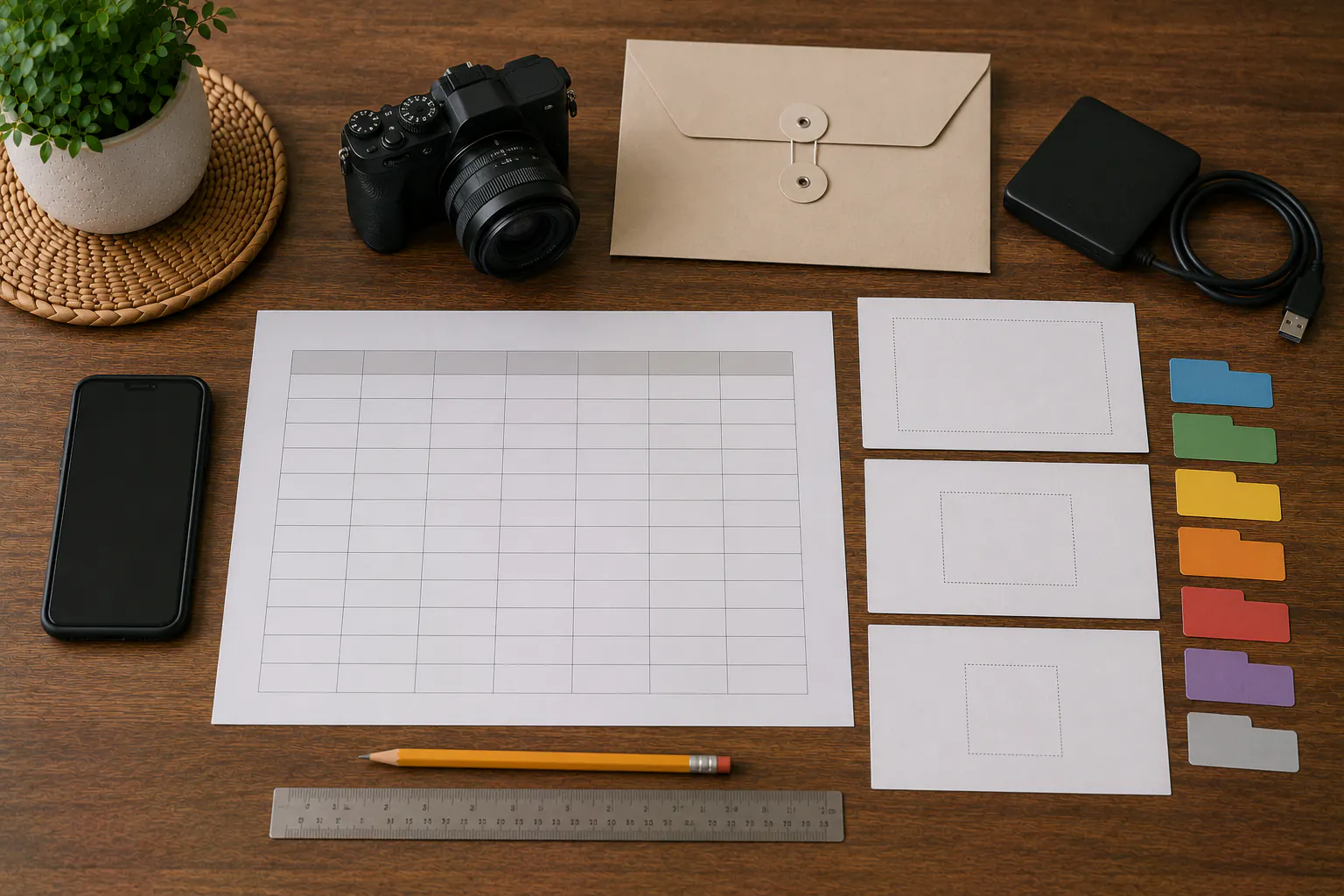
Tracking turns memory into chronology. It can reveal recurrence, help a landlord or contractor find the right location, support an insurance record, and show whether a repair resolved the original symptom.
Protect people before preserving evidence
Call 911 for collapse, fire, severe injury, arcing, explosion, or immediate danger. Move to fresh air for a carbon monoxide alarm or possible CO symptoms. Follow utility instructions for gas odor and damaged service.
Do not delay evacuation, cross a restriction, enter floodwater, stand beneath damaged material, climb, open equipment, remove finishes, or touch an unknown substance for a better photograph. A missing photograph is preferable to an injury.
Use the early warning hub to route urgent conditions before starting a log.
Give every observation a stable identity
For several observations, an optional location label such as KITCHEN-CEILING-01 helps keep them separate. For one issue, a clear room name and date may be enough. Keep unknown dates or causes unknown.
Use the fields that help the next responsible person understand the issue; this is not paperwork you must complete before asking for help:
| Field | What to capture | What to avoid |
|---|---|---|
| Location | Address or unit record, floor, room, wall or side, nearby fixed feature | Vague labels such as “upstairs crack” |
| First observed | Date, approximate time, who noticed it | Inventing an earlier date from memory |
| Observation | Visible, audible, smelled, felt, or functional change | Naming a failed component without evidence |
| Context | Weather, temperature, system mode, recent work, outage, impact, or vacancy | Assuming context proves causation |
| Consequence | Water, egress, comfort, sanitation, alarm, utility, or accessibility effect | Minimizing effects that later disappeared |
| Evidence | Wide, medium, and detail images; sound clip; exact display text | Filters, annotations over the original, or staged damage |
| Action | Emergency call, property report, professional visit, access restriction | Unrecorded verbal promises |
| Outcome | Finding, repair, test, follow-up date, recurrence | Closing the record because a surface was painted |
Keep the original files. Make annotated copies separately so arrows and outlines do not replace the evidence.
Use the pen or pencil you already have to note the date, location and change you actually observed on ordinary dry paper. A retractable gel pen is another writing format only if that tool is missing or unsuitable, not a reason to create more paperwork. Write on a separate copy, not the building or original evidence; reporting and safe access come before the note.
Photograph in three layers
Establish the room or building side
Take a wide image from a safe repeatable position. Include a door, window, corner, or fixed fixture that makes the location unambiguous.
Show the relationship
Take a medium image that includes the full crack, stain, corrosion area, displaced trim, equipment exterior, or drainage path. A cropped detail can hide the pattern.
Preserve detail without contact
Take a closer image only when the surface is safely reachable. Place a clean removable ruler or plain reference beside the change without fastening, inserting, scraping, or touching wet or damaged material. Record the full reference in the same plane as the surface.
Use consistent light when practical. Do not use image enhancement as evidence of moisture, heat, mold, structure, or electrical condition.
Record sound as a pattern
A ten-second recording is more useful when it includes the system state and timing. Write down:
- when the sound starts and stops;
- whether it follows wind, rain, water use, HVAC start, appliance operation, traffic, or temperature change;
- where it is loudest from normal occupied space;
- whether vibration, odor, heat, water, a fault code, or loss of function occurs with it;
- whether it is new, intermittent, repeated, or progressive.
Do not move closer to a motor, fan, panel, roof, pipe, pressure vessel, or damaged assembly. Do not restart equipment to reproduce an abnormal sound.
Track stains without covering the source
Record color in ordinary language, edge shape, apparent wetness without touching, odor from normal room distance, and relationship to seams, openings, plumbing, HVAC, or exterior drainage. Note weather and system use before the observation.
Do not taste, sniff closely, sample, bleach, paint, probe, or cut into the area. A dry stain can represent an old event, intermittent route, or concealed moisture; a consumer moisture reading does not identify the source or prove safe occupancy.
Use the water-intrusion guide when water or swelling is involved.
Track cracks as change, not a diagnosis
Map the complete visible path and connected surfaces. Record nearby openings, floors, ceilings, trim, masonry, water, and prior repairs. Compare images from the same position.
Do not rely on one universal width or direction rule. Material, assembly, event, soil, load path, and rate of change matter. Do not push a gauge into a crack, install fasteners, excavate, or remove finishes. The structural red-flags guide defines when qualified review should replace observation.
Preserve event and repair chronology
Create one timeline that includes:
- normal baseline photograph;
- first observation;
- weather, outage, impact, renovation, or system event;
- emergency, utility, landlord, insurer, or contractor report;
- temporary protection and who authorized it;
- inspection findings and alternatives considered;
- repair scope, permits, and photographs before concealment;
- completion testing;
- next relevant rain, temperature, or operating condition;
- recurrence or closure decision.
Store invoices, reports, permits, warranties, recall remedies, and correspondence beside the timeline. Preserve exact model and serial data in a private record rather than a public photograph.
Use an existing folder and writing support for the timeline and a few working copies. If handling them separately is inconvenient, a clipboard with a shallow compartment is one format to compare, not another required record system.
Saunders SlimMate 00558 is one Black storage clipboard with a writing surface, internal divider and snap closure. Follow supplied care and read the listing’s California cancer and reproductive-harm notices, including o-phenylenediamine and its salts. No cleaning, clip retention, paper fit, impact or weather-protection result is established. Keep original evidence and backups separately in the existing controlled record system; the snap case is not secure or archival storage. Reporting and safe access still come first.
View Saunders SlimMate 00558 on Amazon(opens in a new tab)Use a consistent update rule
Update the record when the observation changes in extent, location, frequency, intensity, consequence, or associated condition. Also update it after professional inspection, temporary work, repair, or the next relevant weather cycle.
Do not create daily measurements merely because a mark exists. The professional should define a monitoring interval when structural, moisture, indoor-air, equipment, or code expertise is required.
Give professionals a one-page packet
Lead with the record ID, location, safety status, first date, current consequence, and one representative wide image. Then provide the timeline and originals. Ask the professional to state:
- what was observed and what remains uncertain;
- immediate access or operation restrictions;
- cause and alternatives considered;
- further investigation and who is qualified to perform it;
- temporary and permanent scope;
- completion evidence and recurrence trigger.
A large unsorted photo folder can hide the useful sequence. Keep originals, but make the chronology easy to scan.
Protect privacy and insurance evidence
Photographs may reveal addresses, keys, alarm panels, children, medication, documents, valuables, access codes, or neighboring property. Store originals in a controlled location and share only with the relevant authority, insurer, property manager, or professional.
Do not publish claim evidence or identifying equipment details by default. Keep a second backup of critical records according to the household continuity plan.
Give renters a documented service trail
Send the exact observation, location, time, consequence, and safe evidence through the lease emergency channel. Record the ticket number and every access attempt. Ask for the temporary safety plan, responsible contractor, expected response, and written closeout.
Do not enter shared, locked, roof, basement, crawlspace, or mechanical areas. A resident record supports escalation; it does not authorize repair to building systems.
Close the record only after verification
Closure should state the source found, work completed, professional evidence, and the relevant condition used to verify it. If a rain leak was repaired, a dry-day visual check alone is not final verification. If HVAC noise was repaired, compare the same operating mode and load.
Move unresolved items into the home repair priority planner and schedule recurring observations through the seasonal inspection calendar.
Sources reviewed
- Federal Emergency Management Agency: Home Inspections for Homeowners and Renters
- National Flood Insurance Program: Document Your Damage
- Ready.gov: Financial Preparedness
- U.S. Environmental Protection Agency: Moisture Control Guidance for Buildings
- U.S. Consumer Product Safety Commission: Recalls
Sources reviewed July 14, 2026. Current emergency services, utilities, property authority, insurers, building officials, model instructions, and qualified structural, roofing, building-envelope, HVAC, plumbing, electrical, restoration, environmental, and appliance professionals control safety, access, diagnosis, and repair.
STAEDTLER’s current 563 30 information and exact Amazon single 30 cm aluminium variant were checked October 12, 2026. No reference measurement, anti-slip, damage, marking or structural test was performed; earlier practical experience is not a test of this ruler.
Pentel’s current selected Black BL77BP2A record and exact two-count US pack were checked October 13, 2026 against UPC 072512202357. The manufacturer’s current 2026 and historical 2018 writing-article notices were read separately; they do not establish this guide’s chemical clearance, product testing or standards determination. No exact wash or refill-service procedure is specified here, and fast-drying marketing is not a measured result. Preserve the original report and supplied instructions.
Saunders’s current Black 00558 record and exact one-item US listing were checked October 13, 2026 against UPC 044357005585. The marketplace’s store byline says Läufer while its title, manufacturer, model and barcode match Saunders; that inconsistency is retained, not an authenticity guarantee. Letter/A4 wording and capacity figures do not establish actual paper fit. No exact cleaning or protection method is supplied here, and earlier practical experience is not a test of this clipboard.