
Start by saving the building’s after-hours maintenance number and checking who changes your filter. You do not need to become the technician for an apartment you rent. You need to know which ordinary controls and tasks are yours, how to report a problem, and where the household can go if heating or cooling is unavailable.
If someone is already unwell or the apartment is becoming unsafe, get help or move to a confirmed suitable destination first. Do not wait to finish a log, settle responsibility, or receive a maintenance reply. Fire, smoke, active arcing, a carbon monoxide alarm, severe symptoms, or immediate danger require emergency help; leave the area rather than investigating.
EPA notes that some apartment indoor-air problems can be addressed by residents, while others can only be corrected by the building owner or manager. (Source: U.S. Environmental Protection Agency, Indoor Air Quality in Apartments.) That boundary is the foundation of this guide.
For equipment planning, use the HVAC and climate-control hub. Here, start with the building contact and the duties actually assigned to you.
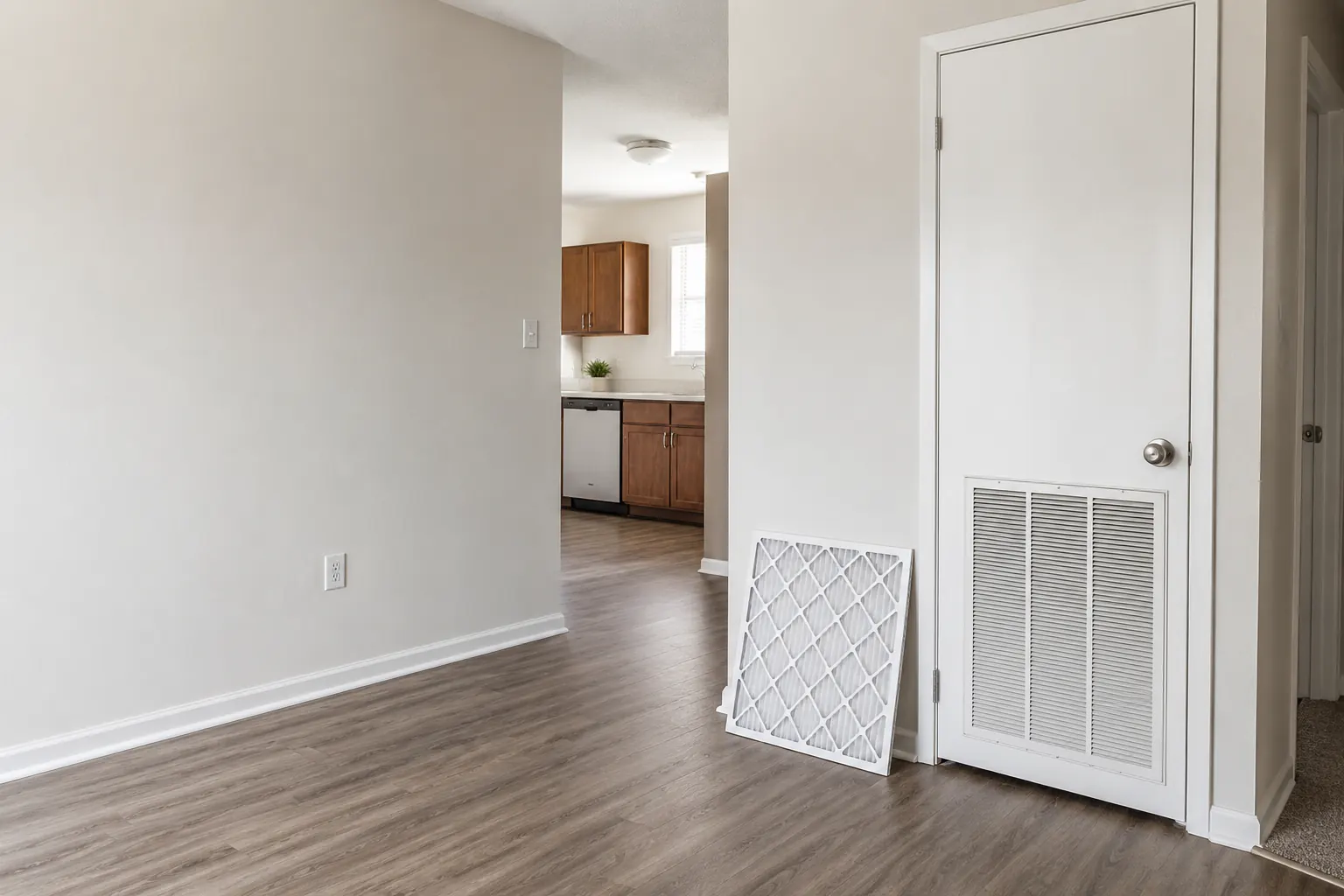
Ask who handles each task
Read the lease, move-in packet, building rules, filter instructions, emergency contacts, and any HVAC addendum. Ask management in writing:
- Is heating, cooling, ventilation, or hot water centralized or unit-specific?
- Which thermostat, remote, room unit, filter, vent, or condensate item may the tenant operate or maintain?
- Who supplies and changes filters, and what exact size and rating are approved?
- Who responds after hours to loss of heat, cooling, water, or ventilation?
- Are window or portable air conditioners allowed, and what installation and electrical approval is required?
- Who handles smoke events, mold concerns, leaks, and shared-air complaints?
- What is the building outage and restart process?
- Which local housing or health contact applies if an urgent problem is not addressed?
Do not infer permission from a previous apartment or another resident’s arrangement.
Stay with permitted occupant tasks
When allowed by the lease and exact equipment instructions, a renter can generally:
- use normal thermostat, remote, or room-unit controls;
- keep accessible supply and return grilles free of furniture, rugs, boxes, and curtains;
- replace an accessible filter only when that duty is explicitly assigned and the approved filter is known;
- keep ordinary belongings away from radiators, baseboards, and equipment clearances;
- note indoor temperature, humidity, sound, odor, water, airflow, and visible fault displays from ordinary safe occupied locations, without approaching a hazard;
- report a problem promptly through the building’s required channel;
- use renter-owned portable equipment only when permitted and electrically appropriate;
- follow the household heat, cold, smoke, and outage plan.
Do not open HVAC equipment, enter a roof or locked mechanical area, touch shared systems, alter wiring, change a breaker, handle refrigerant, clear an internal drain, drill the building envelope, remove a guard, bypass a switch, or hire work on owner equipment without authorization.
Keep a short record while things are working
At move-in or while the system is operating normally, record:
- thermostat or control type and normal modes;
- location of accessible supply and return grilles;
- filter responsibility and specification;
- typical room temperature pattern under similar weather;
- normal sounds and cycle behavior;
- prior stains, repaired areas, or documented damage;
- service contact and request number system;
- assistance and clinician instructions needed by household members, kept privately rather than in a routine maintenance request;
- two cooling or warming destinations and a transportation plan.
Photograph only the tenant-accessible condition and avoid other residents, account numbers, keys, access codes, and private documents.
Report symptoms, not diagnoses
An effective maintenance request describes observable facts:
- exact date and time;
- indoor temperature and humidity trend if a normal household instrument is already available;
- outdoor conditions and official alert if relevant;
- thermostat mode and setting;
- rooms affected;
- airflow present, weak, or absent;
- sound, odor, water, ice, stain, or fault display;
- whether smoke or carbon monoxide alarms activated;
- any building notice or information already available about other affected units, without entering shared equipment areas;
- assistance or urgent relocation needs, sharing only what management needs to respond;
- photos from safe occupied locations.
For example: “At [time], the living room is [observed temperature, if available]. The thermostat is set to [mode/setting], but [observable problem]. I have not opened the equipment. Please confirm the response time and the after-hours contact for this request.” Add a photo only if it can be taken safely and contains no private access details.
Avoid “the refrigerant is low” or “the compressor is broken” unless a qualified professional documented that diagnosis. Describe what you observed; leave the diagnosis to the person responsible for service. An urgent safety problem is not a reason to stay and gather better evidence.
Escalate immediate hazards differently
Call 911 for fire, smoke, active arcing, shock injury, a carbon monoxide alarm, severe symptoms, or immediate danger. Follow the gas utility’s instructions for a gas odor. Leave the area rather than searching for the source.
For the following problems, do not keep operating the affected equipment. Use its normal permitted control only if it is safely accessible without approaching the problem; otherwise stay away and contact the building emergency number from a safe place. The emergency hazards above take priority over a maintenance call.
- burning, fuel, chemical, electrical, or persistent musty odor;
- water flowing from equipment, a wet ceiling, standing water, or active leak;
- repeated trips, sparking, melted material, hot plug, or damaged cord;
- grinding, banging, severe vibration, impact damage, or a fan obstruction;
- known or suspected HVAC contamination with mold, sewage, floodwater, smoke residue, or pests;
- loss of heating or cooling during dangerous weather;
- a fault, alarm, or shutdown that the instructions assign to service.
EPA advises renters to report plumbing leaks and moisture problems immediately to the building owner or manager and says not to run HVAC known or suspected to be contaminated with mold. (Source: EPA, A Brief Guide to Mold, Moisture and Your Home.)
Handle filters only under the building procedure
If filter replacement is assigned to the tenant, use the HVAC filter schedule guide. Confirm exact dimensions, type, rating, airflow direction, access method, and disposal. Do not upgrade to a higher-efficiency filter without system approval.
If filter access exposes wiring, moving parts, a restricted closet, contamination, water, or a panel not intended for users, stop. Ask management to perform the task.
Record the date and keep the receipt if the lease makes the tenant responsible. A clean filter does not clear an unresolved comfort, moisture, odor, or fault condition.
Plan permitted room cooling carefully
Before purchasing a window or portable unit, obtain written building approval. Ask about:
- allowed window type and room;
- structural support and installer responsibility;
- screens, fall protection, exterior appearance, and required egress;
- dedicated circuit or electrical review;
- condensate and facade rules;
- seasonal removal and storage;
- liability for water or window damage;
- noise and quiet-hours rules.
Use the room air-conditioner selection guide. Never use an extension cord or alter a receptacle to make a cooling unit fit.
Treat temperature as a safety trend
Do not wait for a legal dispute while a person becomes ill. During extreme heat, Ready.gov advises using an air-conditioned location when home cooling is unavailable and recognizing heat illness. During winter weather, follow current emergency guidance and move before indoor cold exceeds the household plan.
Record temperature over time, but do not treat one consumer sensor as a legal instrument or medical threshold. Follow:
- the apartment extreme-heat plan;
- the extreme-heat outage plan;
- the winter outage heat plan;
- clinician instructions for vulnerable occupants.
Call emergency services for severe symptoms. Confirm the destination is open, suitable for the household’s needs, and reachable with available transportation. Local cooling or warming centers, friends, family, hotels, shelters, or other prequalified options may fit; a name saved months ago is not confirmation that help is available today.
Document the request trail
Keep:
- initial request and confirmation number;
- time and channel of every follow-up;
- temperature and condition log;
- photographs or videos from safe locations;
- names or roles of responders;
- entry notices and service appointments;
- work orders and stated resolution;
- expenses and temporary measures where relevant;
- current lease and local authority contacts.
Do not publish private correspondence, employee names, access details, or allegations online as the first escalation. Use the lease, local tenant resources, housing authority, health department, code enforcement, legal aid, insurer, or emergency management appropriate to the situation.
HUD advises Housing Choice Voucher tenants to report maintenance issues promptly and keep detailed records; voucher inspection and correction processes are program-specific. (Source: U.S. Department of Housing and Urban Development, Housing Choice Voucher Tenants.) Other renters must verify their own local process.
After service, check ordinary use and keep the work order
After service:
- ask what was found and what work was completed;
- confirm normal controls were returned to the documented mode;
- observe temperature, airflow, sound, odor, and moisture during ordinary use from safe occupied locations;
- report any repeated or new symptom;
- update filter and service dates;
- retain the work-order summary management provides.
Do not open the equipment to verify a contractor’s work. Do not clear a safety concern because the system produced warm or cool air once.
If you only do one preparation task today, save the after-hours contact and ask who handles filter changes. Keep the reply with the lease; it gives you a clear next step without taking on building work.
Sources reviewed
ReadyLience reviewed current apartment indoor-air, mold, HVAC maintenance, rental documentation, extreme-heat, and winter-weather guidance from EPA, HUD, ENERGY STAR, and Ready.gov on July 14, 2026. Lease terms, state and local law, housing codes, public-health instructions, emergency orders, property procedures, and qualified professionals control each real tenancy.
The EPA apartment-air and mold guidance was checked again on October 3, 2026 for the resident/owner boundary and suspected HVAC contamination. This was a narrow source check, not a new review of local tenancy law or every source above.