
Using one smaller room during a winter outage can make clothing, bedding, supervision, lighting, and limited heat easier to manage. It cannot turn an unsafe building into a safe shelter, and it must never block the systems that let people breathe, detect danger, or leave.
Start by checking a room’s exit path, alarms, and access for everyone who would use it. Keep the room connected to the rest of the home, not sealed off. The emergency heating plan for extreme cold owns heater selection and stop rules; choosing a smaller room does not change those limits.
Stop before choosing a room
Do not remain in the building if a carbon monoxide alarm sounds, fire or smoke is present, gas may be leaking, the structure or electrical system is damaged, authorities order evacuation, or anyone may have hypothermia. Get outside, call 911, and follow emergency instructions.
Do not use a garage, attached workshop, mechanical room, attic, crawlspace, or basement containing combustion equipment as the occupied zone. Never bring a generator, grill, charcoal appliance, camp stove, patio heater, or outdoor heater inside or near an opening.
If a clinician or medical-device plan requires a temperature, power source, destination, or earlier departure, that instruction controls. Use the winter medical continuity plan rather than improvising around powered care.
Compare candidate rooms
Walk the home before winter and compare the practical candidates. This is not a safety score or approval. Look for a room that has:
- a direct, unobstructed route to an exterior exit;
- a second way out where the home layout and fire plan provide one;
- working smoke detection and CO detection appropriate to the home;
- fewer exterior walls and less glass than other practical rooms;
- a door that closes normally without a lock or barricade trapping occupants;
- enough floor area for people, mobility devices, pets, and bedding without crowding heat equipment;
- a reliable indoor thermometer and battery lighting;
- phone or radio reception and access to the communication plan;
- no visible water intrusion, damaged ceiling, overloaded receptacle, or unusual odor;
- reasonable access to a toilet, medications, water, and the exit.
An interior room is not automatically best. A window may be an essential fire escape, daylight source, or ventilation opening. A bedroom may create unsafe infant bedding or heater clearances. A room far from vulnerable plumbing may increase damage risk elsewhere. Record the tradeoffs rather than relying on one slogan.
Preserve the escape plan
Keep the door, hallway, stairs, and exterior exit free of bedding, bags, cords, furniture, and stored supplies. Do not hang blankets over the exit, tape a door shut, defeat a closer, cover an alarm, or obscure an exit window.
USFA recommends a practiced home fire escape plan with two ways out of each room where possible. Everyone should know the meeting place and who assists children, older adults, pets, or people with mobility, hearing, vision, or cognitive needs.
Use battery lanterns and flashlights. Candles add ignition risk around extra bedding and close occupancy. Keep keys, shoes, coats, mobility aids, medication, phone, radio, and a small departure bag in an orderly location that does not narrow the path.
Reduce heat loss without sealing hazards
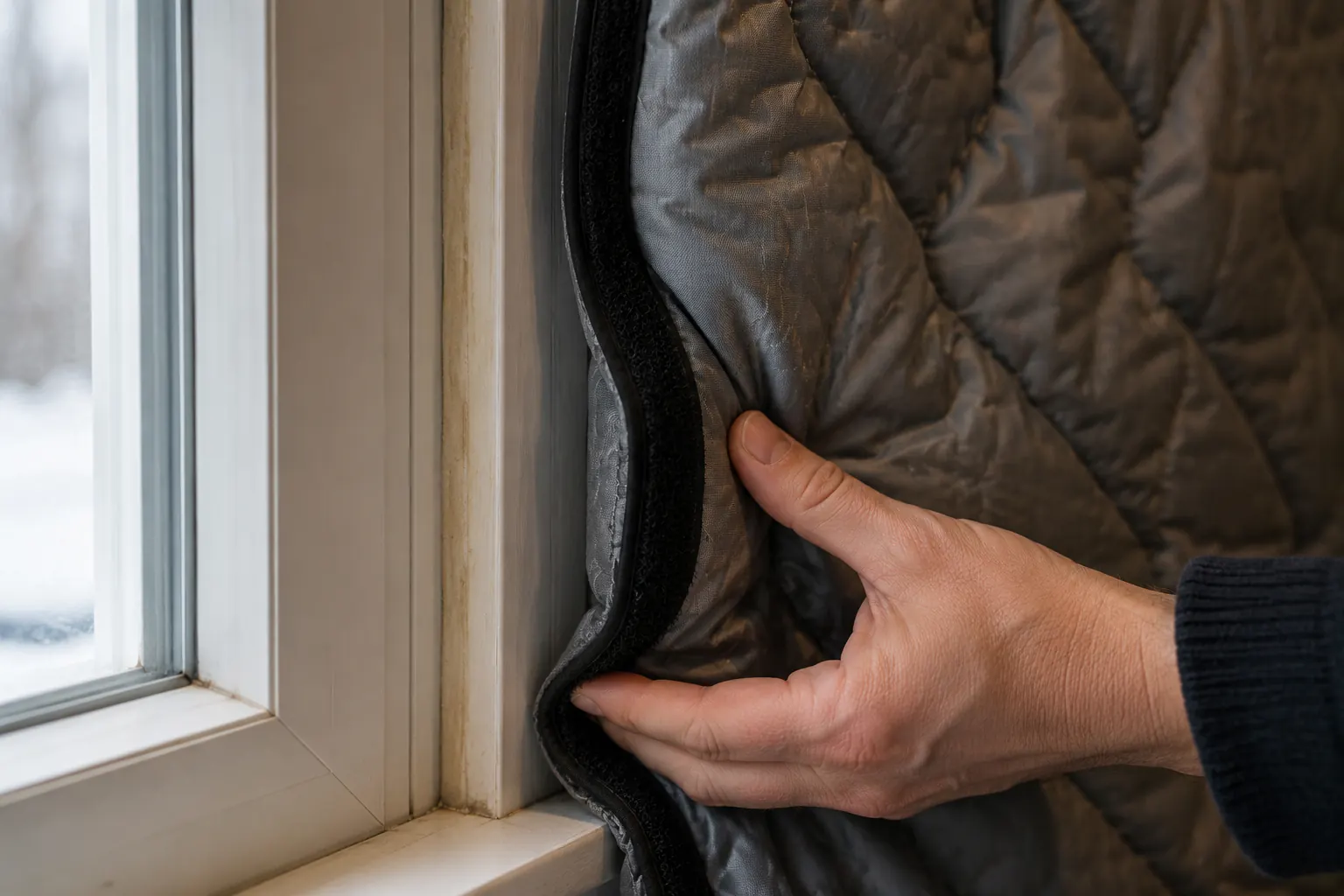
Close the room’s normal door. Close intact curtains or shades where they do not touch a heat source or hide damage. Use only temporary window products suitable for the surface, permission, moisture condition, and required egress. The temporary window-insulation guide explains those boundaries.
Do not cover:
- combustion-air or exhaust openings;
- required mechanical ventilation;
- smoke or CO alarms;
- fire sprinklers or standpipe equipment;
- electrical panels or service access;
- wet, moldy, damaged, or unusually hot surfaces;
- doors or windows needed for escape;
- vents required by the operating heating system.
Closing unused rooms can reduce the occupied area, but ask whether it cuts heat off from plumbing, a required return-air path, or building equipment. Follow the heating-system and property instructions. The frozen-pipe guide covers cabinet access, vulnerable locations, and authorized water response.
Organize warmth around people
Give each person dry base clothing, loose insulating layers, socks, footwear, and a hat. Add or remove layers to avoid sweating. Keep a dry change of clothes in a closed bag. Use sleeping bags and blankets as designed, never draped over a heater or arranged as a tent around one.
Create separate sleeping spaces that preserve safe movement to the exit. Do not place bedding against radiators, baseboard heaters, portable heaters, outlets, chargers, or equipment vents. Infant sleep requires a safety-approved sleep space and current safe-sleep practice; do not add loose blankets, pillows, quilts, or improvised padding to a baby’s sleep area.
Use the sleeping bags, blankets, and layers guide to choose a people-warming system. It does not assign a universal temperature rating to an improvised combination.
Add a heater only if every condition passes
A portable electric heater is not mandatory for a warmer room. Use one only when utility or approved backup power is available, the equipment is permitted and undamaged, the manual allows the location, and the room can preserve every required clearance.
Place it on a stable, level surface. Keep all sides at least the manufacturer-specified distance from beds, curtains, clothing, paper, furniture, people, and pets; current CPSC and USFA guidance uses three feet as a core public-safety rule. Plug an electric portable heater directly into a suitable wall outlet, never an extension cord or power strip. Stop if the plug, outlet, cord, wall plate, or breaker behavior is abnormal.
Turn the heater off when leaving the room or going to sleep. Never leave it unattended in a confined space. The space-heater safety warning owns the detailed stop rules.
Do not introduce a fuel-burning heater merely because the room is smaller. Only equipment explicitly approved for indoor residential use, permitted by the property and jurisdiction, and operated exactly under its installation and manufacturer requirements belongs indoors. A CO alarm is a warning layer, not approval for a combustion device.
Monitor the room as a trend
Record the time, indoor temperature, outdoor alert, utility estimate, power remaining, and each person’s condition at regular check-ins. Also inspect the exit path, alarm status, visible condensation, plumbing concerns, and heater surroundings.
Do not wait for one generic room temperature if:
- temperature is dropping quickly;
- someone is shivering persistently, confused, unusually tired, fumbling, or medically affected;
- a baby, older adult, or person with limited mobility cannot maintain warmth;
- medication, oxygen, refrigeration, communication, or mobility support is at risk;
- the heater or power source cannot operate within instructions;
- the forecast or restoration estimate worsens;
- safe transportation or a heated destination may soon be lost.
Use the safe winter outage sequence and leave while the planned route remains usable.
Keep a one-page room record
Document the selected room, exits, alarm locations, thermometer, normal ventilation, prohibited coverings, heater permissions, circuit information supplied by a qualified person, occupant needs, pet arrangement, plumbing concern, check-in interval, heated destinations, transport, and departure triggers.
Review it after moving furniture, changing heating equipment, adding an occupant, or receiving new medical instructions. A safe occupied room remains connected to the rest of the emergency plan; it never becomes a reason to ignore worsening conditions.
Sources reviewed
ReadyLience reviewed current cold-weather, hypothermia, home-fire escape, portable-heater, carbon-monoxide, and winter-outage guidance from CDC, NWS, Ready.gov, CPSC, and USFA. Current emergency orders, utilities, property authority, clinicians, equipment instructions, recalls, and qualified fire-safety, HVAC, electrical, plumbing, and building professionals control the actual decision.