
Weatherization works, but not every project pays back equally. Caulking a window costs a few dollars and takes minutes; replacing every window costs thousands and may save less than you expect. The skill is not knowing how to seal and insulate — the home weatherproofing and insulation cluster covers the procedures — but knowing what to do first.
This guide is a priority list. It ranks the common weatherization projects by how much they typically save relative to their cost and effort, so your time and money go where the return is largest.
Why sealing and insulating pays
Heating and cooling dominate home energy use, so improvements to the building envelope reach the biggest slice of the bill. ENERGY STAR estimates that air sealing plus adding insulation in attics, floors over crawl spaces, and basements saves homeowners an average of about 15% on heating and cooling costs, or roughly 11% of total energy costs. (Source: ENERGY STAR, Why Seal and Insulate?.)
Air sealing alone is one of the highest-return actions available: reducing drafts can save 5% to 30% per year. (Source: U.S. Department of Energy, Detecting Air Leaks.) That range is wide because it depends entirely on how leaky your home is now — which is exactly why you should start with an audit.
Start with an audit, not a purchase
Priorities are meaningless without knowing your home’s specific weak points. If you have not already, run the DIY home energy audit checklist to locate air leaks and thin insulation. A professional assessment with a blower-door test measures total leakage and shows you the largest gaps in priority order.
The ranking below is the general case. Your audit may move an item up or down.
The priority ladder
Work top to bottom. Each tier generally offers more savings per dollar than the one below it.
Tier 1: Air sealing (cheapest, fastest payback)
Sealing air leaks is almost always the best first dollar spent. Focus on the leaks that connect conditioned space to the outdoors or to unconditioned areas.
- Attic bypasses. Gaps around plumbing stacks, wiring, chimneys, recessed lights, and the attic hatch let heated or cooled air escape upward. ENERGY STAR points to leaks into the attic as a priority. (Source: ENERGY STAR, Seal and Insulate.)
- Basement and rim joists. Air leaks low in the house pull replacement air in.
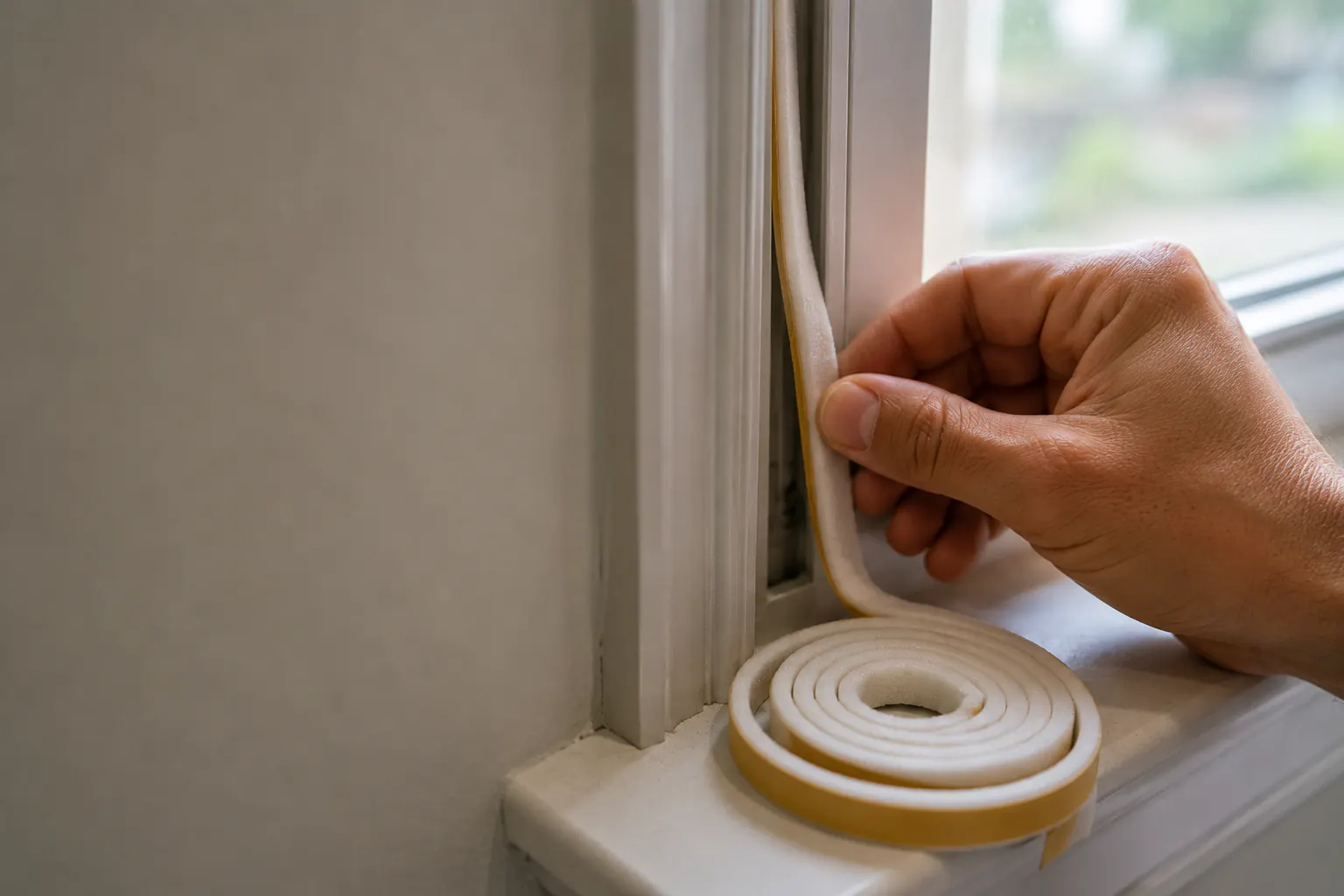
- Windows and doors. Caulk stationary gaps; weatherstrip moving parts. Use the safe door weatherstripping method so a tighter door still opens freely in an emergency.
- Penetrations. Seal where pipes, wires, ducts, and vents pass through walls, floors, and ceilings.
Materials cost little. This tier is where the 5–30% draft-reduction range lives.
Tier 2: Attic insulation (high value, moderate cost)
Once the attic is air-sealed, insulation there is the highest-value insulation project because heat rises and the attic is usually the most accessible cavity. Many homes are under-insulated at the ceiling relative to current recommendations. This is often a DIY-friendly project in an accessible attic, and a professional job in a tight or hazardous one.
Tier 3: Duct sealing (large, often overlooked)
If your heating and cooling runs through ducts in unconditioned space — attic, crawl space, unheated basement, or garage — leaky ducts waste conditioned air before it reaches you. ENERGY STAR notes that sealing and insulating ducts can improve heating and cooling efficiency by as much as 20%, focusing first on ducts in those unconditioned areas. (Source: ENERGY STAR, Seal and Insulate.) Accessible ducts can be sealed with mastic or foil tape; buried or inaccessible runs are a professional job.
Tier 4: Floors, crawl spaces, and walls (case by case)
Insulating floors over unconditioned spaces and rim joists can help, especially over a cold crawl space or garage. Wall insulation in a finished house usually requires a professional (dense-pack or foam) and is a bigger investment — worthwhile in an under-insulated home, but rarely the first move.
Tier 5: Windows and major envelope replacement (last, biggest spend)
Full window replacement is the project people reach for first and should usually consider last. It is expensive, and while new windows help comfort and can reduce leakage, the energy payback is long compared with sealing and insulating. If windows are failing for other reasons, weatherize the rest of the home first so you are not oversizing a decision around them.
A simple ranking worksheet
For each project your audit surfaced, score it and sort:
| Project | Rough cost | Effort | Expected impact | Do it? |
|---|---|---|---|---|
| Seal attic bypasses | Low | Low–moderate | High | First |
| Caulk and weatherstrip | Low | Low | Medium–high | First |
| Add attic insulation | Moderate | Moderate | High | Early |
| Seal accessible ducts | Low–moderate | Moderate | High | Early |
| Insulate rim joist / crawl | Moderate | Moderate | Medium | Next |
| Dense-pack wall insulation | High | Professional | Medium–high | If under-insulated |
| Replace windows | High | Professional | Low–medium per dollar | Last, or if failing |
Do the cheap, high-impact tiers before the expensive ones, even if the expensive project is more visible.
Separate weekend wins from long-term investments
It helps to split your list into two buckets, because they compete for different resources — one for a free weekend, one for a budget cycle.
Weekend wins (do them now):
- Caulk stationary gaps and replace failed weatherstripping.
- Seal obvious attic bypasses you can safely reach.
- Add or reinstall temporary window insulation and door sweeps.
- Seal accessible duct joints with mastic or foil tape.
These cost little, need no contractor, and capture the fast-payback tiers. Most households can complete them in a weekend or two.
Planned investments (budget and schedule):
- Professional attic air sealing and insulation top-up.
- Dense-pack or foam wall insulation in an under-insulated home.
- Duct sealing in buried or inaccessible runs.
- Window replacement, only after the rest is done.
Doing the weekend wins first means you are not paying a contractor to do the easy, cheap parts — and you may find that the cheap tier alone captures much of the available savings.
Check for rebates and assistance
Before committing to a paid project, look for money on the table. Many utilities and state programs offer rebates for insulation, air sealing, duct sealing, and efficient equipment, along with free or subsidized professional energy assessments. Income-qualified households may be eligible for weatherization assistance that covers the work entirely. A subsidized professional assessment is often the smartest first spend because it measures your home precisely and may unlock rebates for the work it recommends. Check your utility and state energy office before you buy materials, not after.
The comfort and resilience dividend
Weatherization is not only about the bill. A sealed, well-insulated home holds its temperature longer when the heating or cooling is off — during a mild night, a thermostat setback, or a full power outage. That thermal coasting is a genuine safety margin in a winter storm or heat wave, and it means your backup power does far less work. This is why the home energy efficiency hub treats envelope work as outage insurance, not just a cost saver.
Two safety boundaries
- Combustion safety after sealing. Tightening a home reduces natural ventilation. After significant air sealing, have furnaces, water heaters, and other fuel-burning appliances checked by a trained technician to confirm they still vent correctly and do not backdraft.
- Hazardous materials. Do not disturb insulation in homes that may contain asbestos, and get a professional assessment before insulating around knob-and-tube wiring.
For renters who cannot alter the structure, the reversible subset of these measures is collected in the renter energy efficiency guide. To execute any project on this list, follow the step-by-step methods in the home weatherproofing and insulation cluster.
Sources reviewed
- ENERGY STAR: Why Seal and Insulate; Seal and Insulate program
- U.S. Department of Energy, Energy Saver: Weatherization; Detecting Air Leaks
Sources reviewed July 14, 2026.