
A draft audit should answer three questions: where is the symptom, under which conditions does it appear, and who has authority to investigate or correct it. It should not begin with a candle, smoke stick, open outlet, removed baseboard, or shopping cart.
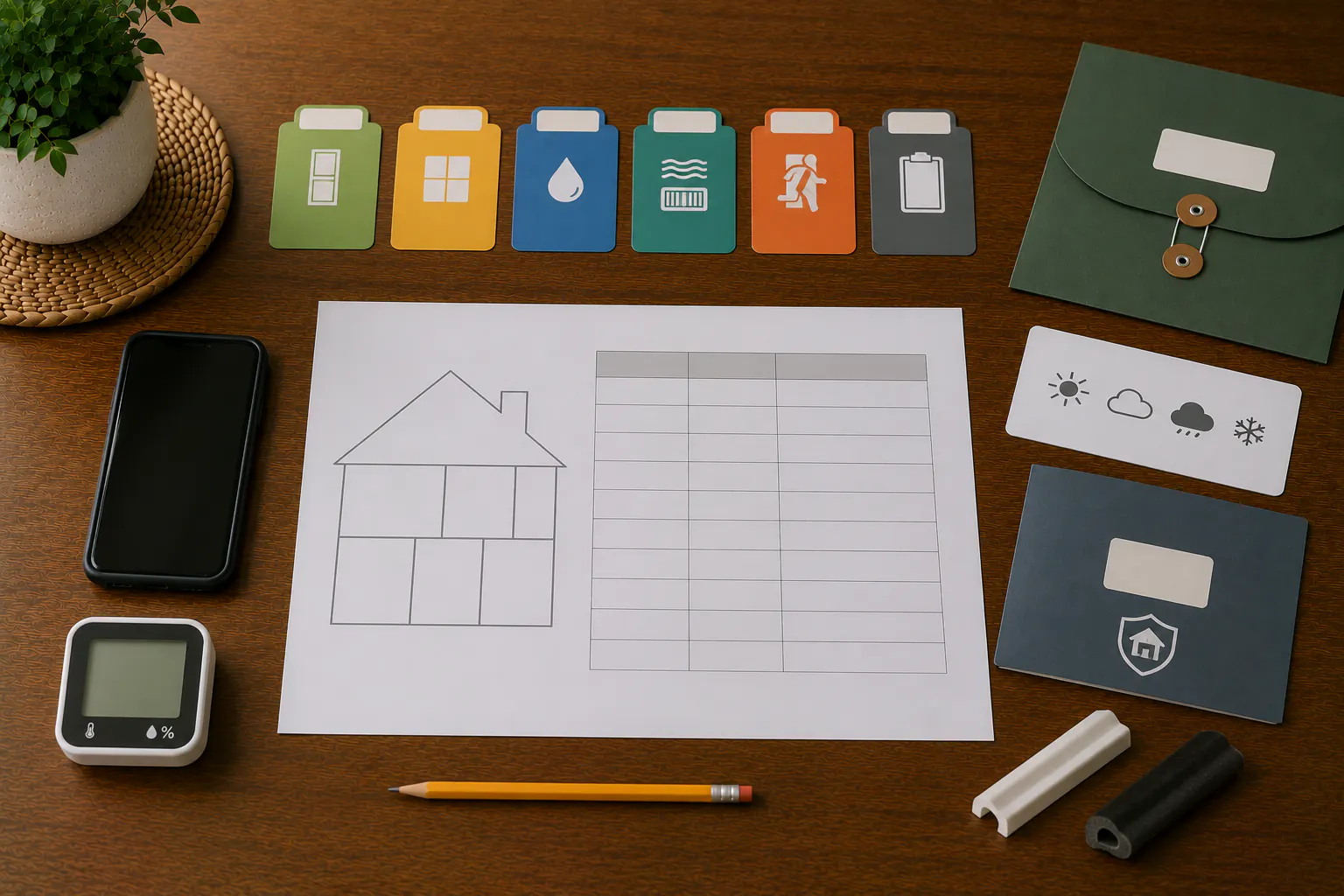
DOE recommends a qualified home energy assessment and blower door test for a thorough measurement of air leakage. This household checklist is intentionally narrower. It creates a repeatable visual and operating record that helps a renter, homeowner, energy assessor, property manager, or contractor decide what deserves attention.
Stop before the audit when danger is present
Leave or isolate the area and use the appropriate emergency, utility, property, or professional contact for:
- gas odor, carbon monoxide alarm, soot, combustion spillage, or unusual appliance flame;
- burning odor, heat, buzzing, damaged electrical equipment, water near electricity, or exposed wiring;
- active rain or plumbing entry, ceiling sag, structural movement, broken glass, or falling material;
- sewage, chemical residue, unknown dust, suspected asbestos or lead disturbance, or extensive mold;
- an attic, crawlspace, roof, exterior height, utility room, or locked service area that is not normally and safely accessible.
Do not continue merely because the suspected gap looks small. Air movement can connect to a larger concealed condition.
Prepare one consistent audit kit
Use simple observation tools rather than improvised pressure or smoke tests:
- a room list or floor-plan sketch with no sensitive details if it will be shared;
- pencil or notes app;
- phone camera with flash disabled around reflective glass when practical;
- one indoor thermometer and relative-humidity gauge kept in a stable location long enough to settle;
- removable paper location labels that do not cover controls or damage finishes;
- normal room lighting and a battery light for viewing an intact surface from the occupied space;
- the household fire escape map and building maintenance contact.
Do not use incense, candles, matches, smoke, powders, tissue near flame or equipment, high-output fans, dryers, exhaust combinations, or homemade depressurization. Do not turn off combustion appliances for a test. Those methods can introduce fire, indoor-air, combustion, electrical, and pressure hazards that this checklist is not designed to manage.
Record the weather and operating state
A draft is driven by pressure and temperature differences, so context matters. At the top of the audit, record:
- date and approximate time;
- outdoor temperature, wind direction or general wind exposure, rain, snow, and sun;
- indoor temperature and relative humidity;
- heating, cooling, ventilation, kitchen exhaust, bathroom exhaust, and dryer operating state;
- doors or windows intentionally open elsewhere;
- any unusual odor, condensation, alarm, outage, or recent storm.
Do not manipulate appliances or exhaust systems to create a stronger effect. The goal is to document the home in a normal state. A second pass during naturally different weather is more useful than forcing a result.
Use one observation code
Assign each location a short code so the record stays comparable.
| Code | Meaning | Action |
|---|---|---|
| O | No visible or operating concern | Recheck seasonally |
| D | Draft symptom under recorded conditions | Compare during a second weather condition |
| M | Moisture, condensation, stain, swelling, or odor | Route to moisture investigation before sealing |
| R | Operation, latch, lock, screen, or exit concern | Correct operation and escape first |
| P | Permission, code, warranty, or shared-building question | Ask the responsible authority in writing |
| S | Stop condition or unsafe access | Leave alone and escalate |
A location can receive more than one code. A drafty bedroom window with condensation and an emergency-egress role is D-M-R, not simply a candidate for plastic film.
Audit exterior doors from the occupied side
For every exterior or corridor door, record:
- Whether it is part of the normal or emergency exit plan.
- Whether it opens, closes, latches, locks, and unlocks using normal force.
- Whether the door rubs, drags, drops, rattles, or has visible frame movement.
- Visible daylight at the perimeter without placing your face near the gap.
- Missing, flattened, torn, painted-over, wet, or displaced weatherstripping.
- Threshold and sweep condition, including trip edges and wheelchair, walker, stroller, or cane clearance.
- Staining, swelling, corrosion, soft material, peeling paint, or musty odor.
- Nearby vents, alarms, electrical equipment, or combustion equipment.
Do not adjust hinges, strike plates, closers, rated-door hardware, thresholds, or locks during the audit. Door movement can be alignment, structure, moisture, security, accessibility, or fire-protection work. The door weatherstripping guide begins only after the door is known to operate correctly.
Audit operable windows
Record each window’s role before touching an accessory:
- required or planned emergency escape opening;
- normal ventilation opening;
- fixed glazing;
- window air conditioner or exhaust location;
- landlord-controlled or historic assembly;
- child-safety or fall-prevention restriction.
Using only normal operation, note whether the sash opens, closes, locks, and remains supported. Look for visible gaps, loose or missing seals, rattle, damaged screen, failed glazing, fog between panes, recurring interior condensation, staining, swollen trim, peeling finish, corrosion, or insect entry.
Do not force a painted, swollen, cracked, unsupported, or jammed sash. Do not remove stops, glazing beads, trim, locks, balances, screens, or an installed air conditioner. Broken or unstable glass and any window that cannot serve its intended escape role require responsible maintenance before weatherization.
Walk the wall and floor perimeter
From the occupied space, inspect intact surfaces where different materials meet:
- baseboard to floor and wall;
- exterior-wall corners;
- window and door trim edges;
- visible pipe, cable, and duct penetrations without touching or opening them;
- fireplace surround and damper area from a safe normal position when the fireplace is cold and unused;
- through-wall air conditioner perimeter;
- accessible attic hatch exterior without opening it;
- shared wall, garage boundary, and utility-room door.
Mark visible gaps, moving finishes, dark streaks, peeling, dampness, pests, or odor. Dark marks are not proof of an air leak or mold. Do not sample, scrape, clean, drill, caulk, or remove a cover to identify them.
The basic electrical safety hub keeps receptacles, switches, panels, and wiring outside this audit. A faceplate or draft sensation does not authorize opening electrical equipment or adding material behind it.
Check comfort zones without diagnosing HVAC
At a normal occupied position, record:
- temperature and humidity after the instrument has stabilized;
- sun exposure and window coverings;
- whether a supply or return grille is visibly blocked by furniture or belongings;
- whether a closed interior door changes comfort during normal system operation;
- whether odor, condensation, noise, or discomfort appears only when a system runs.
Do not balance dampers, remove grilles, insert material into ducts, block returns, close combustion-room openings, or change equipment settings beyond normal household controls. Uneven comfort can involve envelope leakage, insulation, duct leakage, equipment, controls, solar gain, or room use.
Separate draft evidence from moisture evidence
Air sealing wet material can hide the source and reduce drying. Route the location to moisture investigation first when you see:
- droplets, dampness, frost, repeated condensation, or elevated humidity;
- a stain that grows, changes after rain, or returns after cleaning;
- soft, swollen, cracked, delaminated, rusted, or peeling material;
- musty odor or visible growth;
- water below a window, door, wall penetration, ceiling, plumbing fixture, or appliance.
Use the hidden-water-leak guide when plumbing or concealed supply water is plausible. Storm, roof, flashing, facade, foundation, and neighboring-unit entry need their own responsible owner or building-envelope route.
Prioritize the findings
Sort the completed record into four queues.
Immediate escalation
Any stop condition, unsafe exit, active water, electrical concern, combustion concern, structural movement, unstable glass, or significant contamination.
Source investigation
Moisture, recurring stains, mold, unexplained odor, failed operation, or a symptom that spans several rooms. Do not seal first.
Qualified assessment
Whole-house discomfort, high energy use, multiple pressure symptoms, combustion appliances, planned insulation, attic or crawlspace work, or uncertainty about ventilation. Ask for an assessment scope and documented findings rather than a product-only quote.
Small authorized maintenance
An intact, dry, normally operating opening with an obvious worn removable seal, where the owner, lease, warranty, code, and manufacturer allow replacement. Record the before condition and recheck operation after work.
Repeat rather than guess
Run the same audit during a useful seasonal contrast and after any repair. Compare location codes, photos, indoor humidity, operating condition, and weather. A symptom that disappears in calm weather but returns with wind is useful evidence; it is not a quantified leakage rate.
The weatherproofing hub turns the completed map into a sequence that protects moisture control, ventilation, combustion safety, and escape. To place this draft map inside a wider view of where your energy goes — including standby loads, appliances, and heating and cooling — run the DIY home energy audit checklist. Keep the map with maintenance records so later work does not cover the history.
Sources reviewed
- U.S. Department of Energy: Detecting Air Leaks; Air Sealing Your Home; Weatherstripping; Moisture Control
- U.S. Environmental Protection Agency: Protect Indoor Air Quality in Your Home
Sources reviewed July 14, 2026. A qualified energy assessment, current property authority, appliance instructions, local code, and qualified building, HVAC, environmental, and remediation professionals control actual testing and work.