
The garage door is usually the largest opening in a house and one of the weakest against wind. When it fails, wind rushes into the garage, pressurizes the building from inside, and can lift the roof or push out walls — the same envelope-breach failure a broken window causes, at a much larger scale. Reinforcing the big doors is one of the highest-value storm defenses. This is one branch of the home hurricane-preparation hub.
The safety line first: door reinforcement is a before-the-storm job, and structural bracing is a qualified decision. Never improvise bracing in wind, and never let a reinforced door change an evacuation decision — the hurricane preparation timeline sets the deadlines.
Why the garage door is the weak point
FEMA and NOAA identify garage-door failure as a leading cause of catastrophic wind damage to homes. (Sources: FEMA P-320; NOAA hurricane preparedness.) A wide, relatively thin door spanning a large opening flexes under wind pressure; once it buckles or blows in, the wind is inside the building. Protecting it protects the whole structure.
The reliable paths, strongest first
- A wind-rated (impact-rated) garage door. The durable answer is a door engineered and labeled for your area’s wind load, installed to code. It needs no last-minute action and is always in place. This is a replacement-and-permit decision with a qualified installer.
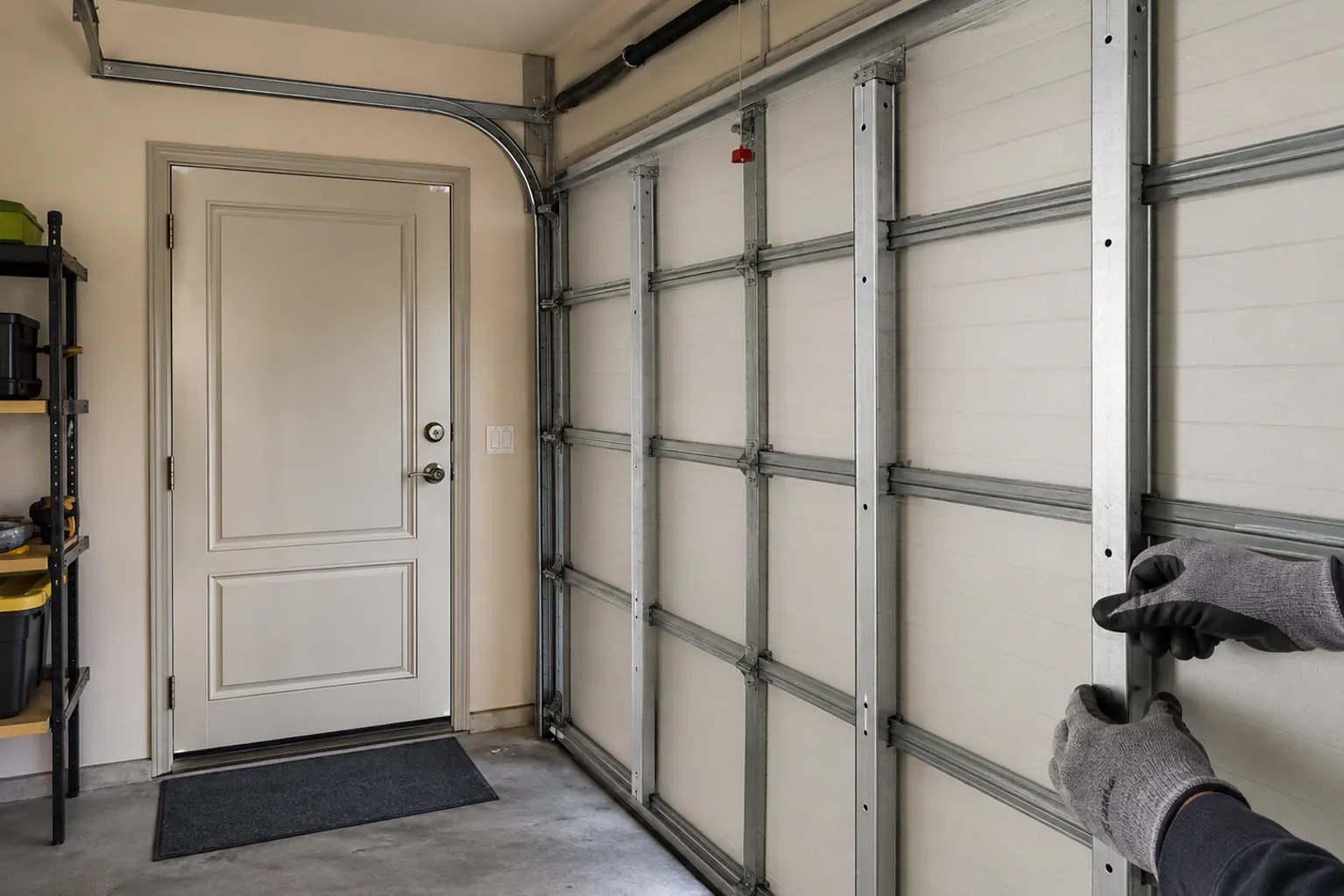
- A manufacturer-approved bracing kit. Many garage doors have a bracing system — vertical posts and hardware — designed for that door to add wind resistance before a storm. Use only the kit rated for your door and install it per instructions; a generic brace can do more harm than good.
- Reinforced track and hardware. Heavier brackets, center supports, and stronger track fasteners help, but only as part of a system matched to the door.
Improvised bracing (random lumber, straps) is not a substitute for an engineered kit or a rated door; it can fail unpredictably and give false confidence.
Entry doors and the frame
Standard entry doors matter too, and the frame is often the weak link:
- Impact-rated exterior doors resist debris and pressure far better than standard doors.
- Three hinges and a solid deadbolt with a long strike screw into the framing keep a door in its frame under pressure — the same door-and-frame integrity the exterior door and frame assessment covers for security also helps against wind.
- Double doors need active top and bottom bolts engaged into the header and threshold; the inactive leaf is a common failure point.
What to do before the season, not the storm
- Assess the garage door and entry doors early, while a contractor is available and permits can be pulled.
- Buy and fit an approved bracing kit ahead of time so deploying it is a five-minute job, not a scramble.
- Protect the door’s glazing (windows in doors) the same way you protect other openings — see storm window protection compared.
- Clear the debris that loads the doors in the first place — securing outdoor projectiles removes the flying objects that break doors and windows.
Where door reinforcement fits
Doors and windows together are the building envelope; protecting both is what keeps wind outside. The home hurricane-preparation hub sequences the whole home, the hurricane preparation timeline says when each job must be finished, and the hurricane preparedness overview frames the wider scenario. Reinforce the big openings early, with rated hardware, and let the deadline — not the forecast — decide when the work stops.
Sources reviewed
- Ready.gov: Hurricanes
- FEMA P-320: Taking Shelter From the Storm
- NOAA: Hurricane preparedness
- National Hurricane Center: Be prepared
Sources reviewed July 29, 2026. FEMA, NOAA/NHC, manufacturer instructions, and local wind-load and building code control real door-reinforcement and installation decisions.