
Most hurricane and high-wind damage to a home starts when flying debris breaks a window. Once the envelope is breached, wind pressure inside can lift a roof and push out walls. Protecting glazed openings is one of the highest-value storm defenses — and the options differ a lot in cost, effort, and how much they actually protect. This is a research-based comparison by protection type, not a hands-on ranking of brands. It is one branch of the home hurricane-preparation hub.
The safety line first: window protection is installed before a storm, from stable ground, and never after an evacuation order or once winds pick up. No window is worth a fall from a ladder or a late departure — the hurricane preparation timeline sets the deadlines.
Why windows are the priority
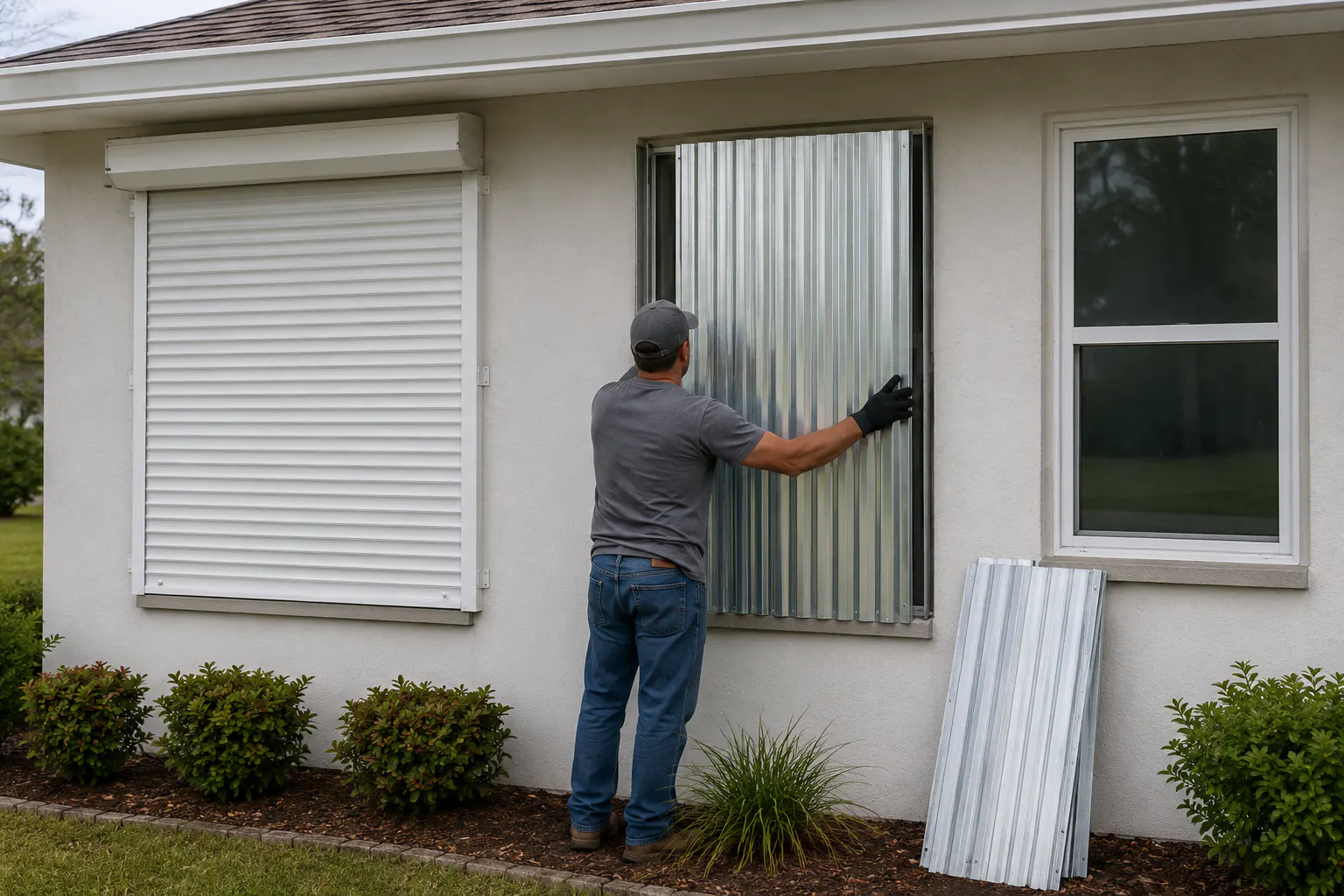
FEMA and NOAA are consistent that a breached opening is what turns a survivable storm into major structural damage. (Sources: FEMA P-320; NOAA hurricane preparedness.) Protecting windows and glazed doors — including the garage door, covered in reinforcing garage and entry doors — protects the whole building envelope, not just the glass.
The options, by protection and effort
| Option | Protection level | Trade-offs |
|---|---|---|
| Impact-resistant windows (permanent) | Highest, always in place, no last-minute work | Highest cost; a whole-window replacement and engineering job |
| Permanent storm shutters (accordion, roll-down, Bahama, colonial) | High, engineered to code, fast to close | Higher cost; professional installation and permits |
| Removable metal/polycarbonate panels | High when properly anchored to pre-installed tracks | Storage, labor to install each event, must be anchored right |
| Fabric storm screens | Moderate–high, lightweight, easier to handle | Must be rated and correctly anchored; still an install-each-time job |
| Plywood (last resort) | Lowest of these; a stopgap only | Heavy, single-use, only helps if thick enough and fastened correctly |
The pattern: permanent, engineered protection (impact glass or code-rated shutters) is the strongest, removable panels and rated screens are a solid middle, and plywood is a genuine last resort — not a first choice.
If plywood is the only option
FEMA’s guidance treats plywood as a stopgap when nothing engineered is available. If you must:
- Use exterior-grade plywood at least the thickness your local guidance specifies (commonly 5/8 inch or more), cut to overlap the opening.
- Fasten into the frame or wall structure with the right anchors — not just into the window trim — following FEMA/local instructions.
- Install it early, from the ground or a stable position, and never in wind.
Plywood over glass slows debris; it does not equal an engineered shutter, and it is not reusable after a real storm.
Buying window protection
Where window protection fits
Windows are one layer of storm hardening. The garage and entry door reinforcement guide covers the largest opening most homes have, securing outdoor projectiles removes the debris that breaks glass in the first place, and the home hurricane-preparation hub ties the layers together within the broader hurricane preparedness overview. Protect the openings early, from the ground, and let the timeline — not the weather — set when you stop.
Sources reviewed
- Ready.gov: Hurricanes
- FEMA P-320: Taking Shelter From the Storm
- NOAA: Hurricane preparedness
- National Hurricane Center: Be prepared
Sources reviewed July 29, 2026. FEMA, NOAA/NHC, and local building-code and wind-load requirements control real window-protection and installation decisions.