
The window that breaks in a hurricane is usually broken by something that was in a yard: a patio chair, a trash can, a potted plant, a piece of someone else’s fence. In high wind, ordinary objects become projectiles, and the cheapest, fastest storm defense is removing them before the wind picks up. This is one branch of the home hurricane-preparation hub.
The safety line first: this is an early job, done from stable ground, and finished well before winds arrive or the evacuation deadline — the hurricane preparation timeline sets the clock. Rushing outdoor work as a storm arrives is how people get hurt.
Why loose objects matter so much
NOAA and the National Weather Service are clear that wind-borne debris is a primary cause of storm damage and injury. (Sources: NOAA hurricane preparedness; NWS wind safety.) A single unsecured object can break a window or door, and a breached opening pressurizes the whole building. Clearing the yard both protects your own home and stops your belongings from damaging a neighbor’s.
The yard-by-yard checklist
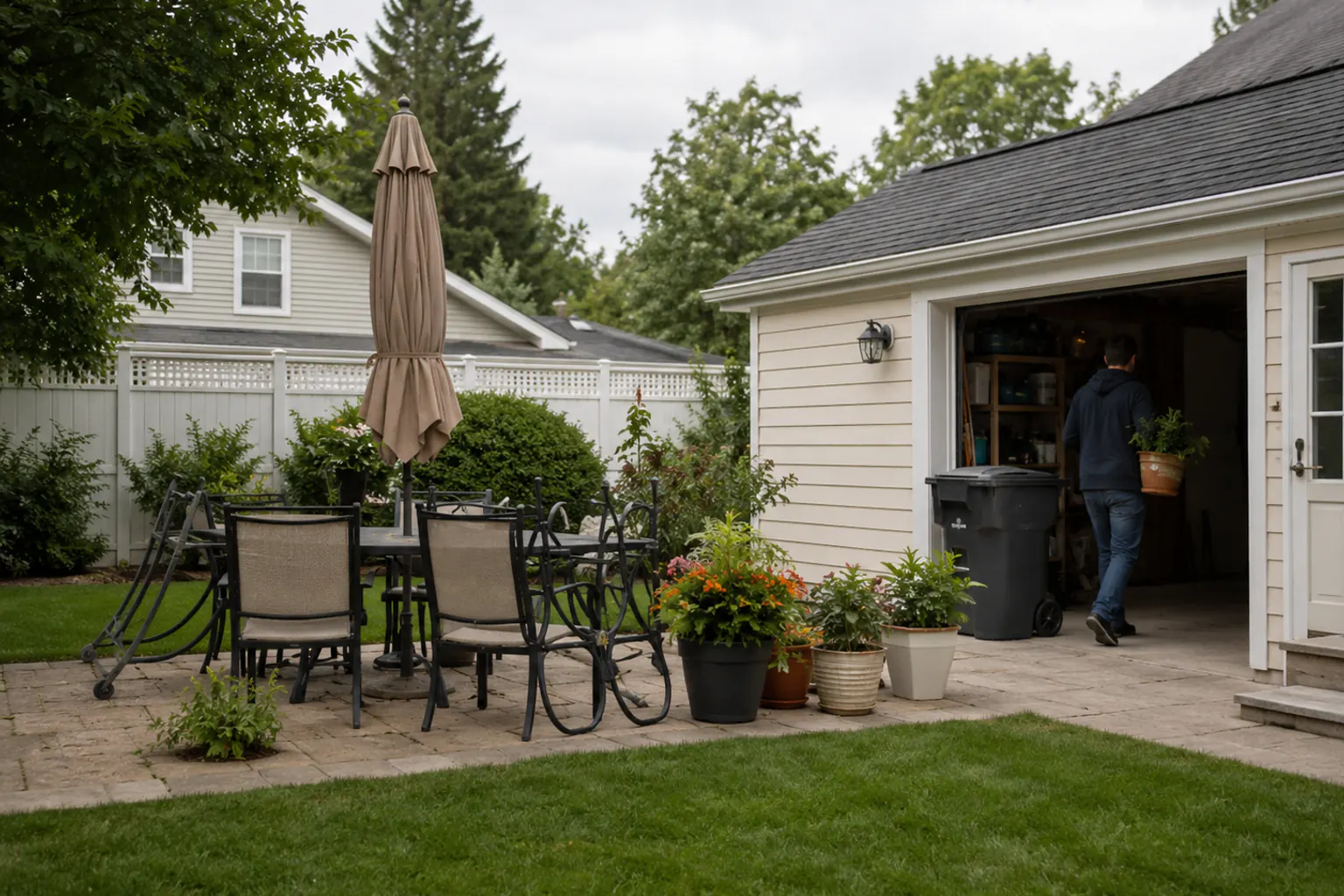
Work through the property methodically. For each item, the rule is bring it in, tie it down, or lay it flat — in that order of preference.
Bring indoors (garage, shed, or house):
- Patio furniture, cushions, and umbrellas
- Grills, propane tanks (store tanks outside away from ignition, never inside living space), and small fire pits
- Potted plants, garden decor, and hanging baskets
- Trash and recycling bins
- Children’s toys, sports equipment, and small play items
- Doormats, flags, wind chimes, and yard signs
- Tools, ladders, and loose building materials
Tie down or anchor (too big to bring in):
- Trampolines (many manufacturers advise disassembly; anchoring alone often is not enough)
- Large play structures and swing sets
- Sheds and their contents
- Boats, trailers, and stored vehicles per their own guidance
Lay flat or lower:
- Patio umbrellas removed from stands
- Antennas and satellite dishes only if the manufacturer allows and it is safe from the ground
- Tall, light items that cannot be brought in
Do not, under time pressure
- Do not climb for antennas, dishes, gutters, or tree limbs as a storm approaches — that is height work in worsening conditions.
- Do not prune large limbs last-minute. Tree work near a storm is dangerous and often ineffective; the roof and tree pre-season inspection belongs to calm weather.
- Do not handle heavy objects alone or in a rush; injuries here are common and avoidable.
- Do not keep working past the deadline. When winds rise or evacuation is ordered, stop and go inside or leave.
For apartments and rentals
Balconies and shared areas are full of projectiles too:
- Clear the balcony entirely — furniture, plants, grills, and decor come inside.
- Ask management what they secure (common-area furniture, pool items, signage) and by when.
- Follow the building’s storm plan for balconies, windows, and shared spaces.
Where this fits
Removing debris is the cheapest layer of storm hardening, and it directly protects the windows and doors you have worked to reinforce. The home hurricane-preparation hub sequences all of it, within the wider hurricane preparedness overview. Clear the yard early, keep the work at ground level, and stop when the timeline says to.
Sources reviewed
- Ready.gov: Hurricanes
- NOAA: Hurricane preparedness
- National Hurricane Center: Be prepared
- National Weather Service: Wind safety
Sources reviewed July 29, 2026. NOAA/NHC, NWS, and local emergency-management guidance control real storm-preparation and safety decisions.