
In calm conditions, check one authorized door’s normal closing, latching, and interior release from safe footing. Report binding or damage before shopping for reinforcement. If there may be a break-in, unsafe occupancy, fire, or another immediate threat, do not inspect or enter; move to safety and call 911.
This assessment is observational. It does not teach bypass or forced-entry methods, and it does not tell a homeowner to attack-test the assembly. A residential opening is not proven secure because a screw feels tight or a product package uses a high-security phrase.
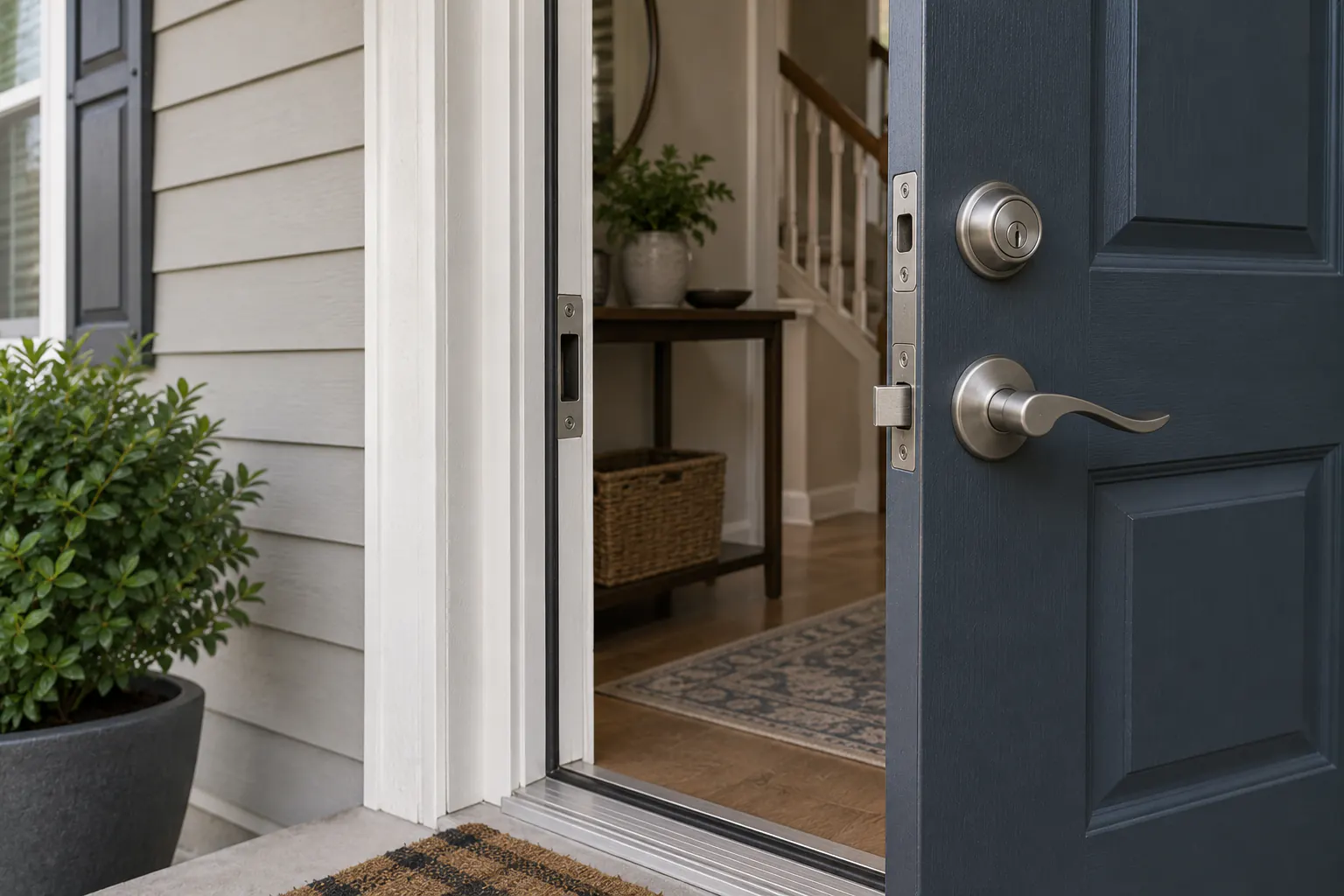
If the door is damaged now
Call 911 from a safe location for a suspected break-in in progress, evidence of forced entry with unknown occupancy, fire, or an immediate threat. Do not enter, touch the opening, or attempt a repair before police clearance.
After clearance, stop using the opening and contact the landlord or qualified professional when:
- the door will not close or latch;
- the frame is split, loose, charred, wet, rotten, or shifted;
- glass is broken or unstable;
- a hinge, closer, lock, strike, or access-control component is detached;
- a fire-rated or self-closing door is involved;
- the interior release binds or requires a missing key;
- the opening is the only practical exit;
- wiring, batteries, or wet electrical equipment are exposed.
Temporary boarding, glazing, access control, and structural repair can affect fire escape, ventilation, utilities, evidence, and insurance. Use the responsible service rather than improvising an occupied-space barricade.
Identify the opening before judging hardware
Record:
- location and whether it opens to outdoors, a corridor, garage, stair, balcony, or shared vestibule;
- owner, landlord, association, or building responsibility;
- door material and visible condition without drilling or cutting;
- inward or outward swing and exposed hinge side;
- frame material and surrounding wall type if known from plans or qualified inspection;
- glazing, sidelights, mail slots, pet doors, vents, and nearby operable windows;
- lock, latch, closer, alarm contact, electric strike, intercom, and access-control components;
- fire label, certification marks, manufacturer labels, and building records;
- whether the opening is required for fire escape or accessibility.
Do not remove labels, paint over them, or assume an unlabeled opening is ordinary. Multifamily corridor and garage doors often have fire and smoke functions that a cosmetic renovation can damage.
Observe normal operation from both sides
Use only authorized keys and ordinary operation.
- Open the door fully and check that the path, threshold, mat, closer, and floor do not obstruct travel.
- Close it slowly without pushing the latch. Note rubbing, sagging, bouncing, or a closer that stops short.
- Confirm the latch enters the strike consistently under ordinary closing.
- Lock and unlock from the normal side using each authorized method.
- Confirm the interior release works quickly without a hidden key, special knowledge, or excessive effort.
- Repeat under the normal weather and seal condition, not while forcing the door against swelling or misalignment.
- Ask every responsible occupant, including anyone with limited grip, reach, vision, or cognition, to demonstrate their normal exit method safely.
Do not repeatedly slam the door, pull against a locked bolt, or increase closer force to hide alignment. Binding is information that the opening needs service.
Read alignment clues
Alignment problems often leave ordinary signs:
- rub marks at the top, latch edge, or threshold;
- a latch that contacts above, below, or outside the strike opening;
- a door that must be lifted, pulled, or pushed to lock;
- uneven gaps that changed over time;
- loose hinge leaves or visible movement at fasteners;
- cracked paint or wood around the strike and hinges;
- daylight, water, or drafts that indicate seal or frame movement;
- a deadbolt that does not extend freely with the door closed;
- a self-closing door that remains ajar.
These signs do not identify one universal repair. Causes can include loose hardware, worn hinges, seasonal swelling, settlement, impact, frame damage, failed anchors, floor movement, or an incorrect installation.
Do not enlarge a strike opening, grind a bolt, bend hinges, plane a fire door, or drive longer fasteners until the construction and code implications are known.
Inspect the frame and strike as a system
From the visible surface, look for splits, missing material, corrosion, prior patching, stripped holes, movement, and fasteners that no longer sit properly. Gently hand-check visible trim and hardware for movement without levering or removing it.
A strike plate transfers load into the jamb and, depending on construction, into framing or another structural element. The correct fastener diameter, length, material, corrosion resistance, pilot hole, edge distance, and anchor depend on wood, metal, masonry, composite, fire-rated construction, and hidden services.
This is why a universal “replace with three-inch screws” instruction is incomplete. A long screw can miss useful framing, split material, strike wiring or a concealed service, interfere with a rated assembly, or be inappropriate for a metal frame.
Use plans, manufacturer instructions, certification, and qualified installation. Renters should report loose or damaged hardware and obtain written approval before alteration.
Check hinges without publishing defeat details
Confirm each hinge leaf sits flat, fasteners appear intact, and there is no visible cracking, severe corrosion, or unusual movement. Look for a sagging door and inconsistent gaps.
Outward-swinging doors and removable hinge components require site-specific hardware and code review. Do not modify hinge pins, add improvised parts, weld, drill a rated door, or rely on an online trick. A door professional can select listed or compatible hinge protection for the exact opening.
Keep fingers clear of hinge gaps and supervise children during inspection.
Evaluate the lock by documented performance
Record the exact manufacturer, model, certification marks, key-control arrangement, battery, app, and manual. Search the current certification directory and recall information; do not rely only on marketplace copy.
ANSI/BHMA residential standards evaluate categories such as security, durability, and finish under laboratory conditions. The standard source notes that actual performance varies with installation, door and frame construction, maintenance, and environment.
Ask:
- Is the exact model certified to the applicable current standard?
- Is it installed on a compatible door and preparation?
- Does the latch or bolt project freely without forcing the door?
- Can occupants release it from inside under smoke, darkness, and power loss?
- Does a smart lock retain mechanical access and a documented low-battery plan?
- Who controls duplicates, codes, app accounts, and revocation?
- Is the cylinder, trim, and latch showing wear or damage?
Do not perform picking, bumping, drilling, prying, impact, or destructive tests at home. Those activities can damage the opening, reveal misuse information, and do not reproduce a standard laboratory evaluation.
Include glass and adjacent openings
Glazing near a lock changes privacy, safety, fire, and security decisions. Do not assume film makes ordinary glass burglary-resistant or safety-rated. Film type, glass type, frame capture, edge attachment, installation, egress, and impact standard all matter.
Use a qualified glazier for cracked glass, safety glazing, fire-rated glazing, security glazing, and retrofit compatibility. Do not cover a vision panel required for safe operation or install a barrier that blocks emergency release.
Mail slots, pet doors, vents, sidelights, and nearby windows need their own inspection without publishing reach or bypass paths. Choose a solution through a site assessment.
The window security guide covers fall protection, egress, guards, stops, and privacy separately. The door is one layer of the egress-safe home security plan, and the layered security inspection walks the whole property in one pass.
Preserve fire and accessibility functions
USFA advises two ways out of every room where possible and unobstructed doors and windows. The interior release should be understandable and operable by the people who depend on it.
Avoid:
- double-cylinder or keyed-interior arrangements where they delay escape or violate local rules;
- surface bars, chains, furniture, or portable devices that cannot be released immediately;
- changes that prevent a self-closing fire door from closing and latching;
- hardware requiring tight grasping, pinching, twisting, high force, or unreachable controls on an accessible route;
- smart-only release with no safe power and account failure plan;
- mats, shoes, cords, or packages narrowing the exit path.
The security egress warning should be reviewed before adding a secondary lock.
Separate observations from decisions
Use an inspection record:
| Observation | Immediate safety action | Responsible review | Status |
|---|---|---|---|
| Door does not latch normally | keep opening supervised or use alternate authorized entry | landlord/door professional | open |
| Frame visibly split | stop relying on opening as secure | locksmith/contractor/building authority | open |
| Interior release difficult | preserve another safe exit and arrange prompt service | locksmith/fire/accessibility review | urgent |
| Smart lock battery alerts | follow manufacturer replacement and mechanical-key plan | household/installer | planned |
| Fire door held open | remove unauthorized obstruction if safe and report | management/fire authority | urgent |
Do not write key codes, bitting, alarm zones, or detailed weaknesses in a document stored in the cloud or shared with contractors who do not need them.
Decide between maintenance, repair, and replacement
Maintenance can include manufacturer-approved cleaning, lubrication, battery replacement, and tightening only when the instructions, authority, and material are clear. Repair may involve alignment, hinges, strike support, closer, frame, glazing, or access control. Replacement should follow a complete opening assessment rather than a lock-only purchase.
Get written scope for:
- exact products and certification;
- door and frame repair;
- fire-rating and accessibility preservation;
- keying, code, account, and credential turnover;
- warranty, service, and emergency response;
- finish and weather exposure;
- permits, landlord approval, and inspection;
- disposal of old keys, codes, and connected accounts.
For alarm-linked or connected locks, include what happens during power, internet, phone, cloud, and vendor failure.
An ordinary door-operation check
- Clear the approach and exit path.
- Photograph the opening generally without revealing key details.
- Record labels and responsibility.
- Operate the door normally from both sides.
- Note latch and bolt alignment without forcing them.
- Observe hinges, frame, strike, glazing, closer, and threshold.
- Test only authorized keys and documented manual release.
- Confirm a second exit where the home plan provides one.
- Ask a vulnerable occupant to demonstrate the normal release safely.
- Assign each defect to the appropriate owner or professional.
Patrick’s practical locksmithing and renovation experience informs this sequence, but the page does not certify an opening or replace a licensed site inspection.
Sources reviewed
- NYPD: Residential Security Surveys and Safeguard Your House
- U.S. Fire Administration: Home Fire Escape Plans
- ANSI/BHMA: Residential Locksets and Latches
- UL Solutions: Access and Egress Control Locking Configurations
Sources reviewed July 14, 2026. A damaged, fire-rated, shared, accessibility-sensitive, or otherwise uncertain opening needs the responsible authority or qualified door professional, not a visual-inspection workaround.