
Confirm a window’s escape and child fall-protection roles before adding a lock, guard, film, or stop. In ordinary safe conditions, inspect normal operation from inside on stable footing. Broken glass, suspected entry, unknown construction, and conflicts with egress belong to the responsible authority or qualified professional.
The right improvement depends on window type, floor, exterior access, glass, frame, child and disability needs, fire plan, climate, landlord authority, and local code. There is no universal pin, bar, film, or opening limit that belongs on every window. Every option below answers to the egress rule set in the home security hardening and safe exit plan — hardening a window never justifies blocking an exit.
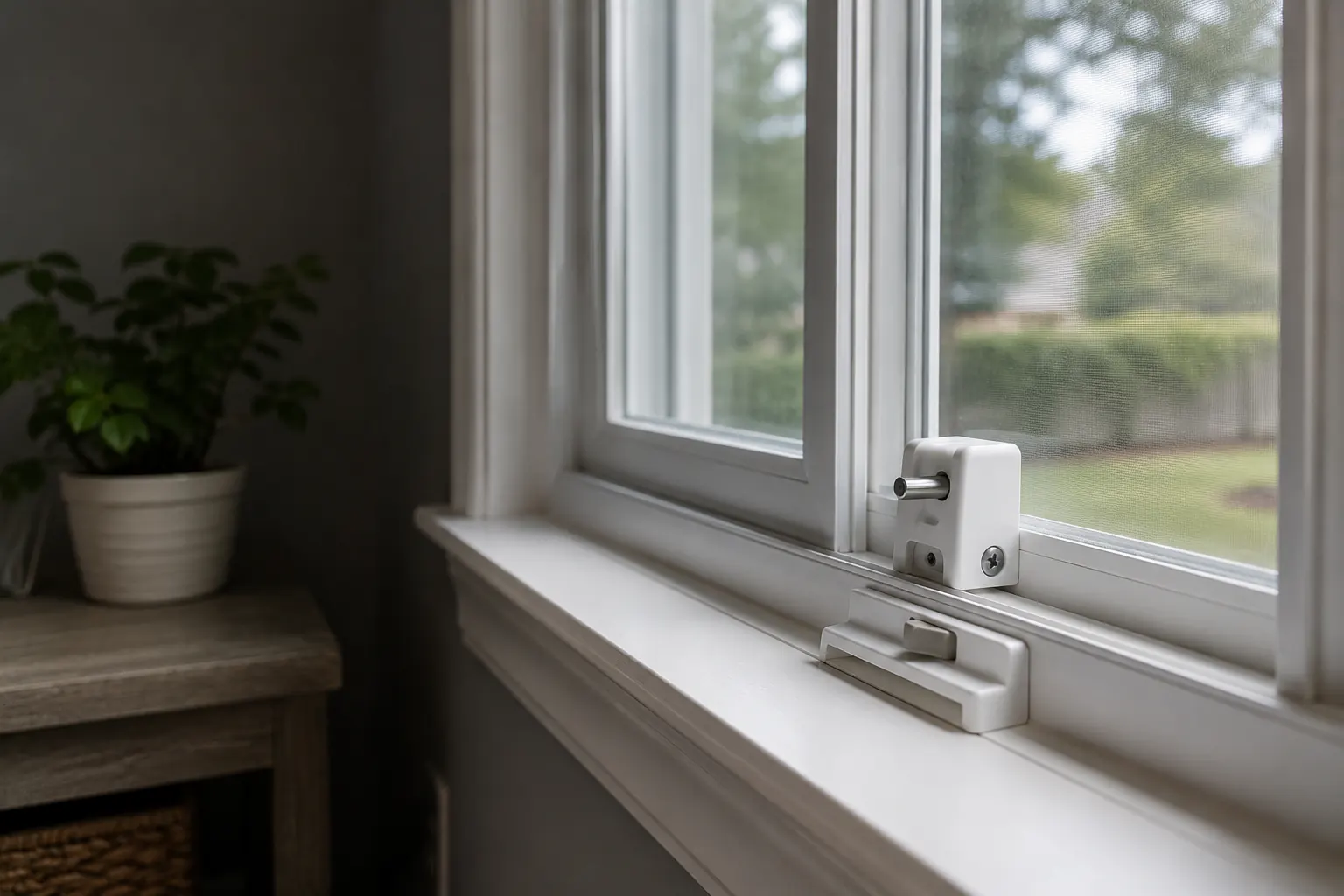
If a window is broken or open unexpectedly
Stay outside or move to a secure area and call 911 for a suspected break-in in progress or an immediate threat. Do not enter, search, confront, or disturb possible evidence.
After police clearance:
- Keep people and pets away from unstable glass and sharp debris.
- Do not touch wet electrical equipment, damaged wiring, or a window near a downed line.
- Photograph the opening from a safe location for the landlord or insurer.
- Contact emergency glazing, management, or the responsible professional.
- Preserve at least one safe exit and do not board occupants into a room.
- Do not leave an opening covered with loose material that can fall, obstruct a fire escape, or conceal a structural problem.
Temporary boarding and glazing require material, attachment, fire-escape, weather, and structural decisions. Treat them as professional work when the home remains occupied.
Classify each window before changing it
Create a private schedule with:
- room and floor;
- window type and opening direction;
- height above interior floor and exterior grade;
- access from porch, balcony, roof, stair, tree, fence, bin, garage, or grade;
- fire-escape or rescue role;
- child fall-protection requirement;
- glass type and condition if documented;
- frame and sash material;
- lock, latch, crank, balance, track, and screen condition;
- guard, limiter, stop, bar, film, sensor, or air conditioner;
- owner, landlord, association, or building responsibility.
Do not publish this map or include detailed weaknesses in a contractor request sent to unnecessary recipients.
USFA recommends including doors and windows in the fire-escape map and finding two ways out of every room where possible. The actual building plan and local fire authority determine which openings must remain available.
Start with ordinary operation and repair
From inside on stable footing, open and close the window normally. Do not lean out, stand on furniture, remove a sash, or test from a roof or ladder.
Look for:
- a lock or latch that does not engage consistently;
- loose, cracked, corroded, or missing hardware;
- frame or sash movement;
- broken glass, seal failure, rot, water damage, or distorted tracks;
- a balance or support that lets the sash fall;
- a crank that strips or binds;
- a screen mistaken for a fall barrier;
- a guard or stop that is loose, damaged, or hard to release;
- an air conditioner or insert that changes closure and support;
- an emergency window blocked by furniture, storage, landscaping, or an exterior obstruction.
Repairing ordinary damage and restoring the intended lock can be more useful than adding another device to a window that no longer closes correctly.
Do not drill a vinyl, aluminum, composite, historic, fire-rated, or unknown frame without manufacturer and professional guidance. Drilling can damage glass, drainage, reinforcement, balances, wiring, weather performance, and warranty.
Separate four different security functions
Privacy
Curtains, shades, and landscaping can reduce casual visibility into routines and valuables. They must not block emergency operation, create a fire hazard, hide exterior conditions the household needs to see, or violate common-area rules.
Reflective or privacy film changes with lighting: a treatment that appears private by day may reveal the interior at night. Verify the real day and night condition from lawful viewpoints without recording neighbors.
Detection
Contact, vibration, or glass-event sensors can report activity, but they do not physically strengthen the window and may create false alarms. Their value depends on placement, battery, hub, network, settings, monitoring, and response.
Use the alarm and camera continuity guide before treating a wireless sensor as an outage-ready layer.
Delay
Locks, compatible stops, guards, shutters, glazing systems, and frames can delay ordinary unauthorized opening or breakage when designed and installed for that purpose. Marketing terms such as “security film” do not prove the complete window assembly meets an impact or forced-entry standard.
Glass performance depends on glass type, thickness, film or laminate, edge attachment, frame capture, anchors, opening size, and installation. Use a qualified glazier and ask for the exact test standard and system scope.
Safe escape and fall prevention
Guards and limiting devices may reduce child fall risk. They can also obstruct emergency escape if selected or installed incorrectly.
CPSC states that screens are not effective child fall protection and advises that where guards are installed, at least one window in each room remain easily usable for fire escape. Local rules can be more specific. New York City, for example, has detailed guard obligations and excludes designated emergency exits; that is local context, not a national template.
Avoid generic window-bar advice
Fixed bars or grilles can trap occupants and delay firefighters. Quick-release features must be compatible with the opening, local code, children, disability, corrosion, paint, maintenance, and actual fire plan.
Do not install, padlock, wire, or improvise bars. Do not rely on a hidden key. Ask the fire/building authority and qualified installer which listed system, release, spacing, and inspection requirements apply.
The fire-egress security warning covers bars, keyed interior locks, secondary devices, and blocked windows as one escape system.
Treat opening limiters and stops carefully
A limiter can reduce how far a window opens, but products differ in load capacity, release, intended age group, window compatibility, and emergency function.
Check:
- current product instructions and certification;
- whether the opening is an emergency exit;
- who must release it and under what conditions;
- whether the release can be reached and operated with limited grip or vision;
- child resistance versus adult emergency use;
- interference with screens, balances, locks, cleaning, ventilation, or fire service;
- landlord approval and local requirements;
- inspection after painting, corrosion, impact, or seasonal movement.
Do not use a loose block, improvised screw, nail, dowel, or furniture as a substitute for a designed system where escape or child safety is involved.
Include window air conditioners and inserts
A window air conditioner changes the opening’s weight, closure, weather seal, fall risk, and access. Installation requirements vary by unit, window, floor, bracket, building facade, and local law.
Do not rely on the sash alone or a casual wedge. Use the manufacturer instructions, landlord approval, appropriate support, and professional installation where required. Keep the electrical circuit, condensate path, fire escape, and exterior fall zone in the plan.
NYPD residential guidance notes that air conditioners should be secured to the opening. That statement does not define the correct support for every building.
Choose compatible hardware without claiming a universal winner
Before buying, document:
- exact window type, material, dimensions, and direction;
- security, fall-protection, privacy, or weather purpose;
- emergency-exit role;
- required standards or local approval;
- drill/no-drill and warranty restrictions;
- indoor release and accessibility;
- corrosion and climate exposure;
- maintenance and replacement parts;
- sensor battery, protocol, hub, and support period.
Avoid products whose listing does not identify compatible windows, test standard, installation method, release, or responsible manufacturer. A high review count does not establish fire safety or structural performance.
ReadyLience will not rank window locks, alarms, films, or guards until representative products and assemblies can be evaluated under the testing methodology.
Renter-safe boundaries
Renters can:
- report broken locks, frames, balances, and glass in writing;
- use curtains or shades consistent with the lease and fire plan;
- improve account security for approved sensors or cameras;
- keep windows closed and normally locked when appropriate;
- maintain a clear escape route;
- request approved child guards or repairs through management;
- use a written inventory and photograph existing condition.
Do not drill, replace glazing, install bars, modify a fire escape, attach exterior equipment, or change common-area appearance without written approval and qualified work. The renter-friendly home security guide covers reversible routines and devices across the whole apartment.
Inspect after storms, renovation, and painting
Paint, caulk, weather stripping, new flooring, settlement, storm impact, and facade work can change window operation. After work, verify from inside that intended locks, releases, guards, and emergency openings still operate normally.
Do not paint over a release, sensor, drain, label, fastener, or moving component. Do not use a security device to hold a damaged sash in place.
A safe window audit
- Confirm the room’s fire-escape plan.
- Clear the interior approach without removing required child protection.
- Operate the window normally from stable footing.
- Record lock, frame, glass, screen, guard, limiter, and sensor condition.
- Check privacy in ordinary day and night lighting.
- Identify exterior access only from safe lawful ground.
- Confirm landlord, code, and professional responsibility.
- Assign repairs before shopping for additions.
- Practice adult emergency release without allowing a child to defeat protection.
- Record the next inspection date.
Never climb, pry, strike, cut, or defeat-test a window. The audit is designed to find maintenance and planning gaps, not simulate an intruder.
Sources reviewed
- U.S. Fire Administration: Home Fire Escape Plans
- U.S. Consumer Product Safety Commission: Childproofing and Window Guards
- NYPD: Safeguard Your House
- NYC Housing Preservation and Development: Window Guard Safety
Sources reviewed July 14, 2026. Emergency-exit, glazing, fall-protection, accessibility, rental, and local legal questions need the applicable authority or qualified professional before a window is changed.