
A useful power-continuity plan does not start with a generator or a shopping cart. It starts with a time window: what must keep working for the next 4, 12, or 24 hours, and what can wait? That question works in an apartment, a rental, a house, or a temporary living situation because it begins with the household rather than the equipment.
This is an orientation page. Use it to divide the next day into decisions, then send each decision to the guide that owns it. The complete backup power framework owns load and equipment planning; the first-actions checklist owns the live outage.
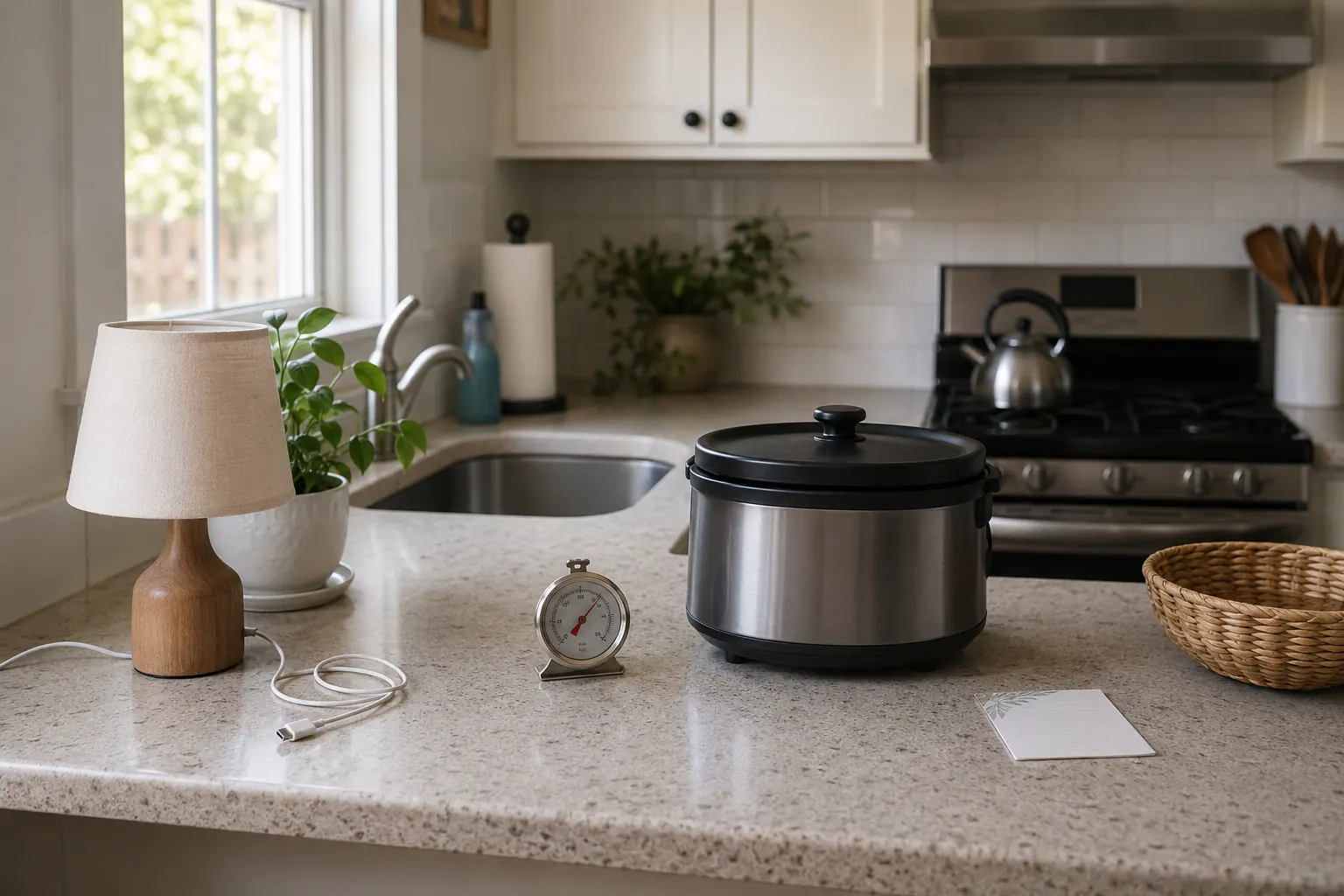
Start with functions, not rooms
Write down the function before naming an item. A household normally needs some combination of safe movement, information, food-temperature evidence, drinking water, communication, care continuity, access, and a safe place to sleep. A phone charger, lantern, refrigerator thermometer, paper contact card, battery, and departure plan may serve different functions even when they are stored in the same drawer.
| Function | Useful planning question | Do not assume |
|---|---|---|
| Light | Can each person move safely and find the first light? | One lantern can light every route |
| Communication | Can the household receive alerts and send a short update? | Local internet will work because the router has power |
| Food | Can refrigerator and freezer decisions use time and temperature? | Food is safe because it looks or smells normal |
| Water and sanitation | Can people drink, wash, and manage a changed utility? | A municipal tap will remain usable without checking notices |
| Care | Is every individually required device or medication covered by its approved plan? | A general battery calculation is medically adequate |
| Comfort and departure | What condition makes staying no longer reasonable? | A predicted restoration time is a safety guarantee |
The CDC recommends identifying emergency lighting, charging, alarms, and backup sources before an interruption. That is a planning direction, not a claim that any one setup will meet a household’s needs. (Source: CDC, Power Sources.)
The first four hours: preserve options
At the beginning of an interruption, the goal is to avoid spending options prematurely. Use the immediate power-outage actions first: account for people, check for danger, preserve cold air, receive official information, and use safe lighting.
For the first four hours, keep refrigerator and freezer doors closed as much as possible, record the outage start time, and avoid turning a normal kitchen into a power experiment. FoodSafety.gov gives a planning window of about four hours for an unopened refrigerator; its item-specific charts control later decisions. The power-outage food-safety guide is the owner for temperature, cooler, refreezing, and discard questions.
Choose one communication routine: an out-of-area contact, a short text format, and a next check-in time. The family communication plan keeps that routine usable if a household member is away when the outage begins.
The twelve-hour horizon: allocate energy and attention
By the middle of a day, the household usually needs a deliberate energy budget. List the loads that are actually connected, their measured or documented watts, the time they need to run, and what happens if they do not. Then leave a reserve for the load that becomes important later.
The runtime calculator exposes the arithmetic behind a portable-battery estimate. It cannot establish equipment compatibility, internet availability, a safe indoor temperature, or an approved medical backup. Use it to compare a reduced plan, not to declare a battery adequate.
At twelve hours, ask these questions:
- Is light available at every necessary route, rather than all at one table?
- Is phone energy being preserved for alerts and check-ins rather than routine use?
- Are food decisions following recorded time and appliance temperature?
- Does the household have drinking water and a usable sanitation plan?
- Has the indoor environment or a person’s individual plan created a reason to leave?
- Does the building still provide safe access, stairs, water, and communication?
Apartment residents should not infer that a visible building generator serves their unit, elevators, water pressure, corridor lights, or entry system. The apartment blackout plan maps the questions management can answer before the next event.
The twenty-four-hour horizon: choose a sustainable next day
Past a day, the question changes from “what can this battery run?” to “what can this household sustain safely until the next verified recharge, resupply, or relocation?” A bigger battery can extend one load, but it cannot remove every constraint around food, temperature, water, fuel, sanitation, accessibility, or care.
Make a short status board with the actual next check:
| System | Record now | Decide before |
|---|---|---|
| People and care | Who is present, contact method, approved care plan status | Backup or destination becomes unavailable |
| Food | Outage start, appliance temperature, cooler condition | The relevant food-safety threshold |
| Power | Stored energy, active loads, realistic recharge path | Protected reserve is consumed |
| Water and sanitation | Available amount, access, current notices | The household’s practical reserve ends |
| Building and weather | Indoor conditions, stairs, alerts, damage, access | Conditions become unsafe or official direction changes |
| Departure | Destination, route, vehicle or transport, contact update | The route or destination becomes harder to use |
This is not a scorecard. It is a way to notice the next system that will fail. For a planned interruption, use the separate planned utility-outage checklist while power is still available. For a home-office dependency, use remote work during a power outage to define the smallest credible work continuity layer.
Keep the plan proportional to the home
A renter may have a small battery, task lights, water containers that can be lifted safely, a paper contact plan, and an earlier relocation threshold. A homeowner may have more equipment choices but also more systems competing for attention. Neither household benefits from copying a large-house generator plan without an operating location, fuel method, cord route, and documented loads.
Reduce demand before adding equipment. Turn off deferrable loads, use task lighting, defer high-watt heating or cooking decisions, and preserve the next communication reserve. Then test the exact plan in ordinary conditions. A label cannot reveal a blocked stair, inaccessible cable, router that has no upstream service, or appliance that starts differently than expected.
Make a one-sheet continuity schedule
Put the plan into a single page that another adult can follow without opening a spreadsheet. It should identify the location of first lights, the exact way to receive official information, the active loads, the protected energy reserve, the next food check, and the departure trigger. Keep it near the household contacts, not buried inside a storage bin.
Do not write a complex manual. A useful sheet may have only three lines for each horizon: what is running, what is checked, and what changes the plan. For example, the four-hour line can say “doors closed, first lights placed, one text sent.” The twelve-hour line can say “record food temperature, preserve phone reserve, confirm indoor conditions.” The twenty-four-hour line can say “verify recharge or relocation before the protected reserve ends.” Review the sheet after any move, new household member, major appliance change, or support-plan change.
Treat restoration as a phase of the plan
Power returning is not the finish line. Food still needs a recorded decision, chargers and batteries need restoration, alarms and clocks may need checking, and damaged or abnormal equipment must remain out of service. The household reset after an outage routes those recovery tasks, while safe load restoration owns electrical stop conditions.
A calm monthly drill
Choose a normal evening. Locate first lights, find the paper contact plan, measure one intended load, check appliance thermometers without holding doors open, and identify the exit and destination information. Record one friction point. The next useful purchase, repair, or household conversation should come from that observation, not from an imagined worst case.
Sources reviewed
- Ready.gov power-outage hazard information sheet
- CDC Power Sources
- FoodSafety.gov food safety during a power outage guidance
Sources reviewed August 3, 2026. Current local authorities, utilities, manufacturers, and care teams may give more specific instructions.