
Start with one item you already own and a clearly named low-consequence use. Confirm its identity, history, condition, and applicable instructions before moving it into a project. A free-looking item or disaster pile is not a shortcut around ownership, access, contamination, recalls, or qualified-work requirements.
Safe reuse can reduce waste and cost. EPA places reuse within disaster-material planning, but it also notes that decontamination, sampling, code approval, and specialized disposal may be necessary. The useful lesson is conditional: reuse is valuable only after ownership, hazard, legal, functional, and documentation gates pass.
This cluster publishes no looting, trespass, lock bypass, utility scavenging, vehicle stripping, infrastructure removal, disaster-site entry, chemical-container repurposing, or unknown-material cleaning method. When a gate is unresolved, leave the item alone and use a lawful alternative.
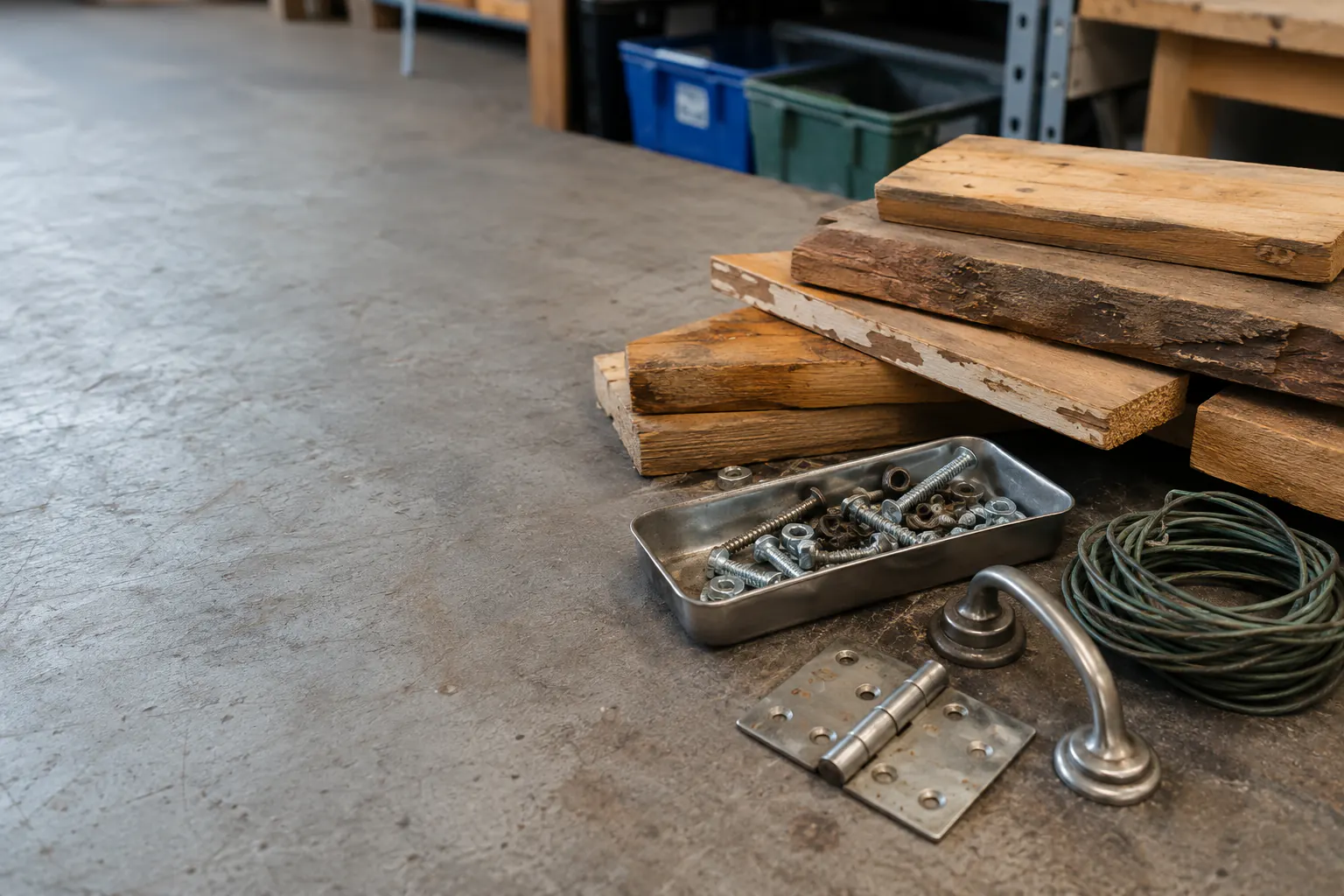
Use this reuse family
- How to Assess Materials You Own or Have Permission to Reuse builds the identity, history, recall, condition, compatibility, cleaning, and intended-use file for ordinary controlled material.
- Safe Household Substitutions When Stores Are Closed separates low-consequence convenience substitutions from prohibited life-safety, medical, food, structural, electrical, gas, combustion, and pressure improvisation.
- How to Use Repair Cafes and Tool Libraries Safely verifies program scope, item acceptance, volunteer or instructor boundaries, borrowing rules, condition, instructions, PPE, and return custody.
- How to Organize a Legal Neighborhood Material Exchange creates explicit transfer, privacy, recall, condition, pickup, and no-pressure controls without publishing household stockpiles.
- Why Disaster Debris Is Not Free to Take joins ownership and no-entry rules to a mandatory pre-touch route into the existing debris-hazard owner.
- Reuse Inventory and Repair-Priority Worksheet records controlled items and ranks projects by household impact, evidence, skill, parts, cost, and stop conditions without declaring a repair safe.
The post-storm debris warning covers electrical, structural, chemical, biological, asbestos, lead, battery, cylinder, sharp, tree, lifting, flood, sewage, and fire hazards. Use the damage-documentation guide from a safe authorized position and without delaying emergency or urgent protective action. The responsible owner, authority, insurer, or investigator controls evidence and movement requirements.
Pass ownership before condition
Do not inspect an item physically until access and ownership are resolved. Looking abandoned does not establish abandonment. A curb, sidewalk, alley, vacant building, damaged home, rental unit, storage room, common area, construction site, contractor pile, dumpster, right of way, public facility, vehicle, vessel, utility corridor, farm, forest, or disaster zone can involve an owner, tenant, landlord, insurer, lender, contractor, municipality, utility, waste hauler, Tribal authority, land manager, evidence custodian, or recovery program.
FEMA’s private-property debris framework illustrates how formal disaster removal can require legal authority and property-owner right of entry. That government funding framework does not decide a resident’s local property rights, but it makes one boundary visible: even organized debris removal does not treat private property as ownerless.
Require affirmative authorization for the exact item, quantity, location, date, purpose, and method. Silence, an open gate, an absent owner, a social post, a handwritten “free” sign with no verified source, prior neighborhood custom, or another person’s claim is not enough when ownership is uncertain.
Record who has authority to transfer the item and how that authority was verified. Permission to move debris to an approved curb is not permission for a third party to take it. Permission to borrow is not permission to modify, lend onward, sell, discard, or keep.
Keep emergency restrictions separate
An owner cannot override every emergency, utility, environmental, building, traffic, evidence, public-health, waste, or access restriction. A disaster declaration does not suspend property law or make unsafe entry necessary.
Check current emergency-management, law-enforcement, fire, utility, building, environmental, public-works, waste, landlord, insurer, and site-controller instructions. Do not cross closures, tape, fencing, barricades, posted limits, responder work zones, rail property, road traffic, floodwater, unstable ground, or utility boundaries.
Civil unrest, supply interruption, or hardship does not create a salvage exception. Do not approach damaged businesses, homes, vehicles, warehouses, infrastructure, or unattended deliveries. Use household inventory, authorized community programs, legitimate retailers, formal aid distribution, or explicit owner-led exchanges.
Pass the hazard gate without touching
Survey from a stable authorized position. Stop for unknown history or any sign of:
- downed or low lines, service equipment, panels, batteries, solar components, generators, or wet appliances;
- unstable walls, roofs, floors, stairs, masonry, glass, trees, suspended loads, sharp metal, nails, or heavy items;
- floodwater, sewage, mold, wildfire or structure-fire residue, ash, soot, animal waste, medical waste, or pests;
- fuel, oil, pesticide, cleaner, paint, solvent, treated wood, compressed cylinder, refrigerant, or unknown container;
- suspected asbestos-containing, lead-painted, PCB-containing, chemically treated, or industrial material;
- a vehicle, vessel, tank, utility component, safety device, child product, food-contact item, medical item, or load-bearing component;
- missing labels, altered serial numbers, removed guards, cut cords, swollen cells, corrosion, odor, heat, leakage, residue, staining, distortion, water line, or fire exposure.
Do not open, smell, taste, test, plug in, charge, pressurize, cut, sand, drill, wash, disassemble, or move an uncertain item. PPE does not grant entry or identify a hazard. Route the condition to the exact utility, fire department, building official, environmental or waste authority, public health, manufacturer, qualified trade, industrial hygienist, or hazardous-material professional.
Preserve identity and history
An item without history can hide incompatible materials, damage, recalls, contamination, unauthorized modification, missing components, counterfeit parts, or a use outside its rating. Record:
| Gate | Evidence needed | Default if missing |
|---|---|---|
| Ownership | Verified owner/controller and explicit transfer scope | Do not enter, touch, or take |
| Event history | Storage, use, impact, water, fire, chemical, repair, and modification history | Do not reuse |
| Identity | Manufacturer, exact model/material, label, rating, age, parts, and instructions | Do not put into service |
| Legal status | Current recalls, bans, code, permit, lease, HOA where applicable, disposal and transfer rules | Hold or reject |
| Hazard | Qualified clearance for plausible electrical, structural, chemical, biological, fire, and pressure hazards | Isolate and escalate |
| Compatibility | Exact dimensions, material, load, environment, system, fastener, voltage, pressure, temperature, and use match | Do not substitute |
| Function | Low-consequence intended role and a responsible inspection/test route | Do not rely on it |
| Documentation | Transfer, photos, condition, instructions, receipts, claim/warranty status, and disposition | Keep out of critical use |
Cleaning cannot reconstruct history. A clean surface does not prove the interior, coating, insulation, wiring, battery, structure, pressure boundary, food-contact status, or contamination is suitable.
Screen consumer products before exchange
CPSC warns that used products can be hazardous and recalled. Its rules can apply to people and organizations that sell or distribute consumer products, including some free transfers. Selling a recalled product is unlawful; a familiar appearance or years without an incident does not cancel a recall.
Check the exact product identifier against current CPSC and manufacturer information. Follow the exact remedy. Do not sell, donate, swap, or give away an item that the remedy says to stop using, destroy, return, repair, or dispose of through a special route.
Reject missing model labels, serial removal, absent guards, altered cords, homemade battery packs, unknown chargers, modified fuel equipment, incomplete child products, damaged helmets or protective equipment, expired life-safety equipment, and anything that requires a buyer to “just be careful.” Keep medical devices, medicines, child restraints, infant sleep products, food-safety equipment, fire/CO alarms, extinguishers, gas equipment, climbing/rescue gear, and other high-consequence products outside informal exchange unless the controlling authority and program explicitly establish a lawful qualified route.
Match material to consequence
Consider reuse only when failure is visible, reversible, and low consequence. An identified clean item used to organize lightweight nonfood supplies at floor level is different from unknown lumber in a wall, stair, roof, crib, bench support, food garden, fire barrier, or overhead load.
Do not substitute unknown or reclaimed material into:
- structural, load-bearing, fall-protection, rescue, towing, lifting, overhead, vehicle, or child-safety use;
- permanent electrical wiring, cords, batteries, chargers, panels, generators, transfer equipment, or grounding;
- gas, fuel, combustion, chimney, venting, pressure, refrigeration, or carbon-monoxide protection;
- potable water, food contact, canning, fermentation, medication, medical-device, hygiene, or animal-feed systems;
- fire doors, egress, alarms, extinguishers, smoke/CO detection, security locks, or emergency communications;
- chemical storage, pesticide use, hazardous-waste transport, or unknown-container reuse.
Use building officials and licensed or qualified trades for code-controlled work. Use manufacturer-approved parts and instructions where a system’s rating depends on them. A temporary repair should remain visible, documented, monitored, and scheduled for qualified correction; it should not become permanent through forgetfulness.
Choose a lawful source hierarchy
Start with items already owned, documented, clean, and suited to the intended low-consequence function. Then consider:
- a current manufacturer-approved repair or replacement part;
- a formal tool library or repair program with stated rules and scope;
- a legitimate reuse center or reseller that preserves identity and transfer documentation;
- an explicit owner-led neighborhood exchange with written condition and custody;
- a qualified deconstruction or material-recovery program operating before or after an event.
Do not make uncontrolled disaster debris the final tier. It is a separate authority-managed stream, not a household sourcing channel.
Protect claims and recovery records
Before cleaning, dismantling, repairing, discarding, donating, or moving damaged property, preserve the records required by the owner, landlord, insurer, warranty provider, public-assistance program, police, tax authority, or legal adviser. FEMA guidance commonly emphasizes photographs and receipts, but the exact policy and authority control.
Do not let a volunteer repair, material exchange, or well-meant cleanup erase model labels, serial numbers, damage patterns, ownership evidence, adjuster access, or chain of custody. Keep a dated decision log even when no money changes hands.
Use a stop-first decision
Proceed only when every applicable gate is documented. Stop when:
- the owner or transfer authority cannot be verified;
- emergency or site access is restricted;
- an insurer, landlord, investigator, utility, or authority has not released the item;
- event history, identity, model, material, rating, or instructions are missing;
- contamination, structural, electrical, battery, pressure, fire, or chemical questions remain;
- a recall, ban, disposal instruction, or missing safety component applies;
- compatibility depends on guesswork or modification;
- failure could injure someone, block egress, damage a system, contaminate food/water, or defeat life safety;
- the proposed cleaning or test cannot establish the needed property;
- a recipient cannot make an informed, unpressured decision.
Record “reject,” “hold for authority,” “qualified inspection,” “formal disposal,” or “controlled low-consequence reuse.” Do not convert uncertainty into a free-item listing.
Return to this hub whenever ownership, location, event history, recipient, intended function, building system, product status, or authority changes. Real resourcefulness preserves consent, safety, evidence, and future options. Taking the wrong object quickly is not resilience; keeping a controlled problem small is.