
Before choosing a fishing spot, ask the site manager and a qualified instructor about access, current water conditions, and the safety plan. A convenient shoreline or a quiet boat ramp is not automatically suitable. Postpone when the group cannot resolve water, weather, flotation, communication, or return needs.
Shore, dock, wading, ice, paddle craft, and motorboat fishing are different activities. Competence in one does not transfer automatically to another. This page organizes go/no-go questions; it does not teach swimming, rescue, wading, ice testing, paddling, navigation, or vessel operation.
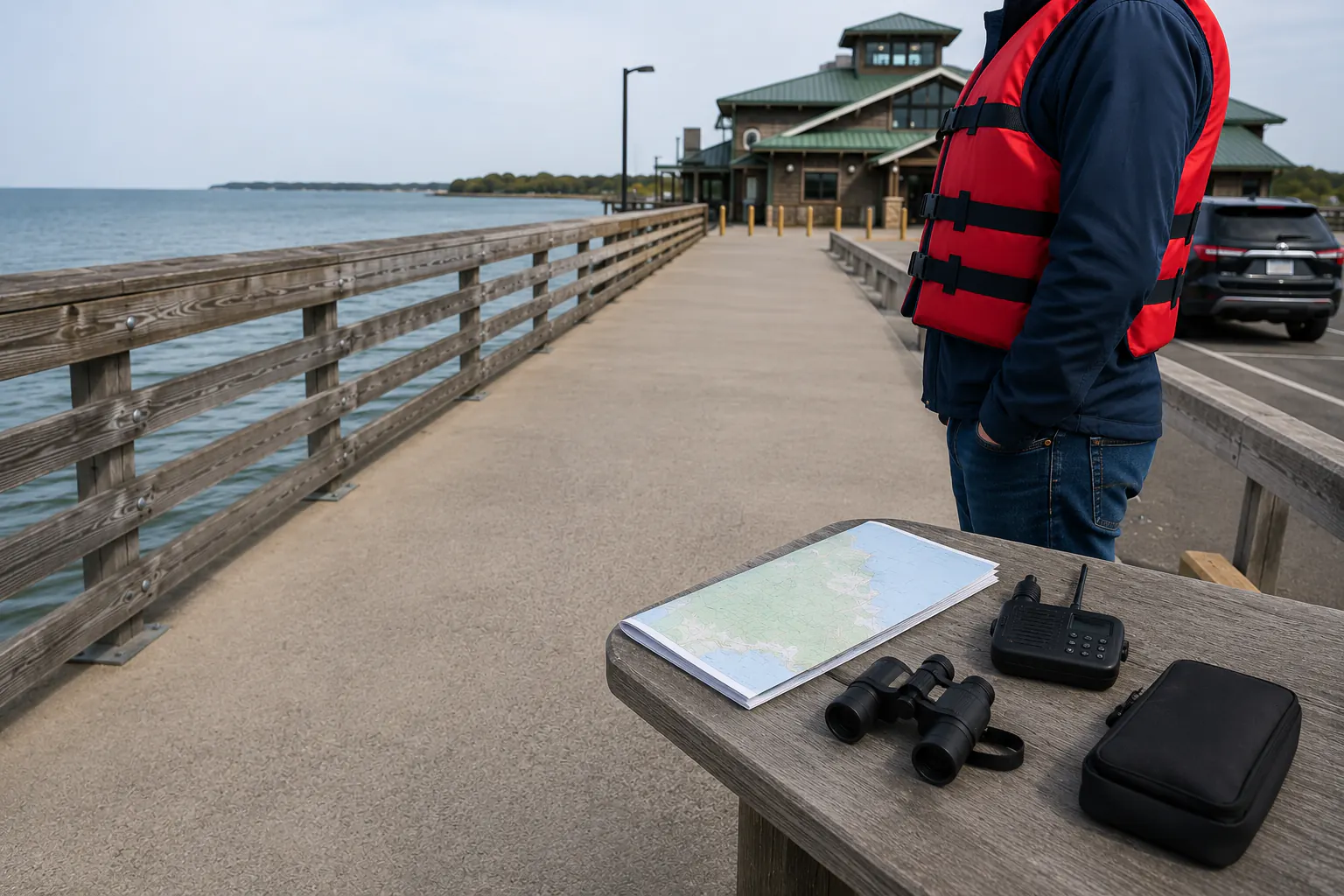
Choose the least exposed option
For an adult beginner, prefer a maintained daylight access point with a stable barrier or broad setback, clear route, nearby help, reliable communication, benign forecast, and no need to enter water. Do not begin with rocks, jetties, surf, dams, spillways, fast rivers, steep banks, remote ice, night access, waders, paddle craft, or boats.
Record why the chosen position is safer than alternatives. “Other anglers use it” is not evidence. Verify the manager’s intended use, hours, closures, barrier rules, mobility access, child supervision, pet rules, and emergency location description.
If a participant cannot remain safely behind the planned edge or use the return route, change the site or cancel.
Separate air temperature from water risk
The National Weather Service warns that warm air does not mean warm water. Sudden immersion can trigger involuntary gasping, rapid breathing, loss of movement, and impaired judgment. Cold water can be dangerous along shorelines as well as from vessels.
Before departure, record:
- current and forecast air conditions;
- current water temperature from a responsible source where available;
- flow, stage, release, tide, current, surf, wave, wake, and visibility information relevant to the site;
- precipitation upstream as well as locally;
- cold-water protective and life-jacket requirements;
- maximum wind and weather conditions accepted by the qualified plan;
- return time before darkness or tide/flow change;
- official alert channels and who monitors them.
Do not use a generic temperature threshold from this page to approve entry. The person, clothing, life jacket, water, current, exposure, rescue time, and training all matter. When data is missing, choose no exposure.
Wear the right life jacket
The U.S. Coast Guard explains that an approved wearable life jacket must be appropriate for the intended user/activity, correctly sized, serviceable, and accessible, with specific legal rules for vessels and children. State or managed-area rules may add requirements.
Selection requires checking the current label, user size, activity, swimming ability, clothing, and manufacturer instructions. Inflatable devices have maintenance and user/activity limitations and are not a universal substitute for foam devices. Adult sizes do not fit children.
Wear the chosen device as the qualified plan requires rather than storing it under gear. Inspect it before departure and follow manufacturer testing/service instructions. A life jacket reduces risk; it does not make unsafe weather, current, surf, ice, wading, overloading, or remote solo activity acceptable.
ReadyLience does not recommend a model without documented fit, wear, activation, maintenance, accessibility, and failure-mode testing.
Control the shore edge
Set a visible working line back from the edge. Keep closed hook storage, bags, chairs, coolers, children, animals, and mobility aids where they cannot roll, snag, block a path, or invite leaning over water.
Stop for:
- undercut, eroded, muddy, icy, algae-covered, loose, steep, or wet surfaces;
- rising water, dam releases, changing tide, surf, waves, wakes, or debris;
- barriers that would need to be crossed;
- overhead power lines, traffic, active launch lanes, swimmers, or crowded casting space;
- darkness, fog, smoke, glare, or precipitation that removes clear footing/visibility;
- a snag or catch that would require entering water, climbing, reaching below a structure, or moving beyond the line.
No fish or tackle is worth an immersion. Cut or abandon inexpensive gear under qualified safe direction rather than escalating retrieval.
Treat wading as a separate trained activity
Waders are not flotation and can add mobility, entrapment, temperature, and exit challenges. Water depth can change between steps; current force, substrate, holes, vegetation, cold, and rising flow may be hidden.
Do not learn wading from an article. Use qualified local instruction, current water data, an appropriate life jacket, communication, group plan, and the exact equipment rules. A person who cannot identify a controlled entry, exit, depth/current limit, and immediate retreat under that instruction does not wade.
Never wade in floodwater, near a dam/spillway, on uncertain releases, in surf beyond training, or to free a snag.
Keep vessels in their own system
Boat or paddle-craft fishing requires the complete boating plan before fishing equipment is added. Confirm:
- operator education, registration, permits, inspections, and local rules;
- vessel capacity, loading, seating, stability, and manufacturer limits;
- approved wearable life jacket for every person and other required safety equipment;
- float plan, communication, location, weather, and overdue action;
- launch/recovery route and qualified assistance;
- fuel, electrical, ventilation, navigation lights, sound/signaling, and emergency systems as applicable;
- cold-water clothing and rescue plan;
- no alcohol, drugs, fatigue, or medication impairment;
- fishing gear secured so hooks/line cannot interfere with people, controls, exits, or rescue equipment.
Do not stand, lean, move positions, or fight a catch in a way that conflicts with vessel/instructor rules. Fishing does not take priority over navigation and lookout.
The Vehicle and Transportation hub owns road and trailer travel only at a general preparedness level; qualified boating instruction owns launch and vessel operations.
Leave before lightning
Water and open shorelines are dangerous during thunderstorms. NWS says swimming or boating during a thunderstorm is very dangerous and advises monitoring forecasts and heading to shore/safe shelter early.
Set the leave trigger before departure. Do not wait for a nearby strike, heavy rain, or an official lightning warning that may not exist. A picnic shelter, tree, small open shelter, tent, or fishing umbrella is not a safe lightning refuge. The weather shelter guide owns the substantial-building/hard-topped-vehicle distinction.
If safe return cannot happen before a developing storm reaches the area, do not launch or begin the session.
Use a float or shore plan
Give a trusted person:
- exact access/launch and waterbody;
- participant and vessel description where relevant;
- route or fishing area;
- vehicle/trailer details;
- planned departure, check-ins, return, and overdue trigger;
- communication equipment and limitations;
- responsible manager/emergency contacts;
- what the contact should do at the trigger.
The group carries the same plan offline. “Call if we are late” is insufficient without a time, location, and action.
Prepare for emergency response without improvising rescue
Identify how to call 911 or the responsible marine/water rescue service and how to describe the location. Do not enter water to rescue a person unless trained, equipped, and directed under the applicable rescue plan; an untrained rescuer can become another victim. Follow dispatcher instructions.
Call immediately for a person in water, missing person, capsized/swamped vessel, serious injury, severe cold exposure, breathing difficulty, loss of consciousness, or immediate danger. Keep visual contact from a safe position when possible and use approved reachable/throwable equipment only within training and instructions.
The first-aid hub does not replace water-rescue or emergency services.
Audit the no-go decision
Record forecast versus observed conditions, water data, life-jacket inspection/wear, edge intrusions, check-ins, route changes, snag/retrieval decisions, and the time the session ended. Record every cancellation as a successful use of the plan.
Do not measure success by time on water, distance, fish, or equipment recovered. Return to the Fishing for Food hub when the group can demonstrate that weather, water, edge, vessel, and communication decisions remain more important than the catch.