
Choose one document you would want to find if you had to leave home: a current insurance statement, an ID, or an authorized care summary. Locate it, check that you can read it, and find a known contact for the organization that issued it. You can stop there today. A completed binder, cloud archive, or new storage box is not a prerequisite.
The next question is what you would need if that document were unavailable. A protected copy may help you find the right record; it does not necessarily replace an original or prove your right to act. Keep only the information you have a legitimate reason and permission to hold. The emergency documents and records hub helps with the wider plan when you are ready for it.
This guide organizes the protection decision. It does not tell a reader whether a record is legally valid, accepted by an agency, covered by insurance, or appropriate to share with another person.
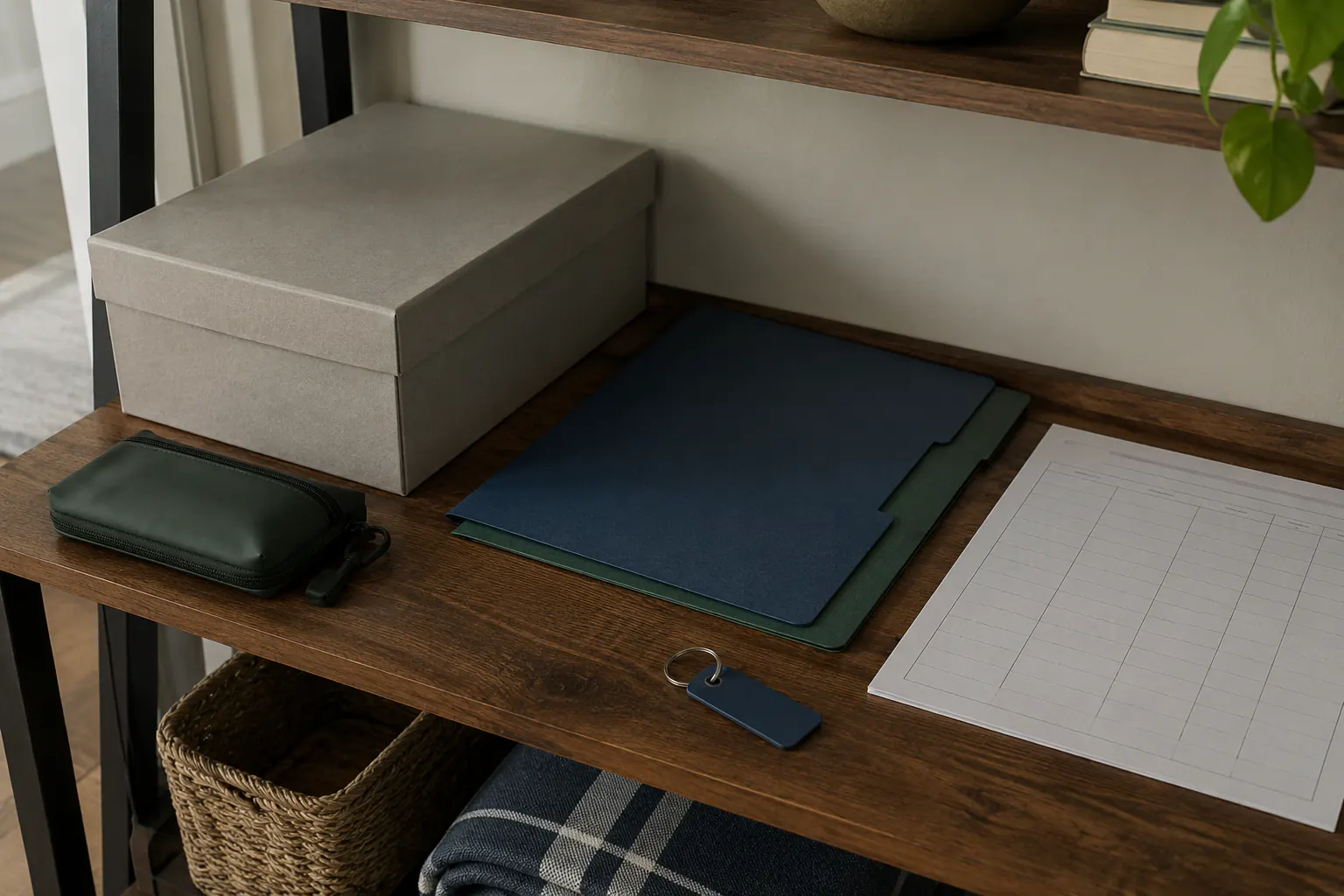
Sort records by consequence before choosing storage
Use the group that fits your first document. You do not have to fill every category.
| Record | What to check first |
|---|---|
| Identity or vital record | Which issuer handles replacement, and does your next appointment or destination require an original? |
| Property or housing record | Can you identify the lease, asset, or responsible contact without exposing unnecessary private details? |
| Insurance record | Can you find the current policy reference and reach the insurer through a known channel? |
| Care summary | Is it current, and who is permitted to share it with the relevant care provider? |
| Digital recovery record | If this device is unavailable, is there another authorized way to retrieve the record without exposing passwords? |
If a private location reminder would help, use the emergency documents checklist. Keep passwords, recovery codes, and unnecessary full identity or account numbers out of that reminder.
Protect vital and identity records without making them travel everywhere
Birth, marriage, divorce, death, citizenship, adoption, Social Security, passport, and other civil records have different replacement requirements. Decide what a particular trip or destination actually needs before carrying originals that could be lost with the bag.
For the document you are working on, decide whether you need:
- the original in controlled storage;
- a legible protected copy to help identify the record and issuer;
- a limited private location reminder, without unnecessary identity numbers;
- a verified official replacement channel;
- a limited travel copy because a current evacuation, appointment, or destination has a genuine need.
USA.gov’s How to replace lost or stolen ID cards, checked October 3, 2026, identifies the responsible agencies for several common IDs and notes that replacement rules vary. The issuing office decides its current process. Do not assume an old photocopy, a phone photo, or a family story establishes identity, citizenship, relationship, custody, or authority.
Choose a discreet, dry location that the authorized person can reach during ordinary conditions. Consider actual water exposure, heat, theft risk, and access restrictions rather than assuming a room name or a closed box guarantees protection. Follow any document or container storage instructions. If moving a container would require straining or lifting beyond your ability, plan around that limit; do not try a risky lift or block an exit to test it. Never delay evacuation or enter an unsafe home to retrieve records.
Keep property records useful, not exhaustive
Property documentation helps a household reconnect facts after a loss. It is not a substitute for an inspection, title search, contractor assessment, lease interpretation, or insurance decision.
Maintain a controlled record of the items that are difficult to reconstruct:
- lease, deed, mortgage, tax, condominium, landlord, or property-manager references as relevant;
- vehicle identification, registration, title, insurance, and service references;
- an ordinary room-by-room inventory and dated photographs taken during normal conditions;
- major purchase receipts, serial numbers, warranties, maintenance notes, and prior repair records where they have a practical reason to exist;
- utility, alarm, internet, and service contact channels without account passwords;
- the names and dates of significant permitted work, inspections, or documents that may matter later.
Do not photograph or store more than necessary. A wide room photograph may accidentally include open mail, financial statements, children’s schedules, access codes, or care records. Check the image before preserving it. Use labels that identify a category and date without displaying full account or identity numbers.
For a rental, preserve the legitimate records that identify the tenancy and property-manager contact, then follow the current lease and local rules. For a homeowner, preserve the records that identify the property and its service history, then use qualified professionals for structural, electrical, plumbing, gas, or safety decisions. A document does not certify a condition.
Prepare insurance information before there is a claim
Insurance records are valuable because they point to the right process. The best time to capture the policy number, insurer contact, agent or service channel, deductible reference, and current declarations is before access is disrupted.
Keep a current, protected copy or reference for policies relevant to the household. Record how to reach the insurer through a known statement, official app, or official website. Do not rely on a number or link sent in an unsolicited disaster message.
Help, care, and safe departure come before paperwork. After a loss, when it is safe and useful, keep a separate event record with dates, reference numbers, official notices, safely obtained photographs, receipts, and relevant communication notes. Keep it factual. Do not clean, discard, repair, or enter a dangerous area merely to improve the record. The insurer’s instructions, public restrictions, and qualified safety assessment control the next step.
For flood damage, use how to document flood damage for an insurance claim. It covers the claim-specific safety and evidence boundary. Coverage, deadlines, temporary repair approval, proof rules, and appeal rights vary by policy, program, state, and event, so confirm them directly with the responsible organization.
Treat medical and care records as a continuity file, not a home medical record
Care information may be essential during displacement, yet it is also among the most private data a household holds. Keep a concise, current, authorized summary with the person who needs it and the people who are permitted to help. Include a known contact for the clinician, pharmacy, device supplier, caregiver, or veterinarian responsible for the relevant care question.
A controlled care file may identify:
- health-insurance information and verified provider contacts;
- a current medication list, allergies, care contacts, and communication or accessibility needs prepared through the relevant clinical path;
- medical-device, mobility, sensory, or caregiver information that a destination or responder may genuinely need;
- pet or service-animal identification, veterinary, medication, and destination-policy records where applicable;
- the location of a more complete plan without placing detailed private notes into an ordinary packet.
Do not use an outdated list to decide medication, insulin, refrigeration, device settings, oxygen, feeding, mobility, or treatment. Those questions belong to the clinician, pharmacist, device manufacturer, supplier, and current official guidance. For an outage affecting care, start with medical device and medication continuity.
Use physical and digital layers with different jobs
Paper, devices, and accounts can become inaccessible for different reasons. Choose a useful second route for your first record; you do not need every format below.
| Format | Useful job and limit |
|---|---|
| Controlled physical storage | Keep originals you do not need to carry. Check actual exposure and authorized access; a box alone does not establish fire or water protection. |
| Protected digital copy | Keep a readable recovery reference. Check access protection and a legitimate retrieval route if your usual device is unavailable. |
| Limited evacuation packet | Carry information needed for travel or early displacement, not every original or private file. |
| Separate access-secret storage | Protect passwords, recovery codes, and encryption material separately from the records they unlock. |
The Consumer Financial Protection Bureau’s Get prepared before a disaster or emergency strikes, checked October 3, 2026, supports organizing contacts, locating records, keeping a separate copy, and protecting digital storage. It does not certify a household’s storage arrangement or grant another person access.
Use secure digital copies of sensitive documents for the digital-copy decision. Use the 3-2-1 backup method for the broader question of independent backups. A sync service or a photo in one device does not automatically provide a second recovery route.
Plan for different disruptions without overreacting
Think about the interruption you might face. Water exposure may make a low shelf unsuitable. A departure may leave home storage out of reach. An outage may leave your usual device unavailable. Choose storage against those actual constraints; check a container’s documented limits rather than inferring fire, smoke, or water resistance from its appearance. After theft or a lost bag, ask the relevant issuer what needs to be reported or replaced. Deleting a location note does not revoke account or legal authority.
You do not need a separate filing system for every scenario. A small private reminder can be enough to identify what travels, what stays home, and whom to contact. The family communication plan helps if reaching one another is the next gap. Someone living alone can keep their own retrieval and contact reminder without appointing another person or sharing private files.
Review after changes, not only after damage
Revisit the relevant record after a move, family or care change, changed insurer, new device, major purchase, or property repair. An annual reminder is an optional household habit, not an official review interval; actual issuer deadlines and current care instructions take priority. Do not destroy records merely because you made a new copy or simplified a folder. Check applicable retention requirements with the responsible organization or qualified professional.
If a document is lost or damaged, use the issuer’s current replacement process. If a home is unsafe, do not enter to retrieve a record. If a file may have been exposed, contact the appropriate provider through a verified channel and adjust the access-secret system separately. Protection is successful when it makes the next legitimate step easier, not when it creates a more elaborate archive.
For today, finish with one record located and one contact confirmed. That is a useful starting point, not proof of legal acceptance, coverage, authority, or disaster readiness.