
When the power goes out, the safest security posture is not to become the neighborhood’s night watch — it is to make your home look occupied, ordinary, and not worth the trouble, while keeping people safe inside. Deterrence works best when it lowers the temperature rather than raising it. This is one branch of the home security during a power outage hub.
The rule that governs everything here: people first, property never worth a confrontation. Call 911 for a real threat; do not confront, chase, or try to detain anyone. (Sources: Ready.gov; American Red Cross, power outages.)
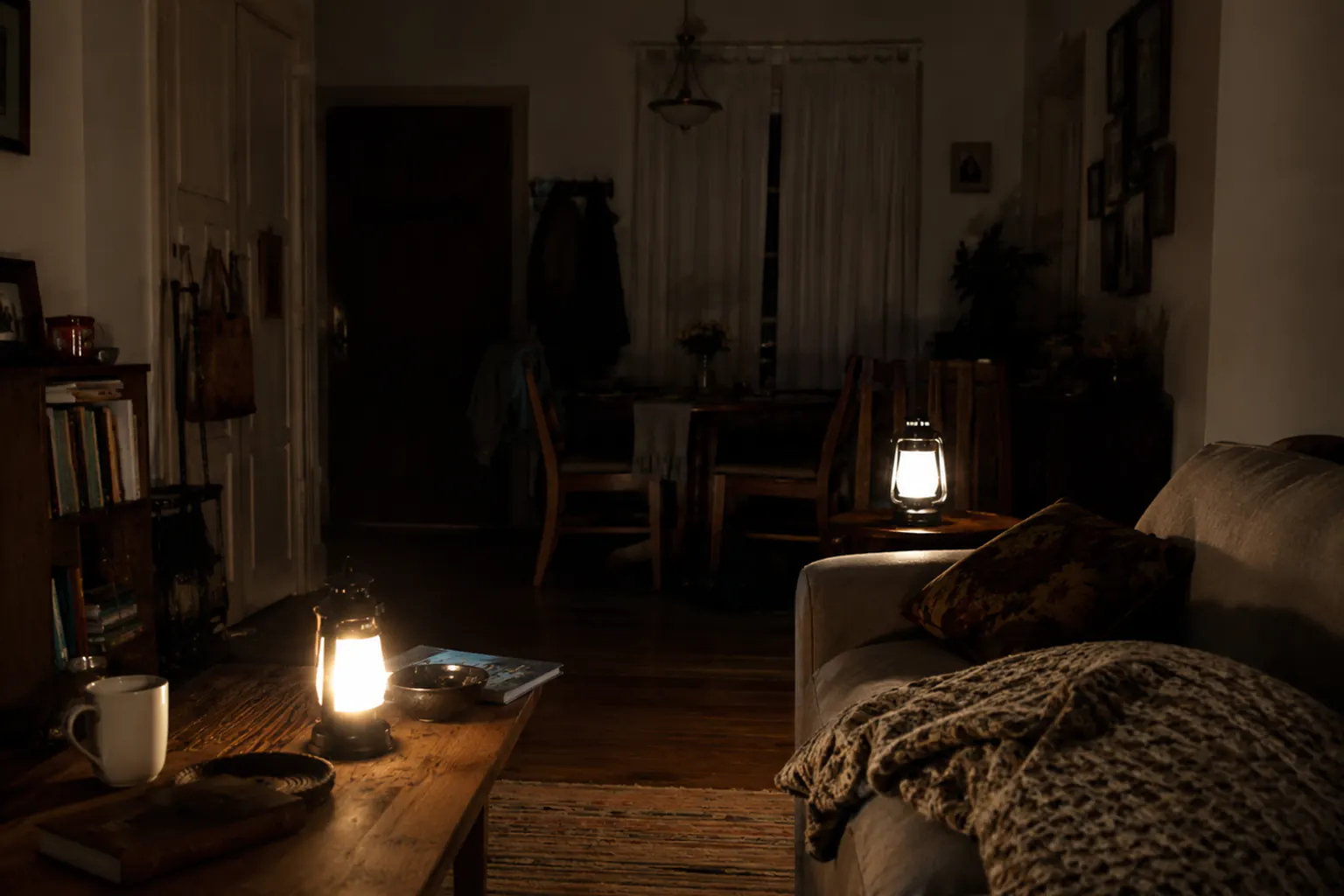
Look occupied, quietly
Most opportunistic trouble avoids homes that appear occupied and alert. You can signal that without drawing attention to yourself:
- Use light deliberately, not brightly. A soft interior light or two suggests occupancy; a blazing, isolated house can do the opposite. Battery lanterns and flashlights — see emergency lighting — keep this safe and fuel-free.
- Keep normal-sounding routine. Ordinary household movement and low sound read as “occupied.”
- Avoid advertising the outage’s effect on you. Do not post that your alarm, cameras, or gate are down, or that the house is empty — that is information for the wrong audience. The coordinate without broadcasting principle applies.
Keep the ordinary layers working
An outage disables some security; lean on the layers that still work:
- Locks still lock. Confirm doors and windows are secured; a powered gate or garage may need its manual mode.
- Know what lost power — alarm, cameras, electronic locks, intercom — so you are not relying on something that is off. The hub’s check the systems that lost power section covers this.
- Battery backups and a charged phone keep communication and minimal deterrence alive.
If someone approaches or you hear something
Passive, not confrontational, is the whole strategy:
- Do not go outside to investigate or confront. Distance and a locked door are your advantage.
- From safety, make your presence known if appropriate (a light, a voice) — many would-be intruders leave when a home is clearly occupied.
- Call 911 for anyone attempting entry or a genuine threat, and follow the dispatcher.
- Let property go. Nothing outside is worth opening the door to danger. The situational-awareness guide covers distance, exits, and avoiding escalation.
For apartments and shared buildings
- Rely on building security and neighbors, and report outages of shared systems (lobby doors, cameras) to management.
- Coordinate quietly with trusted neighbors for mutual awareness without broadcasting who is away — the privacy-respecting approach in neighborhood check-ins.
- Keep shared exits and fire routes clear even while securing your unit.
Where this fits
Passive deterrence is one layer of the home security during a power outage hub, and it pairs with the personal-safety mindset in the situational-awareness guide. Look occupied, keep the working layers up, share less, and let the police — not you — handle a real threat.
Sources reviewed
- Ready.gov: Power outages
- Cybersecurity and Infrastructure Security Agency: Physical security
- American Red Cross: Power outage safety
- FEMA: How to prepare for power outages
Sources reviewed July 29, 2026. Local law enforcement, your building’s rules, and current Ready.gov/Red Cross guidance control real security decisions; call 911 for any threat.