
Ask one neighbor you trust whether they would like a simple check-in arrangement during outages. Agree on the contact method and what each person is comfortable sharing before creating a group or adding anyone’s number. A group chat should not become a map of empty homes, medications, children, keys, or departure plans.
A useful neighborhood check-in plan is deliberately small. It gives consenting people a way to confirm basic status, pass along verified official information, and request a limited practical favor when conditions are safe. It does not turn neighbors into responders, investigators, caretakers, or an audience for private household details.
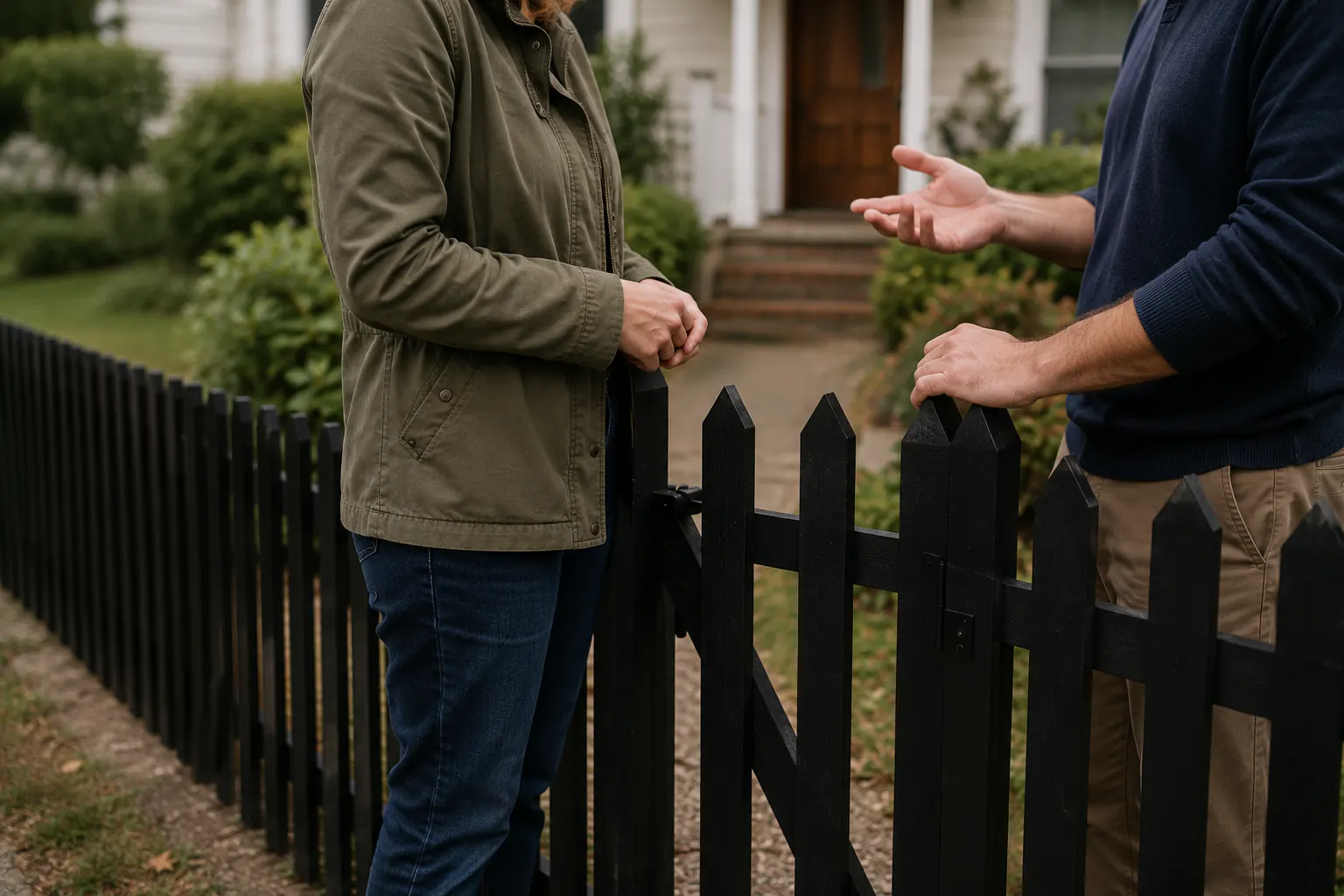
Decide what the group is actually for
Write one sentence that everybody can understand: “This group shares verified local instructions, basic status, and voluntary practical help during disruptions.” That boundary helps when messages become urgent or emotional.
The group can support five modest tasks:
- share an official alert with its source and time;
- say whether a household is safe, needs a callback, or needs emergency services;
- ask whether a safe, ordinary task can be done, such as relaying an official update;
- identify a building or block issue that should be reported to the appropriate authority;
- reconnect a person with the household’s own out-of-area contact or care network.
It should not collect a permanent roster of diagnoses, access codes, immigration status, weapons, financial information, schedules, or property inventories. Those details do not become safer because a chat group has a reassuring name.
Ready.gov encourages people to know their neighbors and include them in emergency planning. Inclusion still requires consent, boundaries, and a plan that works for renters, people who travel, people who do not use smartphones, and people who do not want their details shared.
Keep membership voluntary and visible
Ask before adding a person, copying their phone number, or naming them as someone who needs checking on. Make it easy to decline. A tenant, neighbor, caregiver, teenager, or older adult may have reasons not to reveal their address, availability, household composition, disability, location, or contact information to a group.
Use a short membership record held by one or two named coordinators. It can contain only:
| Field | Enough information | Do not add |
|---|---|---|
| Name | First name or agreed household label | Full profile or unrelated contacts |
| Contact method | One number, text method, or relay preference | Passwords, account access, device unlock details |
| Availability | “Can receive text” or “call only” | Work schedule or routine absence |
| Check-in preference | “Reply with status” or “contact my named person” | Medical history or care instructions |
| Consent | What may be shared and with whom | Assumed permission |
Review the list after a move, new tenant, change in household, changed contact method, or a request to leave. Do not forward the list to a broader neighborhood forum, post it on a building board, or store it in an unprotected shared document.
Use a plain status message
The best check-in message is short enough to send with a low battery and narrow enough not to expose the household. Agree on three ordinary statuses:
OKmeans the person is safe and needs no reply.CALLmeans use the agreed private contact method when practical.EMERGENCYmeans the sender has contacted or needs emergency services; it does not ask the group to self-deploy.
Add an official source only when sharing an instruction: County alert 7:15 PM: avoid Elm Street; source: county emergency management. Do not repost a cropped screenshot, voice rumor, scanner comment, or a message with no issuing authority and time as if it were an order.
For a person who does not text, agree on an equivalent: one porch-light signal only if it is safe and permitted, a landline call, a relay contact, or a planned knock during normal conditions. Never require a person to open a door, leave a safe location, or display a signal that could create a risk for them.
Separate observation from instruction
Neighbors may notice a fallen branch, dark common area, blocked entrance, smoke, rising water, or a person who appears to need help. State what was directly observed, where it is, and when it was seen. Then use the appropriate official reporting channel.
Do not convert an observation into diagnosis or direction. “There is water at the garage entrance at 6 PM” is an observation. “The building is safe” or “everyone should evacuate” is an instruction that belongs to the authority responsible for the event. The local emergency alerts guide explains how to maintain those official channels.
When an immediate threat exists, call 911 rather than collecting group opinions. When a building service is disrupted but no immediate danger exists, contact the manager, utility, or local service that owns the issue. A group member should not enter a dark, flooded, damaged, smoke-filled, violent, or restricted area to prove that someone is okay.
Protect location and absence information
A group does not need a live map. Share the smallest location statement that solves the immediate coordination problem: “I am safe” can be enough. If an exact location is necessary, send it privately to the named person who has agreed to receive it, not to a broad chat or public post.
The Federal Trade Commission advises people to consider when location sharing makes sense, use privacy settings, and limit online connections to people they actually know. Apply that principle to emergency groups. Photos can reveal an address, layout, faces, medical equipment, vehicle plate, security system, or current location. Ask permission before posting a photo of another person or their home, and do not assume a disappearing message cannot be copied.
Never announce that a household is away, an evacuation bag is packed, a vehicle is empty, a person is alone, or valuables are unprotected. The Home Security During a Power Outage guide covers the broader rule: resilience should not advertise vulnerabilities.
Make help offers specific and optional
Vague offers can create pressure or unsafe expectations. Use an offer that names its limit: “I can text the official outage number to the group once at 8 PM,” or “I can bring a printed update to the lobby while conditions are safe.” The person receiving help chooses whether to accept it.
Do not assign a neighbor to carry medication, provide clinical care, transport someone during an evacuation, supervise a child, manage a pet, enter an apartment, hold keys, or inspect a hazard unless there is an existing consented relationship and a safe, lawful plan. Individual care and transport arrangements belong with the household, provider, family, building, and public authorities that own them.
For a household without a car, use the car-free backup transportation guide to plan official transport, trusted drivers, pickup points, access needs, and travel stop rules before an event. A group chat does not create a ride service.
Build a quiet escalation path
Every participant should know what happens when somebody misses a check-in:
- Wait until the agreed retry time; phones and people are not always available.
- Send one short private message through the agreed channel.
- Contact the named household or out-of-area contact if consent covers it.
- Use the building, school, care, utility, or public-safety procedure that owns the concern.
- Call 911 only for an immediate threat or emergency, not for a routine missed reply.
Do not publish “has anyone seen” messages with a person’s home, location, health details, or photograph unless that person or the appropriate authority has authorized it. Preserve the person’s dignity and reduce the chance of spreading an incorrect or unsafe claim.
Practise without simulating a crisis
Once or twice a year, send a clearly labeled test message. Confirm that members can recognize the group, find the official-alert source, reply with the agreed status, and opt out or update a contact. Test whether a renter can receive the information without revealing a unit number and whether an accessible format works for the people who use it.
After the test, remove stale contacts and discuss only gaps that matter: an unclear coordinator, a dead battery, an inaccessible format, a person who never consented, or a message that shared too much. The household’s Family Communication Plan remains the primary plan; the neighborhood layer is a voluntary supplement.
Sources reviewed
- Ready.gov: Resolve to be Ready; Family Emergency Communication Planning
- Federal Trade Commission: Heads Up: Stop. Think. Connect.; How Websites and Apps Collect and Use Your Information
Sources reviewed July 15, 2026. This page is a consent-based planning framework, not emergency-response, legal, medical, caregiving, security, or dispatch advice. Current local instructions and each participant’s own plan control a live event.