
An extension cord can temporarily place an approved low-risk load where a suitable outlet is unavailable. It cannot create circuit capacity, convert an indoor connection into a wet-location system, make a generator safe indoors, or replace permanent wiring.
During an outage, poor light, urgent loads, open doors, wet weather, and unfamiliar backup sources increase risk. The planning rule is simple: define the exact load and route before the outage, use the shortest appropriate listed cord only when both equipment manuals permit it, and stop at the first abnormal sign.
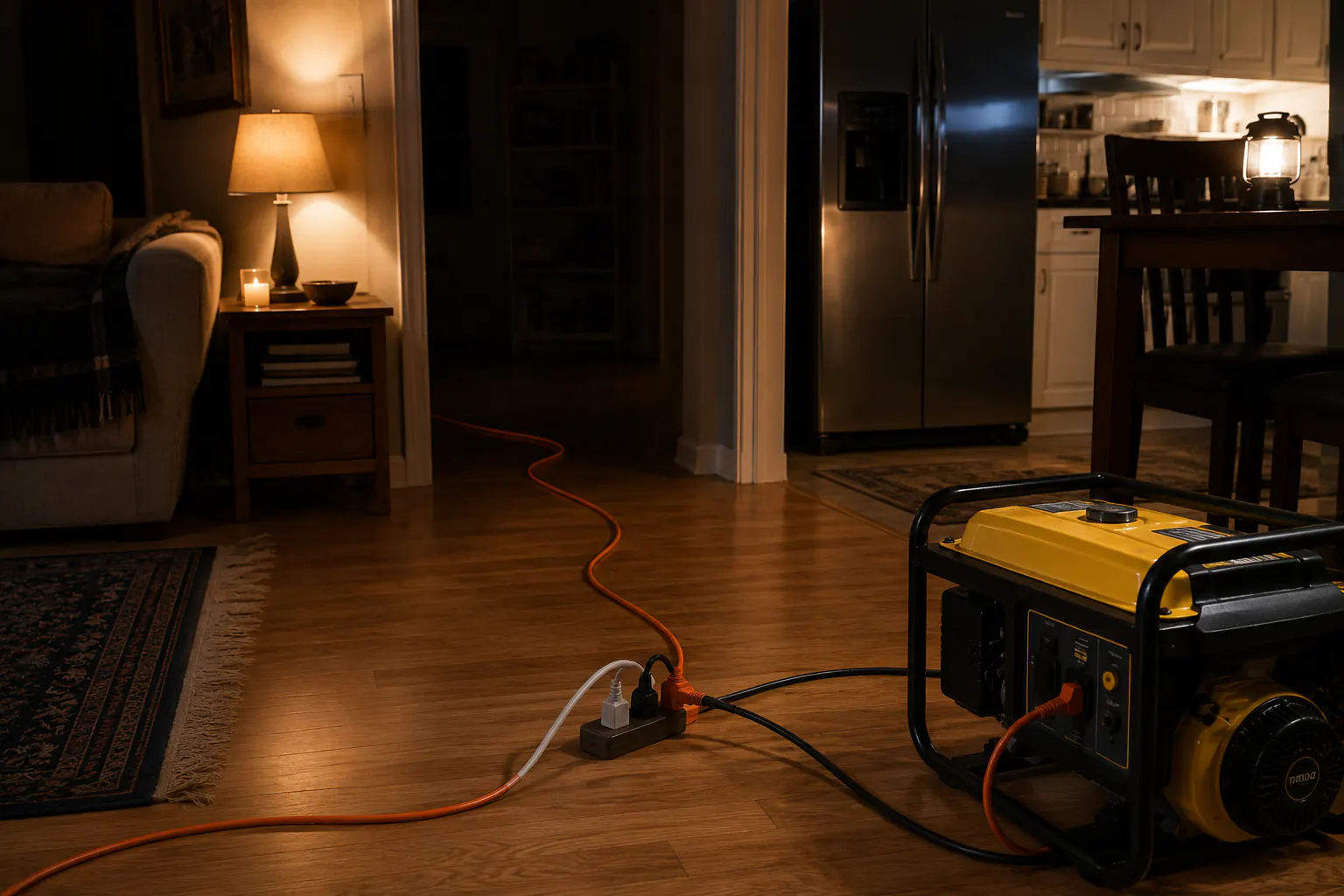
Do not use a cord in these situations
USFA advises plugging major appliances directly into wall outlets and never using an extension cord for major appliances because the cord can overheat and start a fire. Follow the appliance manual when it is more restrictive.
Do not use an extension cord for:
- a portable heater, air conditioner, refrigerator, freezer, washer, dryer, cooking appliance, pump, or charger when direct connection is required;
- medical or life-safety equipment without a documented manufacturer, clinician, facility, and electrical continuity plan;
- permanent everyday wiring or a cord routed through a wall, ceiling, floor, duct, or concealed space;
- a damaged, loose, discolored, hot, buzzing, sparking, wet, or uncertain receptacle;
- backfeeding a home through any receptacle, adapter, or double-male cord;
- a load beyond the source, cord, plug, connector, or environmental rating;
- a location exposed to water, snow, traffic, sharp edges, crushing, doors, windows, rugs, furniture, heat, children, or pets without an approved protected design.
Stop and use a licensed electrician when the required load cannot reach a suitable permanent outlet safely.
Match the complete electrical path
The cord is only one link. Verify:
- the appliance permits extension-cord use;
- the source is approved for the appliance and environment;
- the receptacle is intact, dry, grounded as required, and protected as required;
- the cord voltage, current or watt rating, conductor size, length, plug, connector, grounding, temperature, and indoor/outdoor designation fit the use;
- the connection stays fully inserted without strain;
- the route remains visible and protected;
- total source and circuit load includes every connected device;
- GFCI or other protection follows the exact equipment and location requirements.
Do not rely on color, thickness, marketing category, or number of sockets. Read the permanent markings and instructions. A cord rated for one condition may be unsuitable when longer, coiled, exposed to cold, wet, or connected to a different load.
Inspect before every temporary deployment
OSHA’s workplace rule requires visual inspection of portable cord equipment for external defects and evidence of internal damage. For household planning, look for:
- cuts, cracks, abrasions, exposed material, brittle jacket, or tape repair;
- pinched, crushed, flattened, kinked, or sharply bent sections;
- missing, loose, bent, corroded, blackened, or altered pins;
- loose strain relief, connector, receptacle, switch, or housing;
- melting, discoloration, unusual odor, or prior overheating;
- moisture, dirt, metal debris, chemical contamination, or pest damage;
- illegible rating or missing manufacturer identification;
- a recall or stop-use notice for the exact model.
Remove damaged equipment from service. Do not tape a jacket, bend a grounding pin, replace a plug casually, splice cords, or combine parts from different products. Follow the manufacturer and qualified repair or disposal path.
Route it where damage cannot develop
Plan the cord route in daylight. Keep it on a dry stable surface, visible for its entire length, and away from exits, stairs, walkways, door swings, windows, furniture legs, vehicle tires, heaters, cooking, sharp metal, and standing water.
Route cords in the open, where heat can escape and damage stays visible: never under rugs, mats, bedding, carpet, insulation, or furniture, and never stapled, nailed, tightly tied, or suspended by the cable itself.
Use a cord cover only when it is designed for the exact environment and load and does not conceal heat, water, or a damaged connection. A cover does not make a household cord suitable for vehicle traffic, public paths, snow, or rain.
Keep every plug and connector dry, supported, and free from pull. Do not leave a connection hanging by the cord or sitting where condensation or runoff can collect.
Avoid daisy chains and outlet multiplication
Never connect one extension cord to another, one power strip to another, or a strip to a cord unless an exact listed system and manufacturer instructions explicitly form a single approved assembly. Household improvisation increases connections and makes total load harder to see.
A three-way adapter or multi-outlet cord end does not increase capacity. Add the nameplate loads and keep within every applicable limit, but do not use arithmetic to approve a questionable circuit or connection. The overloaded-circuit warning signs explain what the household should notice long before a cord decision hides the problem.
If a room needs permanent outlets, use a licensed electrician and property approval. Extension cords should remain temporary. The household electrical safety boundaries frame everything a resident may and may not touch.
Use generator cords without bringing exhaust inside
Generators must remain outdoors at least 20 feet from homes and openings under current federal guidance, with exhaust directed away. Never operate one in a home, garage, basement, shed, porch enclosure, or other enclosed or partly enclosed space.
Use only the generator manufacturer-approved cord, connection, grounding arrangement, weather protection, and load. Keep the generator and all connections dry without operating under an unsafe enclosure.
Never feed household wiring through a receptacle. Supporting selected circuits requires listed transfer equipment or a code-permitted interlock arrangement installed by a qualified electrician. The backup-power guide and generator carbon monoxide guide control the larger system.
Monitor without handling a suspect connection
During use, stop for:
- heat, hot-plastic odor, discoloration, melting, smoke, or sparks;
- buzzing, crackling, popping, or intermittent power;
- a loose connection or plug that will not remain fully inserted;
- breaker, GFCI, AFCI, generator, inverter, or source shutdown;
- voltage warning, overload warning, repeated restart, or abnormal appliance behavior;
- water, condensation, snow, debris, crushing, or route damage;
- a cord that becomes tightly coiled, covered, trapped, or pulled.
If a cord runs hot, gets wet, smokes, sparks, or shows damage, keep your hands off it. Switch off the source through a safe normal control from outside the hazard area if possible, then call emergency or qualified help — and leave tripped protection off rather than resetting it to test.
Plan for critical outage loads
For lighting, prefer battery lanterns and headlamps that avoid floor cords. For phones and radios, use approved low-voltage charging paths. For refrigeration, medical devices, sump pumps, well systems, heating, and cooling, build a source-and-connection plan with the manufacturer and qualified professionals before an outage.
Do not prioritize property over people. A cord across a wet basement to keep a freezer running is not resilience. Use stored food and water, relocation, backup medical arrangements, or professional temporary power when the electrical route is unsafe.
Apartment and renter limits
Do not route a cord through a common corridor, stairwell, balcony, window, door, neighboring unit, utility room, or common-area receptacle without written building authority and a code-compliant plan. Preserve fire doors, egress, accessibility, weather protection, and security.
Do not assume rent includes permission to power high-load equipment from any unit outlet. Report insufficient, damaged, loose, or hot receptacles and request qualified correction.
Store and retire cords deliberately
After use, disconnect by gripping the plug only when everything is cool, dry, undamaged, and de-energized through normal controls. Inspect again. Coil loosely using the manufacturer method and store dry, secured from children, chemicals, sharp tools, heat, and pests.
Record model, rating, purchase date, intended loads, and recall check. Retire a cord that cannot be positively identified or has been overheated, crushed, cut, altered, immersed, or damaged. Do not donate it.
Sources reviewed
- U.S. Fire Administration: Appliance and Electrical Fire Safety
- U.S. Consumer Product Safety Commission: Electrical Safety Alerts; Recalls
- OSHA: Use of Cord- and Plug-Connected Equipment
- Ready.gov: Power Outages
Sources reviewed July 14, 2026. Current emergency services, utility direction, equipment manuals, listing and certification evidence, code, property authority, and licensed electrical review control actual use.