
“Best” is not one brand or one giant set. The best household tool is the one that fits the recurring task, gives the intended user control, has verifiable safety and performance evidence, can be maintained, and remains available when needed.
ReadyLience has not completed model-level tests for this page. No product ranking, award, Amazon link, or first-person performance claim is active. This research framework defines what must be documented before future recommendations can be credible.
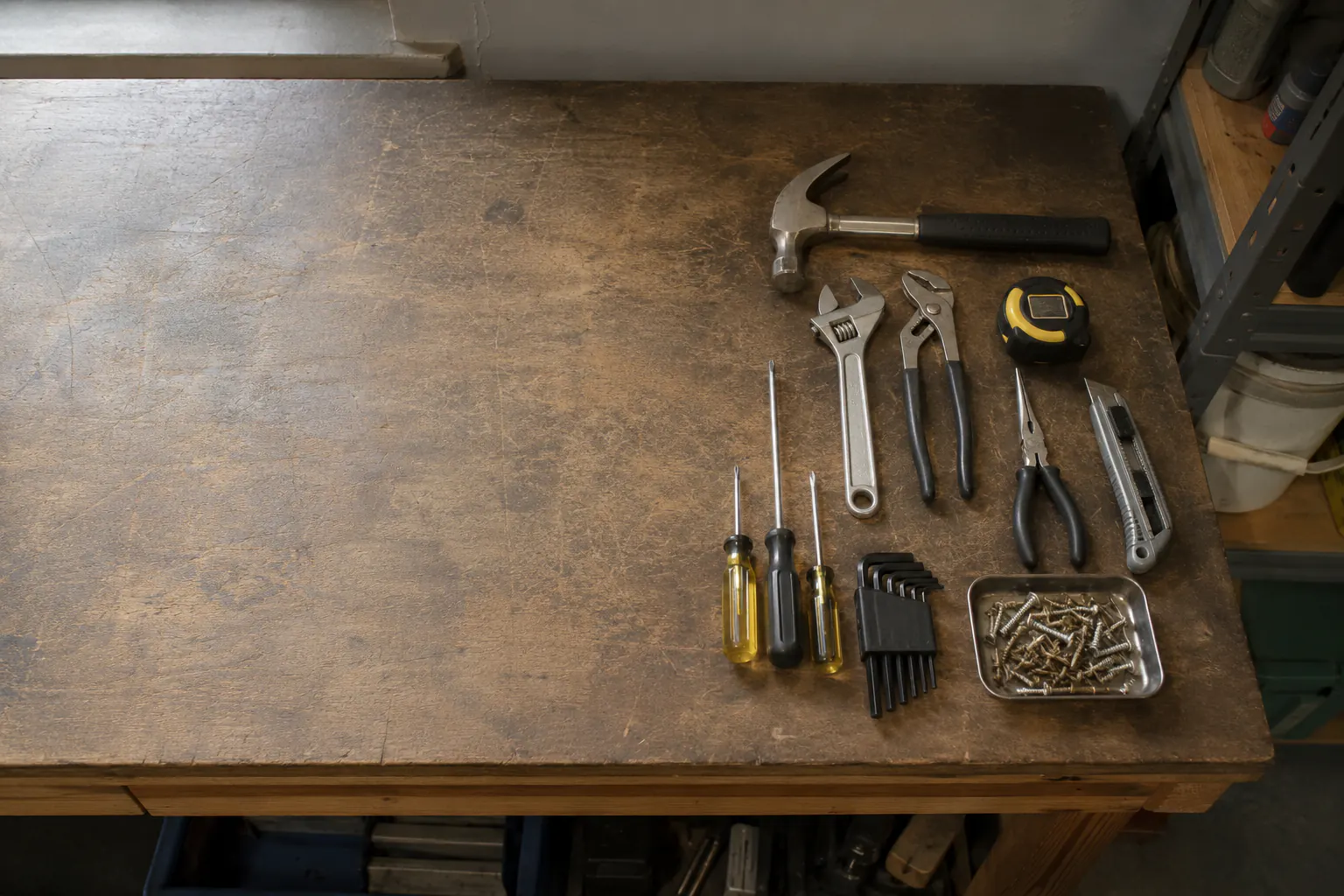
Rank categories by household value
| Priority | Category | Core household role | Main evidence question |
|---|---|---|---|
| 1 | task lighting | see work and stop conditions | output/runtime controls and battery safety |
| 2 | tape measure | room, object, and repair documentation | readability, hook, control, durability |
| 3 | drivers and bits | common correctly fitted fasteners | tip fit, material, handle control, replacement |
| 4 | pliers | controlled ordinary grip | jaw alignment, pivot, handle, cutter rating |
| 5 | wrenches/sockets | known nuts, bolts, and approved controls | fit, jaw spread, markings, ratchet strength |
| 6 | hammer | light fastening and removal | head attachment, balance, face, handle |
| 7 | knife/scissors | packaging and controlled cutting | lock, blade control, replacement, storage |
| 8 | level/square | orientation and layout | readability, straightness, verified accuracy |
| 9 | storage | access, condition, child control | load, stability, organization, environment |
| 10 | PPE | protection for a defined task | correct standard, fit, compatibility, condition |
The list starts with observation and fit because many household mistakes happen before force should be applied.
What a trustworthy recommendation needs
For every exact product:
- manufacturer and full model number;
- version, kit configuration, size range, and market region;
- product manual and intended-use limits;
- material and manufacturing claims with source;
- applicable standard and exact conformity evidence;
- recall and safety-warning check date;
- warranty, service, replacement parts, and consumables;
- measured dimensions and weight;
- documented hands-on protocol and sample size;
- accessibility and grip observations from relevant users;
- storage and maintenance requirements;
- price and availability date;
- affiliate relationship and evidence disclosure;
- limitations, failures, and untested claims.
Marketing terms such as professional, industrial, premium, high torque, lifetime, or military grade are not evidence by themselves.
Drivers and bits
Compare:
- exact tip geometry and size markings;
- full engagement in known fasteners;
- tip wear after a controlled repeatable protocol;
- shaft straightness and finish;
- handle diameter, shape, texture, and solvent resistance;
- bit retention and wobble;
- reach, insulation claims, and storage;
- availability of replacement bits;
- manufacturer conformity to relevant ASME B107 requirements.
Do not test by intentionally stripping household hardware or driving beyond the fastener’s specification. Ordinary colored handle covering is not proof of electrical insulation. Any electrical rating needs exact standard, markings, inspection, and trained-use context.
Pliers and cutters
Compare general, needle-nose, tongue-and-groove, locking, and cutting pliers only within intended roles. Record jaw alignment, tooth form, pivot smoothness, handle spacing, pinch points, cutter rating, rust protection, and one-handed control.
Use specified sacrificial materials for controlled tests. Do not cut energized wire, hardened material beyond rating, security cable, springs under tension, or unknown household wiring. A damaged cutter can chip and create flying fragments.
Wrenches, sockets, and ratchets
Compare exact sizes and systems for:
- jaw and socket fit;
- size marking readability;
- adjustment play;
- jaw spread under controlled non-destructive load;
- socket retention and drive fit;
- ratchet direction, backdrag, and serviceability;
- corrosion protection;
- handle comfort and clearance;
- warranty and replacement of individual sizes.
Do not use cheater pipes, impact tools on hand-only sockets, or informal overload tests. Torque-critical work needs the specified calibrated tool and procedure, not a general ratchet impression.
Hammers and striking tools
Record head mass, balance, face geometry, claw or peen role, handle material, grip, head retention, and applicable ASME B107 evidence. Inspect for chips, cracks, mushrooming, loose handles, and unintended sharp edges.
Testing should use an appropriate fixture and ordinary intended material, with eye protection and no bystanders. Do not strike two hardened tools together, hit a wrench, or perform demolition as a product demonstration.
Tape measures and layout tools
For tape measures, document blade length, width, coating, standout claim, hook design, markings, lock, return control, drop protocol if any, and replacement policy. Test readability in normal indoor light and controlled extension without letting the blade snap back.
For levels and squares, compare straightness and vial or digital indication against a documented reference. A consumer comparison can report repeatability under its method; it should not claim laboratory calibration without one.
Knives and scissors
Evaluate handle control, blade exposure, lock, retraction, change process, replacement availability, storage, ambidextrous use, and permitted materials. Use a stable cutting mat and standardized sacrificial material.
Do not use body-facing cuts, concealed material, force-to-failure lock tests, or dramatic edge demonstrations. Local carry law and venue restrictions matter when the product leaves the home.
Task lights
Lighting may be battery-powered or rechargeable, so evaluate exact output modes, beam usability, color rendering where relevant, stability, controls with gloves, low-battery behavior, charging, runtime at defined output, water/dust rating evidence, replaceable cells, and recall status.
Do not report the highest lumen claim as useful runtime. Measure output behavior with a stated method. Avoid looking into the beam, placing hot lights against fabric, or charging unattended contrary to instructions.
Storage systems
Compare box, bag, drawer, cabinet, and wall systems by:
- rated load and installation requirements;
- lift weight and handle attachment;
- stability and tip risk;
- child and unauthorized access;
- visibility of missing tools;
- blade, bit, and battery separation;
- moisture and dust control;
- drawer retention and pinch points;
- replacement trays, latches, wheels, and keys;
- fit in the actual apartment, garage, or closet.
Do not load-test wall storage in an occupied home beyond the documented rating. Anchoring depends on wall construction, hidden services, fastener system, and installation quality.
Power tools are a separate comparison
A home workshop may later add a drill/driver, but electric tools require a different evidence stack: UL/IEC 62841 family standards, NRTL certification where applicable, battery and charger identity, guards, controls, noise, vibration, accessories, dust, and hidden-service risk.
OSHA explains that NRTL recognition is not a general product endorsement; certification applies to an exact product within a recognized scope and standard. A certification mark should be verified, not inferred from a listing image. UL’s current standards status distinguishes tool categories and effective dates.
ReadyLience should not merge cordless power-tool rankings into a hand-tool page merely to raise affiliate value.
Proposed ReadyLience test matrix
| Test area | Low-risk method | Publishable result |
|---|---|---|
| identity | model/manual/mark/recall verification | exact evidence table |
| dimensions | calibrated scale and measurement | measured size and mass |
| ergonomics | multiple relevant users, stated tasks | observations, not universal fit |
| fastener fit | known replaceable hardware | fit and damage notes |
| repeatability | defined cycles under intended load | method, variance, visible wear |
| corrosion care | manual-approved cleaning and storage | condition over stated period |
| organization | timed retrieval from standard kit | retrieval time and missing-item visibility |
| warranty | documented support inquiry | response, parts, exclusions |
No destructive, electrical, bypass, overload, rescue, or injury-risk testing belongs in the initial program. Test methods should be published before affiliate conclusions.
Buy in this order
- Complete the starter toolkit task log.
- Select exact sizes and functions used by the home.
- Check handle fit and control for the actual user.
- Verify standards and manufacturer evidence.
- Check recalls and service.
- Buy one good core tool before a giant set.
- Assign storage and maintenance.
- Inspect after first use.
- Add specialty tools only after repeated need.
Use the multi-tool comparison, annual inspection, and essential toolkit hub to keep buying connected to capability.
Sources reviewed
- ASME: B107 Hand Tools and Accessories
- OSHA: Hand and Power Tools; NRTL Program FAQ
- U.S. Consumer Product Safety Commission: Recalls
- UL Solutions: Tool and Garden Machine Standards Publication Status
Sources reviewed July 14, 2026. This page contains no current product ranking, tested badge, Amazon link, or performance winner. Exact standards, certification, recalls, manuals, tests, and commercial disclosures are required before recommendations.