
Water heaters combine stored or flowing water with heat, pressure, electricity, fuel, combustion, refrigerant, or several of those systems. A puddle, new sound, temperature change, odor, corrosion line, or relief discharge therefore deserves a disciplined response, not a generic internet shutdown sequence.
There is no universal safe shutoff procedure for every water heater. Tank, tankless, gas, electric resistance, heat-pump, solar, indirect, manufactured-home, and shared central systems have different controls and hazards. Safe steps begin with distance, exact equipment identification, and current model instructions.
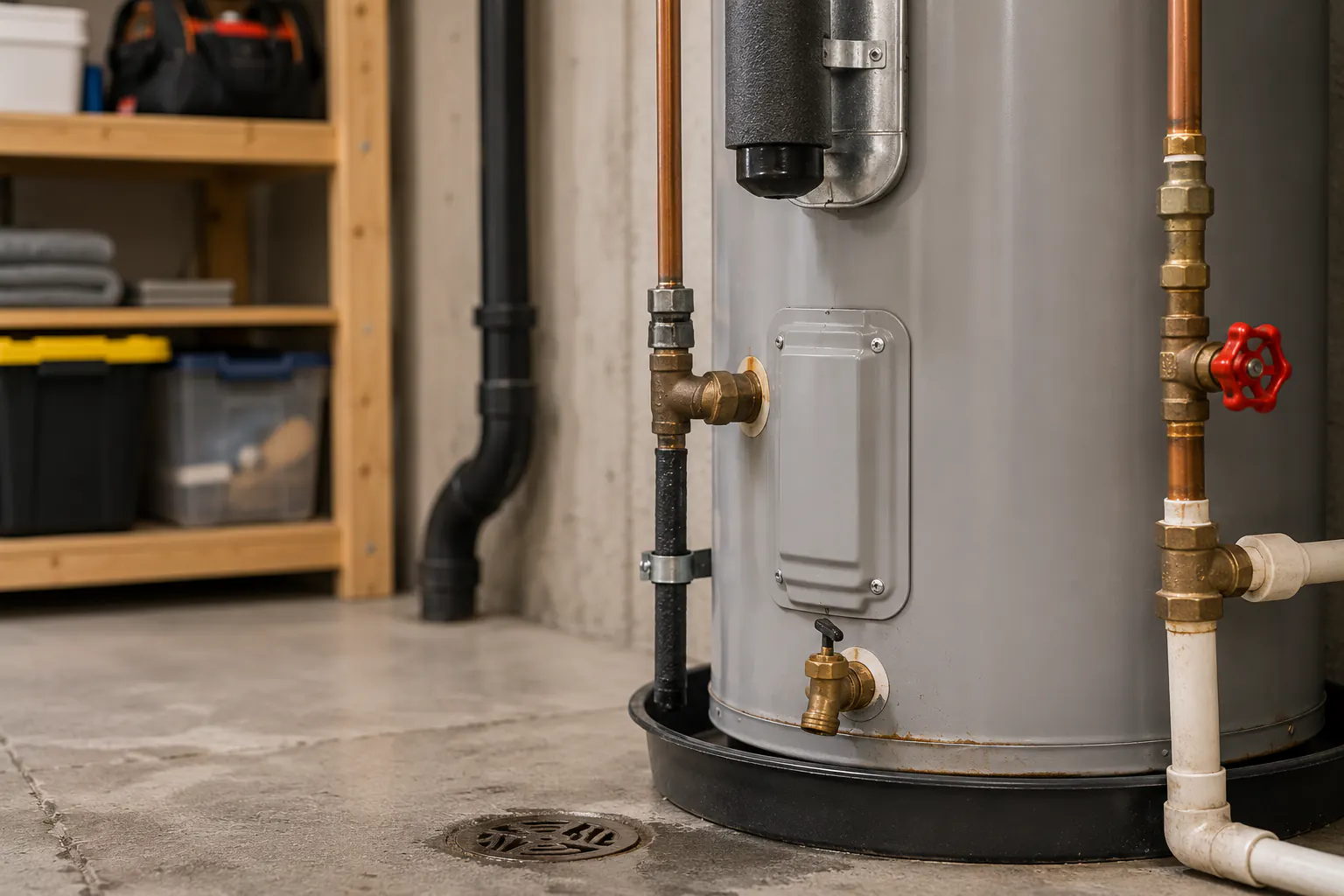
Leave for fire, gas, carbon monoxide, or pressure danger
Call 911 for fire, explosion, severe injury, active arcing, or immediate danger. Move everyone to fresh air and follow current emergency instructions for a carbon monoxide alarm or possible CO symptoms. Follow the gas utility’s current instructions for gas odor; do not search for the leak or operate switches.
Stay away from equipment that is:
- smoking, burning, sparking, arcing, melting, or unusually hot outside;
- hissing forcefully, bulging, deforming, shifting, or producing steam;
- discharging uncontrolled hot water from a valve, pipe, fitting, or tank;
- surrounded by floodwater, sewage, storm damage, falling material, or wet electrical equipment;
- associated with repeated breaker operation, damaged wiring, combustion staining, or a blocked or damaged vent;
- inaccessible without entering a confined, locked, unstable, contaminated, or shared mechanical space.
Do not touch the heater, valve, disconnect, panel, plug, vent, or nearby metal to investigate. Emergency services, the utility, and qualified professionals control the area.
Recognize failure signs without naming the cause
| What you can observe | Possible system categories | Safe household response |
|---|---|---|
| Water beneath or around the unit | Tank, connection, drain, relief path, condensate, or another nearby source | Keep away from electricity and hot water; photograph from dry ground and call property maintenance or a plumber |
| Corrosion, mineral trail, staining, or swelling | Long-term seepage, condensation, material, or connection issue | Record its location and progression; do not scrape or tighten anything |
| Popping, rumbling, banging, whistling, or new vibration | Flow, material, heating, pressure, fan, pump, or combustion conditions | Stop ordinary use only through an authorized normal control and arrange qualified service |
| Water too hot, too cool, unstable, or quickly depleted | Controls, supply, mixing, element, burner, tank, load, or distribution can be involved | Prevent scald exposure and obtain service; do not change internal controls |
| Relief pipe drips or discharges | Temperature, pressure, valve, expansion, installation, or system condition may be involved | Keep clear of hot discharge and call a qualified plumber promptly |
| Gas, exhaust, soot, scorch, or CO concern | Combustion or venting hazard | Leave, use emergency and utility routes, and do not restart |
| Electrical odor, heat, noise, trip, or damaged cord | Wiring, control, element, connection, or water exposure | Keep away, prevent use, and call an electrician or qualified service provider |
These observations do not identify the failed part. Water can travel across a floor, down a pipe, or from HVAC and plumbing nearby. Sound alone is not a sediment diagnosis. A relief valve is a safety device, not a household troubleshooting control.
Use a safe shutdown decision path
1. Decide whether anyone should approach
If there is gas odor, a CO alarm, fire, arcing, steam, forceful discharge, flooding, structural damage, or uncertainty about safe access, do not approach. Leave and call the controlling authority.
2. Identify the exact system from a safe position
Use records, an exterior label photograph, landlord information, or the manual to identify manufacturer, model, serial range, energy source, normal user control, water isolation, and emergency instructions. Do not remove a cover or reach behind equipment for a label.
If the equipment is shared, rented, locked, or not clearly identified, call the property emergency line. Do not operate a common valve or disconnect.
3. Stop hot-water demand
Keep people away from affected fixtures and the equipment area. Do not run hot water to “test” a pressure, temperature, electrical, combustion, or leak condition. Protect children and anyone with reduced sensation or mobility from scald exposure.
4. Use only an authorized normal control
Operate only a normal user control that the current model instructions explicitly identify for the observed condition, and only when it is safely reachable from a dry, stable location. Do not guess between valves, switches, breakers, gas controls, or plugs.
Do not:
- operate a gas valve because it resembles an online photograph;
- open an electrical panel or remove an equipment cover;
- unplug or switch wet, hot, damaged, or arcing equipment;
- turn, cap, block, lift, or test a temperature-pressure relief valve;
- drain the tank, connect a hose, release pressure, or open hot water as a generic emergency step;
- repeatedly reset a fault or protection device;
- relight a pilot, restore power, or restart after water, gas, CO, pressure, fire, earthquake, or flood involvement.
5. Control building water only when the route is known and safe
For a controlled leak with no electrical, gas, hot-discharge, contamination, structural, or access hazard, use only a previously identified and authorized upstream water shutoff according to the property plan. If the valve is unknown, shared, stuck, damaged, hot, submerged, or requires force, stop and call maintenance, the utility, or a plumber. Finding and verifying the main water shutoff is calm-day work, not something to attempt for the first time beside a failing tank.
The plumbing emergency hub explains pre-identification and renter boundaries. It does not override model instructions.
6. Prevent restart until cleared
Tag the condition in the household record, tell every occupant, and prevent ordinary use without modifying equipment. The qualified service provider should determine isolation, depressurization, drainage, repair, inspection, and restart.
Document the scene from a safe location
Record:
- time, first symptom, and whether it is active or recurring;
- wide equipment-area photograph and close detail only from dry safe ground;
- exact model and serial information from records or a reachable exterior label;
- water location, direction, apparent temperature, and rate without touching it;
- sound, odor, display, alarm, or fault code copied exactly;
- recent outage, pressure change, freeze, earthquake, flood, service, or plumbing work;
- affected hot-water fixtures and vulnerable occupants;
- property report number, utility instructions, and professional arrival time.
Do not taste, smell closely, touch, or collect unknown water. Do not step over wet flooring to improve the photograph.
Check recalls by exact identity
Search current CPSC recalls using the manufacturer, model, and serial or date range. Follow the notice’s stop-use and remedy instructions. Similar appearance, marketplace title, or brand alone is not enough.
A unit absent from the recall database is not certified safe. A recalled unit should not be sold, donated, or used contrary to the official notice. Keep a copy of the remedy and completion record.
Ask for a complete service report
A qualified report should identify the source, affected systems, safety controls, alternative causes considered, water damage, electrical or combustion involvement, code or permit implications, and restart checks. For a leaking or corroded installation, ask whether surrounding materials and the drain or pan also require assessment.
Do not accept a temperature adjustment, reset, sealant, or part replacement as complete evidence when the original leak, pressure, combustion, electrical, or water-quality concern remains unexplained.
Give renters a faster escalation route
Report loss of hot water, leaks, excessive temperature, odor, alarm, relief discharge, and equipment damage immediately through the lease emergency channel. State whether water, electricity, gas, sanitation, habitability, neighboring units, or vulnerable occupants are affected.
Do not enter a shared mechanical room or operate common controls. Ask management for the safe-use restriction, temporary water or accommodation plan, responsible contractor, completion evidence, and authorization before normal use resumes.
Verify before normal operation resumes
Restart should follow current model instructions and qualified clearance after the underlying event is resolved. Record normal temperature delivery, leak-free condition, alarm state, sound, and professional test results without performing your own internal test.
Use the early warning hub to keep the event connected to plumbing, electricity, HVAC, moisture, and seasonal inspection.
Sources reviewed
- U.S. Department of Energy: Standard Work Specifications for Single-Family Home Energy Upgrades; Water Heating
- U.S. Consumer Product Safety Commission: Carbon Monoxide Safety; Recalls
- Ready.gov: Power Outages
- Federal Emergency Management Agency: Home Inspections for Homeowners and Renters
Sources reviewed July 14, 2026. Current emergency services, utilities, model instructions, recalls, property authority, permits, and qualified plumbing, gas, electrical, HVAC, appliance, restoration, and building professionals control actual shutdown, isolation, repair, and restart.