
If a household keeps firearms, how they are stored is the single most important safety decision — more than any other habit, and most of all where children live or visit. Public-health and safety authorities are consistent that secure storage prevents unauthorized access, unintentional injury, theft, and misuse. This guide covers the widely accepted principles; it recommends no product and does not replace hands-on training or the law. It is one branch of the household firearm emergency planning hub.
This is general education. Your manufacturer’s instructions, qualified training, and your state and local laws — which vary and can be strict — govern what you actually do.
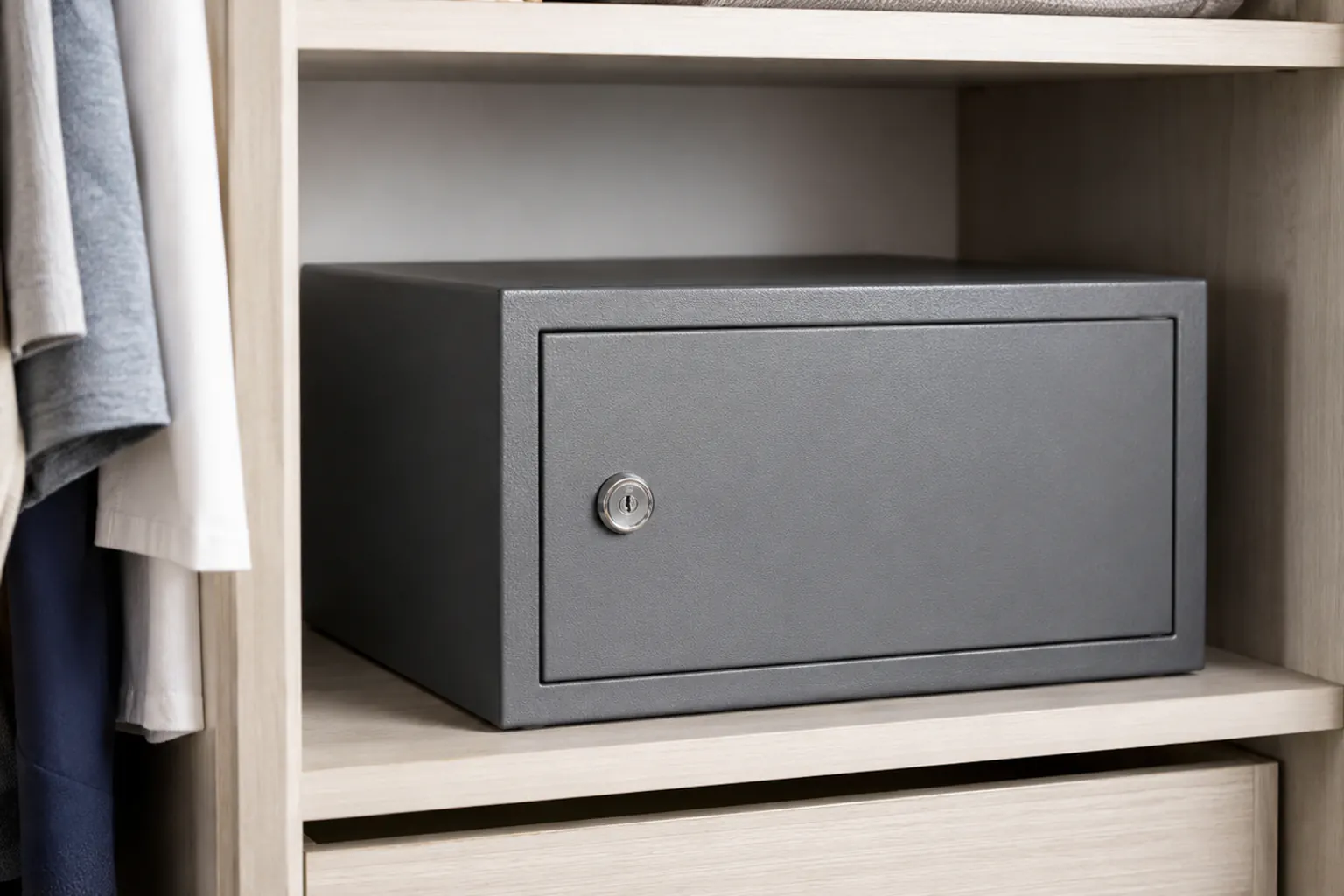
The core principle: secured and inaccessible to anyone unauthorized
Safe storage means a firearm is not accessible to children, guests, or anyone who should not reach it. Project ChildSafe, the CDC, and pediatric-health authorities converge on the same foundation (Sources: Project ChildSafe; CDC firearm-injury prevention; AAP HealthyChildren):
- Store firearms securely — in a locked container, safe, or with a locking device — so only authorized adults can access them.
- Store them unloaded when not in use.
- Store ammunition separately and also locked.
- Keep keys and combinations away from children and anyone unauthorized.
These are not competing options to pick one of; they layer. Locked, unloaded, ammunition separate, keys controlled — together they close the gaps that a single measure leaves open.
Why it matters this much
- Children are curious and can find firearms adults think are hidden. “Hidden” is not “secured”; pediatric guidance is explicit that hiding a firearm is not a substitute for locking it.
- Unintentional injuries and youth access are preventable with secure storage — the whole point of child-access-prevention efforts.
- A crisis is the wrong time to improvise. Secure storage that is already in place protects during a mental-health crisis, a break-in, an evacuation, or a house full of visiting kids.
Storage during specific situations
- When children visit — yours or others’ — the same locked-and-separate rules apply, and it is reasonable to ask other households whether firearms where your child visits are securely stored.
- During an evacuation, securing or removing firearms is part of the plan the firearm emergency planning hub covers — never leave one accessible in a hurried departure. The evacuate-or-shelter decision guide frames when that departure happens.
- During a mental-health crisis, many authorities suggest temporarily storing firearms away from the home. If someone is at risk of harming themselves or others, contact 988 or 911.
What this guide does not do
- It recommends no specific product. Storage-device choice depends on your firearms, home, budget, and needs; follow device and firearm manufacturer instructions and qualified guidance.
- It is not legal advice. Storage and child-access-prevention laws vary by state and can carry serious penalties. Know your local law.
- It is not training. Safe handling and storage are learned hands-on from qualified instructors, not from an article.
Where this fits
Secure storage is the foundation the household firearm emergency plan is built on, alongside the household’s broader home security and safe exit and fire-egress planning. Locked, unloaded, ammunition separate, keys controlled — that is the standard, every day and in every emergency.
Sources reviewed
- Project ChildSafe: Firearm safety and storage
- Centers for Disease Control and Prevention: Firearm-injury prevention
- American Academy of Pediatrics (HealthyChildren): Handguns in the home
- U.S. Department of Justice: Safe storage of firearms
Sources reviewed July 29, 2026. Manufacturer instructions, qualified training, and current federal, state, and local law control real firearm-storage decisions.