
Ask the responsible fisheries agency which beginner program fits the water and activity you have in mind. You do not need to buy a full tackle kit or complete every note below before asking. Before a lesson or trip, the agency and instructor must resolve the applicable rules, access, equipment, water-safety, and supervision requirements.
Start with the state or territorial fish and wildlife agency. The U.S. Fish and Wildlife Service provides a current state directory and notes that rules differ. Then find a recognized aquatic education, learn-to-fish, park, conservation, community, or qualified local instructor for the exact context.
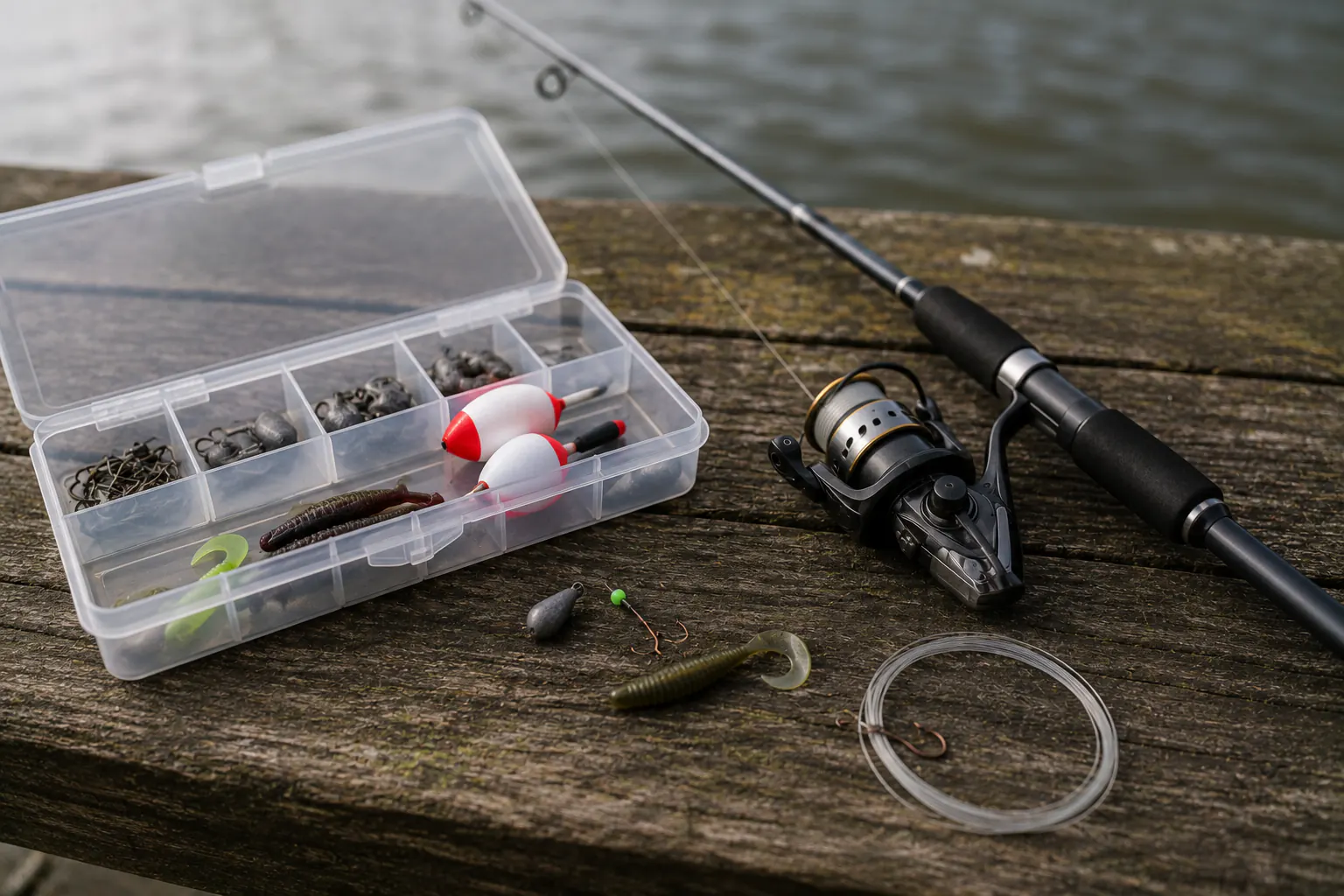
Define the beginner session
Write one narrow objective before selecting equipment:
“Complete a two-hour supervised shore-fishing lesson at the named maintained access point, under the current agency rules, with no food-yield target.”
Record:
- learner’s age, license status, experience, dominant hand, vision/hearing, mobility, and accessibility needs;
- exact waterbody and managed access point;
- landowner or manager and permission conditions;
- date, hours, forecast, water temperature/condition, and no-go triggers;
- likely species categories and protected look-alikes from agency materials;
- legal method and terminal-tackle categories named by the authority/instructor;
- whether the session is observation, dry-land practice, dock/shore instruction, wading, or vessel-based;
- instructor role, group ratio, emergency plan, and provided equipment;
- retention, release, consumption-advisory, and cold-chain objective, if any.
For the first session, make retention optional or exclude it. Learning hook control, casting space, fish identity, release rules, edges, communication, and cleanup is enough.
Use the instructor’s matched system
Ask the program what it provides and what the learner may bring. Do not arrive with hooks tied on, bait, lead tackle, live organisms, waders, a vessel, or unfamiliar gear unless expressly instructed. Some waters restrict hook number/type, barb, lure, bait, line, felt soles, lead, nets, containers, or aquatic equipment. Rules can be species- and season-specific.
A qualified beginner system should address these functions:
| Function | Question for the authority or instructor |
|---|---|
| Legal method | Which category is allowed for this water, date, species, and learner? |
| Rod/reel/line | What size and configuration can the learner control safely? |
| Terminal tackle | What hook/lure/bait restrictions and protected-species precautions apply? |
| Casting space | What maintained area and supervision prevent contact with people, wildlife, structures, or lines? |
| Landing/release | What tools and direct teaching match likely fish and current rules? |
| Measurement/identity | What official aid and process must be used before retention? |
| Water safety | What life jacket, edge, wading, vessel, weather, and communication plan applies? |
| Cleanup | What Clean, Drain, Dry and line/tackle disposal process is required? |
ReadyLience does not choose a rod power, reel type, line strength, hook, knot, lure, bait, or fishing method. Those choices can alter safety, legality, protected-species interaction, and fish handling.
Practice hook control on the instructor’s terms
Hooks are sharp tools connected to flexible line. A written description cannot observe the learner’s casting arc, line control, release timing, bystanders, wind, snag, hook condition, or response to a tangle. Use instructor-led dry practice with non-hook training aids if the program provides it, then controlled live equipment only under the program’s commands.
Before every movement, the learner should know who controls the hook, where every person and animal is, which direction is permitted, and what word stops the activity. Never cast toward a person, pet, bird, vessel, trail, road, building, power line, dock user, swimmer, or uncertain area. Stop when another person enters the controlled space.
Do not pull hard against an unseen snag. A hook, lure, weight, or broken segment can release suddenly. Do not climb, wade, enter current, lean over an edge, reach below a dock, or launch a boat to recover inexpensive tackle.
For a hook embedded in a person, control the remaining hook/line to prevent additional injury, do not use an improvised removal technique from this page, and obtain appropriate medical care. Call 911 for eye/face involvement, severe bleeding, breathing difficulty, loss of consciousness, or immediate danger.
Keep species identification with the rule file
Learn likely species from official local materials and direct instruction. Common names, seasonal color, juvenile forms, hybrids, protected look-alikes, and measurement definitions can make remote identification unreliable.
The fishing rules research guide records the exact definitions. If a fish cannot be identified and measured as the current authority requires, follow its immediate release/reporting instruction. Do not keep it for later internet identification.
NOAA’s responsible-fishing guidance emphasizes checking surroundings before casting and changing behavior when protected wildlife is present. If a protected animal is hooked or entangled, contact the responsible response network and follow its directions rather than attempting a dangerous rescue.
Separate shore, wading, and boat skills
A maintained shore session does not qualify someone to wade or operate a vessel. Wading adds current, depth changes, foot entrapment, cold water, unstable substrate, rising water, and return-route risks. Boat fishing adds legal carriage, operator education, life jackets, weather, loading, stability, navigation, fuel/electrical, and rescue systems.
The shore and boat water safety plan treats them as different activities. Do not add waders or a boat as a gear upgrade. Add them only through the responsible training and complete plan.
Prepare a benign support kit
After the instructor confirms the activity, support equipment may include:
- current license/permit record and official regulations;
- protected offline route and emergency contact card;
- properly fitted, approved, activity-appropriate life jacket as required or chosen through authority guidance;
- weather- and visibility-appropriate clothing;
- water, food, medication, sun and insect protection;
- communication and spare power;
- bounded first-aid kit matched to training;
- eye protection where the instructor recommends it;
- closed rigid hook/tackle storage;
- line-recycling or secure disposal container;
- clean transport/cold-chain module only if lawful retention is planned;
- supplies required by current Clean, Drain, Dry instructions.
This is not an affiliate list. Each item must be selected for the actual user, site, rule, and instruction. A product label never overrides local law or fit.
Prevent aquatic invasive species transfer
Fishing and boating equipment can move plants, animals, mud, and water between waterbodies. The Fish and Wildlife Service promotes Clean, Drain, Dry practices and disposal of unwanted bait, organisms, and fish parts as directed. Exact temperatures, dry times, inspections, bans, and decontamination rules can be stricter locally and may depend on the equipment.
Before travel, ask what may enter the water and what must be inspected. After the session, keep equipment from another waterbody out until the current decontamination process is complete. Never move live bait, fish, water, plants, shells, or organisms between waters unless expressly legal and instructed.
Do not apply heat or chemicals that damage equipment or expose people. Follow the authority and manufacturer.
Audit the first session
Record only observed facts:
- instructor/program and scope;
- exact legal setup used;
- whether the learner controlled the hook and line under commands;
- casting-space intrusions and stops;
- species/measurement questions;
- edge, weather, water, life-jacket, mobility, and communication friction;
- damaged, lost, or discarded gear;
- Clean, Drain, Dry actions completed;
- fish retained, released, or not encountered;
- qualified next step.
Do not claim independent competence after one lesson. Do not buy a more complex system to solve a control problem. Repeat the same benign, lawful setup until the instructor identifies the next appropriate progression.
Return to the Fishing for Food hub with the session record. The useful beginner setup is the least complex legal system that a named person can control in a safe place under current qualified instruction.