
Fishing equipment combines sharp points, springy rods, nearly invisible line, small parts, moving mechanisms, water exposure, and sometimes a moving vehicle or vessel. A tidy tackle box is not proof that the system is safe. Each trip needs a deliberate inspection, controlled transport, and a closed storage state.
This guide does not teach casting, rigging, knot tying, hook setting, dehooking, lure making, reel repair, or fishing technique. Learn those skills from a qualified instructor using the exact equipment, water, species, and local rules. The purpose here is to find reasons to remove equipment from service before a sharp point, line failure, or obstruction hurts a person or wildlife.
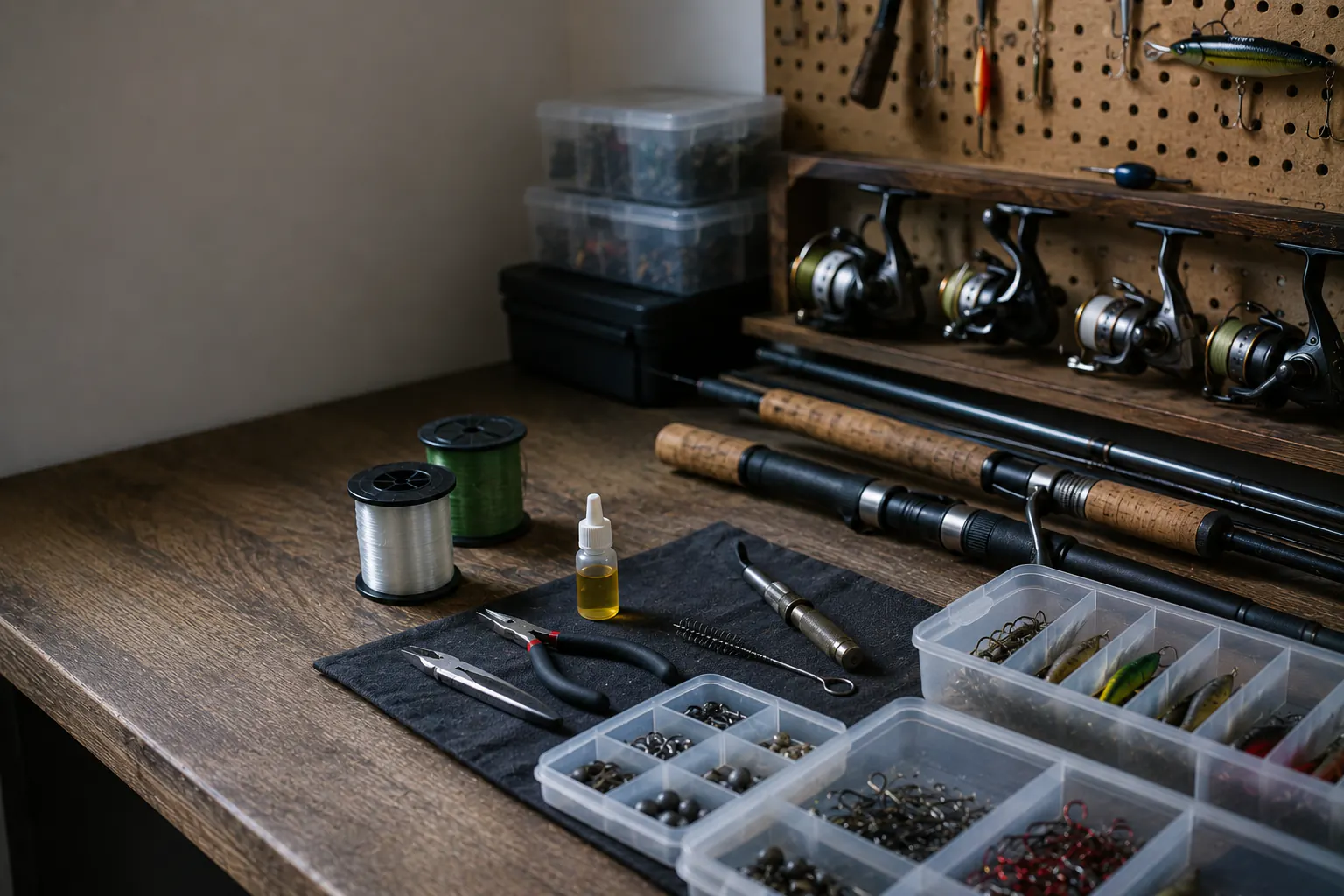
Start with a closed work zone
Choose a stable, well-lit surface away from children, pets, food, walkways, vehicle controls, and the water’s edge. Account for every sharp item before opening a container. Wear the eye and hand protection specified by the manufacturer or instructor; protective equipment does not make unsafe handling acceptable.
Open only one compartment or item group at a time. Keep a rigid puncture-resistant temporary container available for unusable hooks and sharp fragments. Do not place a hook in a pocket, fabric bag, open cup, seat, dock plank, or loose trash where someone can contact it.
Stop if lighting is poor, the surface moves, people cannot remain outside the work zone, or wind could carry line and small parts. Inspection can wait for a controlled place.
Build an equipment identity record
Record enough information to retrieve the correct instructions and recall notices:
- manufacturer, model, and size or rating where marked;
- purchase or acquisition date if known;
- intended water type and activity under qualified guidance;
- line identity, age, storage history, and exposure history;
- last cleaning, inspection, and service;
- damage, repair, corrosion, contamination, or overload event;
- manual location and manufacturer support route;
- disposition: ready, quarantined, professionally assessed, or discarded.
Do not infer compatibility from color, diameter, apparent fit, or a seller’s generic description. Rod, reel, line, terminal components, and intended conditions form a system. The manufacturer and qualified instructor own compatibility and adjustment decisions.
Control hooks before inspecting anything else
A hook should be individually guarded or held in a closed compartment that prevents points from escaping. Confirm that guards, dividers, latches, and hinges still contain the exact hook shapes in the box. Shaking an open container or sweeping a hand through a compartment is not an inspection method.
Look without touching for corrosion, distortion, cracks, damaged eyes, loose points, or an unknown attachment. Quarantine anything uncertain as a unit. Do not straighten, sharpen, heat, grind, weld, or modify a hook based on this page. Replacement and disposal must follow the manufacturer, instructor, and local waste rules.
Count hooks before and after the session. If one is missing, close the area to bare feet, children, pets, cleaning equipment, and ordinary traffic until a careful visual search under safe lighting is complete. Never reach blindly into upholstery, grass, drains, bags, or vehicle gaps.
An embedded hook is a medical problem, not a field-maintenance problem. Do not push, cut, or pull it using an online technique. Protect the area from movement, follow emergency or clinical direction, and call 911 for an eye injury, severe bleeding, breathing threat, or other immediate danger. The household first-aid plan owns supply readiness, not invasive removal.
Inspect line as a consumable safety component
Fishing line can degrade from age, sunlight, heat, chemicals, abrasion, knots, loading, storage deformation, and unknown prior use. Its remaining strength cannot be certified by looking at one clean section. Follow the line manufacturer’s replacement, storage, compatibility, and disposal instructions.
Under qualified guidance, visually inspect accessible, unloaded line for abrasion, flattening, discoloration, stiffness, kinks, fraying, contamination, or unknown splices. Do not wrap line around a hand or body, pull against another person, tension it near a face, or create an uncontrolled snap-back test. Never use fishing line for lifting, rescue, restraint, towing, shelter support, climbing, or another life-safety purpose.
Loose and cut line must be captured immediately. Wind it into a controlled bundle without placing tension around fingers, then place it in the designated closed collection container. Local fishing-line recycling programs may accept only specified clean line types; verify the current program before depositing anything. Otherwise follow local solid-waste instructions. Never leave line on shore, in water, on a dock, in vegetation, or loose in household trash.
Check rods without loading them
Keep the rod unloaded and separated from hooks while inspecting it. Look for cracks, splinters, crushing, delamination, corrosion, loose components, damaged guides, rough guide surfaces, missing inserts, an insecure reel seat, or a prior impact. A damaged rod can fail suddenly and release energy or sharp fragments.
Do not flex a questionable rod, bend it beyond the manufacturer’s instruction, touch a splinter, or repair a structural defect with tape or glue based on appearance. Mark and quarantine the item. Ask the manufacturer or a qualified repair service whether it can be assessed or must be retired.
Confirm that multi-piece sections, protective caps, and storage supports are present and used as instructed. Transport rods so they cannot enter an aisle, strike a person, interfere with driving or vessel controls, contact power lines, or project from a vehicle contrary to law. The water-safety plan remains controlling near shore or aboard a vessel.
Inspect reels without dismantling them
Use the manufacturer checklist for external cleaning, lubrication, service intervals, and storage. A generic oil or solvent can damage materials, contaminate water, or create unsafe operation. More lubricant is not automatically better.
With hooks removed and the system unloaded, look for cracked housings, corrosion, loose hardware, damaged handles, rough or binding movement, line trapped in an unintended location, contamination, and an uncertain drag or brake history. Do not dismantle springs, loaded assemblies, sealed mechanisms, or electrical components unless the manufacturer authorizes the work and you have the required competence.
After saltwater, muddy water, or another exposure, follow the exact manufacturer cleaning sequence and local wastewater rules. Do not spray contaminants toward people, food, animals, storm drains, or natural water. Quarantine a reel after submersion or chemical exposure until the maker’s instructions resolve its status.
Prevent invasive-species transfer
The U.S. Fish and Wildlife Service promotes a location-specific Clean, Drain, Dry approach to reduce movement of aquatic invasive species. Current state, Tribal, federal, and site rules can require more specific inspection, decontamination, draining, drying, bait, water, felt-sole, boat, or equipment actions.
Before leaving a site, follow the responsible authority’s instructions for every item that contacted water or aquatic material. Do not move water, plants, mud, bait, fish parts, or organisms between waterbodies. Never use a cleaning chemical or hot-water process that conflicts with equipment instructions or site rules.
Record the waterbody, exposure, required process, completion, and unresolved contamination. An item that cannot be lawfully or safely decontaminated stays out of the next trip until the authority and manufacturer provide a compatible route.
Protect wildlife from gear
NOAA and sanctuary guidance emphasize preventing line and tackle from becoming marine debris and avoiding harmful wildlife interactions. Keep distance from wildlife and follow current protected-species rules. Do not cast toward, feed, chase, touch, restrain, disentangle, or attempt to rescue wildlife based on this page.
If wildlife is entangled, hooked, stranded, or distressed, note the location and situation from a safe distance and contact the authorized local wildlife-response network or emergency authority. Human safety and official direction control. Cutting a visible line without understanding the entanglement can leave attached gear or worsen injury.
Retrieve only gear that can be reached lawfully without entering water, crossing a barrier, climbing, approaching wildlife, contacting a power line, or creating another hazard. Abandon gear when retrieval is unsafe, then report it through the relevant manager if appropriate.
Create a closed transport state
Before moving, account for every hook, lure, tool, line bundle, rod section, reel, weight, and small part. Guard points; close and positively latch containers; separate wet/contaminated equipment from food and clean household items; secure long objects against shifting.
In a vehicle, equipment must not obstruct pedals, steering, airbags, mirrors, doors, passenger restraints, or emergency exit. Do not carry a rigged rod with an exposed hook. In a vessel, follow the operator and manufacturer stowage plan so gear cannot block controls, flotation, fire equipment, lines, or movement.
At home, move the closed system directly to its controlled cleaning or storage area. Do not leave it temporarily on a porch, floor, seat, or counter.
Store for the least-authorized household member
Storage must work for the child, visitor, cognitively impaired person, or animal who does not understand the hazard. Use a dry, stable, access-controlled location and closed rigid containers that contain every point and loose line. Keep equipment away from food, medication, bedding, toys, emergency egress, moisture, heat, sunlight, chemicals, and electrical equipment.
Label the container without advertising valuables. Maintain an inventory and key/access plan that does not create a fire-egress barrier. Reinspect after a fall, leak, pest event, unauthorized access, move, or long storage period.
Use a repeatable closeout
After each trip, record:
- all sharp items accounted for and guarded;
- line captured, disposition decided, and no loose pieces left;
- rod/reel damage or exposure noted without improvised repair;
- location-specific invasive-species actions completed;
- wildlife interaction or lost gear reported when required;
- wet and contaminated equipment isolated and processed correctly;
- transport and storage containers fully closed;
- quarantined items clearly separated from ready equipment.
Return to the Fishing for Food hub with the inspection record. Ready equipment is not equipment that merely looks usable. It is equipment whose identity, instructions, sharp-point control, exposure, condition, transport, and storage state are known.