
Home canning is controlled heat processing, not simply filling a clean jar and creating a seal. Food acidity determines the safe method. The exact recipe determines preparation, ingredient proportions, packing style, jar size, headspace, processing time, pressure or boiling-water process, and altitude adjustment. Equipment condition and uninterrupted operation matter.
A jar can seal after an unsafe process. Appearance, smell, a concave lid, family tradition, or previous success cannot validate a changed recipe.
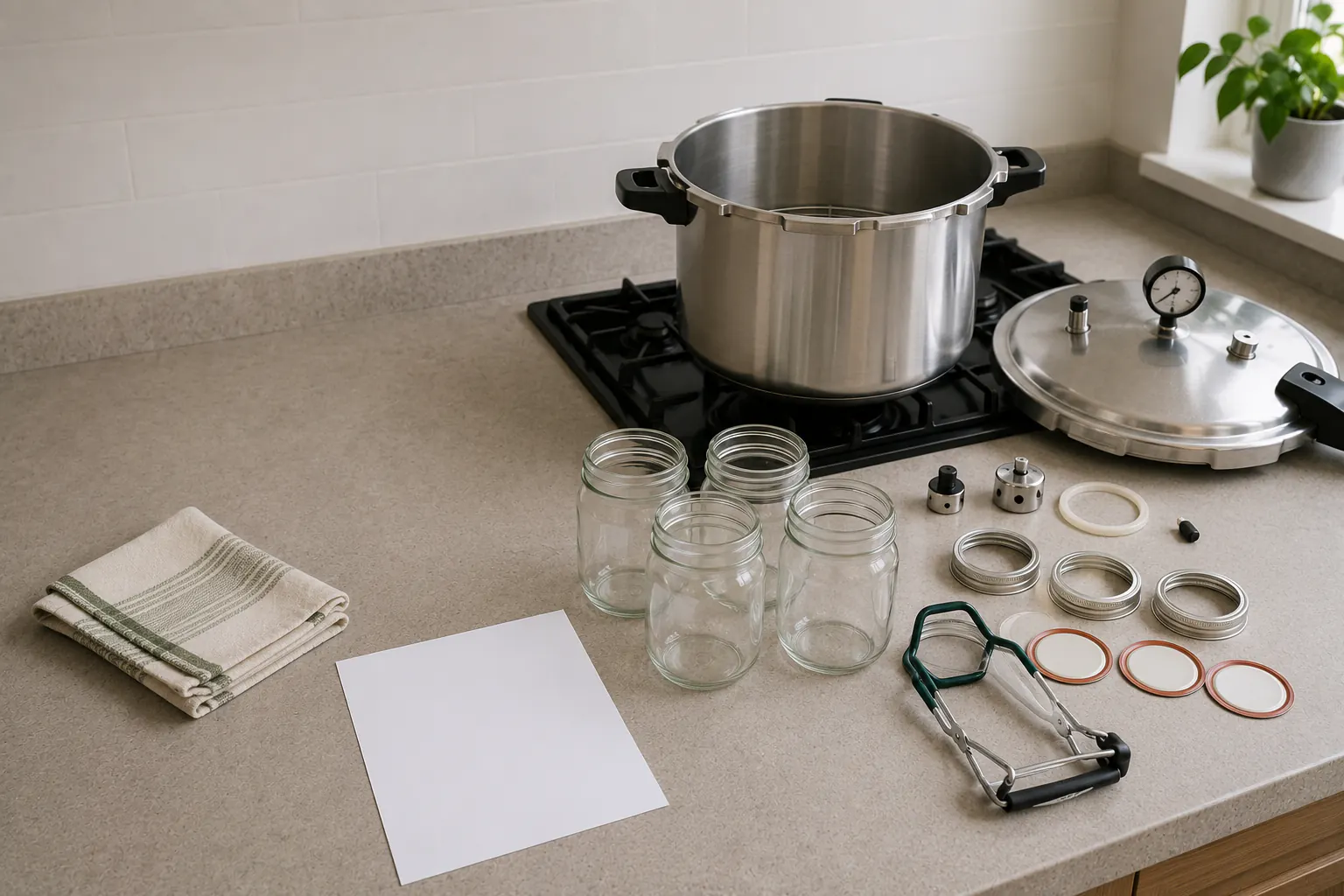
Start with a current research-tested recipe
Use a current USDA Complete Guide to Home Canning, National Center for Home Food Preservation, or appropriate Cooperative Extension recipe for the exact product. Read the full introduction and equipment instructions that accompany the recipe; a clipped ingredient list and process time can omit altitude, pack, jar, acidification, cooling, and spoilage rules.
Record:
- source organization, publication, recipe title, revision, and access date;
- exact food, variety, ripeness, and preparation where specified;
- every ingredient and proportion;
- hot-pack or raw-pack method;
- jar type and exact size;
- headspace and closure preparation;
- boiling-water, atmospheric steam, or pressure-canner method where explicitly authorized;
- processing time, pressure, and altitude adjustment;
- venting, cooling, seal check, storage, and spoilage instructions.
Do not combine two tested recipes into a third. Do not add extra vegetables, thickeners, oil, meat, starch, dairy, or other low-acid ingredients. Do not reduce acid, salt, or sugar where the tested formulation depends on it.
Understand acidity and botulism risk
NCHFP explains that Clostridium botulinum spores can survive ordinary boiling-water temperatures and can produce deadly toxin in suitable moist, low-acid, low-oxygen conditions. Low-acid foods have pH above 4.6; acid foods have pH 4.6 or below. Mixtures can behave as low-acid foods unless a tested formula acidifies them correctly.
Low-acid foods require pressure canning under the exact tested process because pressure canners reach temperatures above boiling water. Properly acid or acidified foods may use a boiling-water or other specifically approved process. This distinction is not a preference or a way to save time.
An ordinary household pH strip or meter does not authorize a new canning recipe. Product particle size, heat penetration, consistency, packing, jar size, and process validation still matter. Do not use a measured pH to convert leftovers, soup, salsa, sauce, purees, or a family recipe into shelf-stable home canning.
Use the method specified, not the equipment available
A boiling-water canner cannot replace a pressure canner for low-acid foods. An electric multicooker, pressure cooker, oven, microwave, dishwasher, open kettle, slow cooker, solar oven, insulated box, or improvised pot is not a pressure canner merely because it heats or seals a jar.
Use only equipment that the current research-tested source approves for that method. Follow the canner manufacturer’s instructions where they do not conflict with the validated process. The pot must accommodate the required water level, jar rack, jar size, lid, venting, and stable heat source.
Do not process jars in an oven. Dry oven heat transfers differently from water or steam, jars may break, and the method is not the tested canning process. Do not invert jars as a substitute for heat processing.
Inspect pressure-canner components
Before use, inspect the canner body, lid, gasket where present, vent port, overpressure plug, rack, handles, fasteners, dial or weighted gauge, and manufacturer-required components. A blocked vent, damaged seal, inaccurate gauge, warped surface, missing rack, or incompatible part can invalidate operation.
NCHFP and Extension programs provide guidance on dial-gauge testing. Follow the current interval and local service for the exact gauge; do not compare it casually with a kitchen pressure gauge. Weighted gauges also require correct parts and operation.
Do not repair, modify, drill, lubricate, bypass, or substitute safety parts outside the manufacturer and qualified service instructions. Stop for steam leakage at an unintended location, damaged metal, failed pressure control, a blocked vent, or any uncertain operation.
Adjust for the home’s altitude
Water boils at lower temperatures as altitude increases. Tested canning directions include altitude adjustments through longer boiling-water processing or the specified pressure change. Determine the home’s reliable elevation before the first batch and keep it with the canning record.
Do not use a city-center elevation when the home is in a different terrain band without checking. Do not add a guessed margin “to be safer.” Excess process can harm quality and does not correct the wrong method, ingredients, jar, pack, or equipment.
Keep jar size and packing method exact
Heat penetration changes with jar size, food density, particle size, packing, and starting temperature. If a tested recipe lists pints but not quarts, do not scale the process to quarts. A smaller jar may use the process allowed by the source, but only according to its guidance.
Raw pack and hot pack are not interchangeable labels. Do not puree a chunky product, thicken a sauce, pack more tightly, or alter headspace. Follow the jar and lid manufacturer’s current instructions for preparation and reuse. Commercial jars and unapproved closures are not automatic substitutes for home-canning jars and two-piece lids where the process specifies them.
Never can in a container that is chipped, cracked, incompatible, or not designed for the method.
Protect the process from interruption
Canning requires continuous attention and a stable heat source. Read the tested interruption instruction before starting. A pressure drop, boil interruption, power failure, depleted fuel, emergency, or need to leave the home can invalidate the process. Do not simply add the missing minutes or continue from the displayed pressure without the applicable authority’s instruction.
This is why freezer-risk preservation planning tells households to can before a forecast disruption, not during one. A generator, camp stove, grill, or improvised burner is not a safe universal canning platform. Carbon monoxide, fire, stability, output, wind, weather, fuel, and equipment instructions can make it unsuitable.
Never run outdoor combustion equipment indoors, in a garage, porch, shed, tent, or partially enclosed area. The generator and combustion safety guide applies even when preserving food feels urgent.
Cool jars without forcing the result
Follow the tested process for depressurizing, opening the canner, removing jars, spacing, and undisturbed cooling. Do not force-cool a pressure canner, tilt jars, tighten bands, press lids, invert containers, or move them repeatedly to make a seal appear.
After the specified cooling period, check seals under the authoritative method. A failed seal follows the source’s time-limited reprocessing, refrigeration, freezing, or discard instruction. Do not put an unsealed jar on the shelf or assume vacuum will develop later.
Wash and label sealed jars as directed. Remove bands for storage when the authority recommends it so a failed seal is not hidden by a band. Do not stack jars in a way that masks leakage or reseals a failed lid.
Inspect stored jars and use strict stop rules
Store home-canned food cool, clean, dry, and away from light under the tested guidance. Label product, recipe source, batch, date, and location. Rotate through ordinary meals rather than treating a jar as a permanent reserve.
Do not open or taste a jar with:
- a bulging or loose lid;
- leakage, spurting, foam, rising bubbles, or unexpected pressure;
- mold, cloudiness, discoloration, or an off odor;
- a cracked jar, deep rust, damaged closure, broken seal, or missing record;
- evidence the process, altitude, jar, ingredients, pressure, time, or cooling was wrong.
Botulinum toxin cannot be seen, smelled, or tasted. Do not taste to test. Follow current disposal guidance without exposing people, pets, surfaces, or waste handlers.
Keep canning records auditable
For every batch record the exact source, food, ingredients, jar size, pack, number of jars, canner, gauge status, altitude, required process, actual process, interruptions, cooling, seal results, storage, and later inspection. A yield and cost log may supplement this, but it never replaces the safety record.
If someone cannot determine how a jar was processed, the label “homemade” is not enough. A future household member needs the source and batch identity.
Learn with qualified instruction
First-time pressure canning benefits from an up-to-date Cooperative Extension class, Master Food Preserver program, or other qualified local instruction. Bring the exact equipment manual and tested recipe. Ask where dial gauges are checked and which current sources the local program supports.
ReadyLience does not provide a novel recipe or a shortcut process. The useful role of this page is to make the non-negotiable controls visible before someone heats a jar.
Sources reviewed
Return to the Food Preservation and Dehydration hub for the complete method map. Use the FIFO pantry guide only after a batch has passed its tested processing, cooling, seal, labeling, and storage requirements.
ReadyLience reviewed NCHFP canning safety, process selection, canner guidance, and the USDA Complete Guide source on July 15, 2026. Current tested recipes, equipment instructions, altitude adjustments, and qualified Extension guidance control every batch. This page supports safe method selection; it does not replace a current tested recipe or qualified Extension guidance.