
People do not need a long family plan while they are trying to leave, check on someone, or conserve a phone battery. They need a short, current card that names the contact route, agreed meeting points, and the next review point. This printable template stays in the browser and sends nothing anywhere.
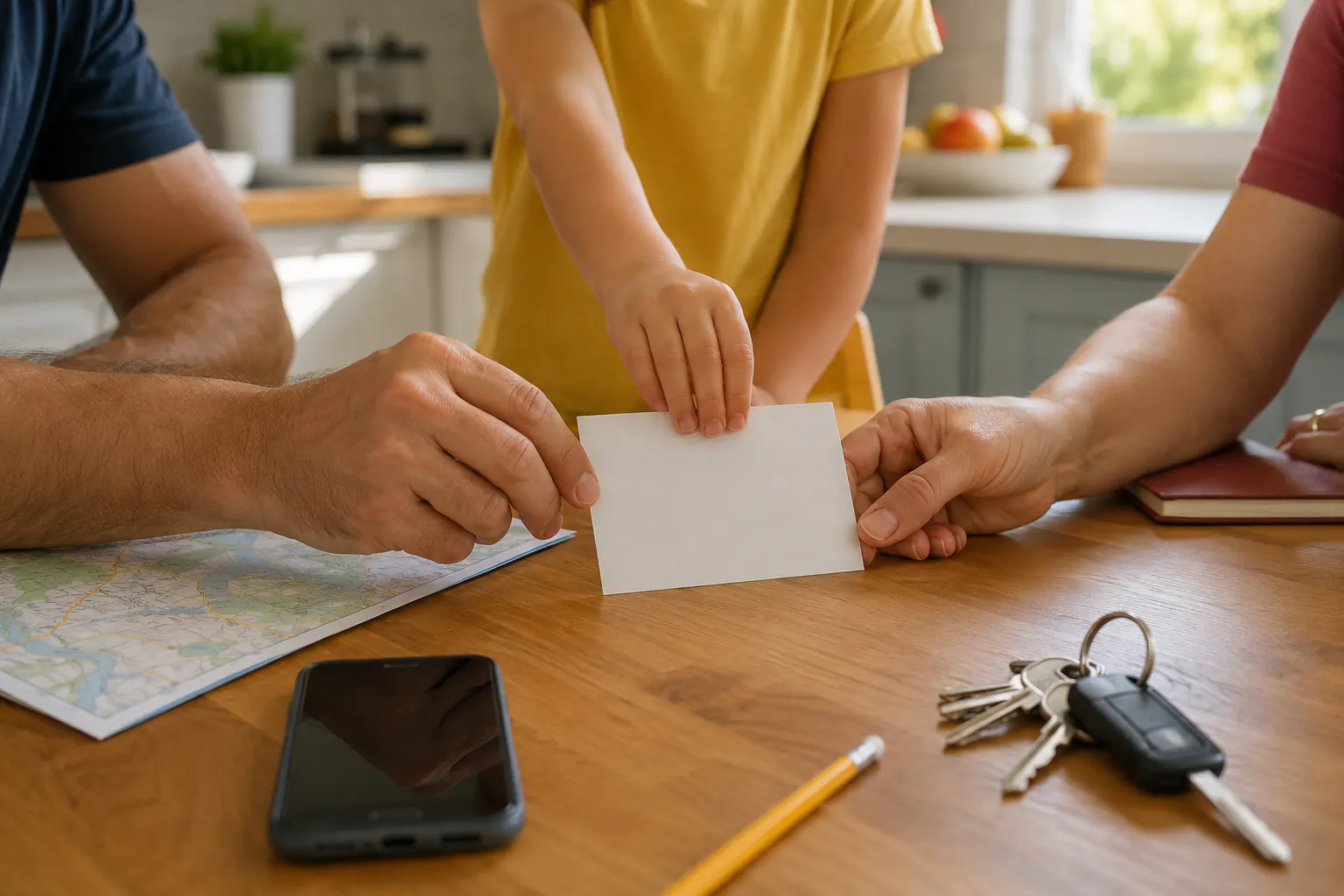
Private in-browser worksheet
Family emergency plan card
Make a short card people can find and understand. Nothing entered here is saved or sent.
Use the current event. Follow local authorities, schools, caregivers, workplaces, building management, and emergency services when they give different instructions.
Keep the card smaller than the full plan
The card is a memory aid. It is not the full household plan and does not replace the instructions given by a school, caregiver, workplace, building, utility, local authority, or emergency service. It should contain only the information people may need quickly:
- a neutral household label;
- one local meeting point the household has actually discussed;
- one out-of-area contact with a verified current number;
- an agreed check-in method, such as text first or a defined call window;
- an optional second meeting point when the household has one;
- a review point after a change or season.
Use the Family Communication Plan for a Power Outage to work through the full decisions before filling the card. The full plan accounts for network limits, absence, access needs, pets, and roles; the card simply keeps the chosen essentials visible.
Verify the contact route before relying on it
An out-of-area contact can help a household consolidate updates when local networks are strained, but a name on paper is not enough. Confirm that the person agrees to the role, knows which information they may share, and has a current way to be reached. Update the card when a number, household member, school, caregiver, address, or communication preference changes.
The multiple-channel alerts guide explains why a household should not depend on a single phone, app, or message path. The communication channel limits guide keeps the limits of text, voice, radio, and satellite systems realistic.
Use the Emergency Charging Plan for Phones, Radios, and Power Banks to make sure the communication tools named on the card have a realistic charging and inspection routine.
Protect children and private details
Keep a printed card where the household has agreed it belongs. Do not publish it, leave it in a visible car, post it outside, or include passwords, detailed daily schedules, account data, health details, full identification, or information that makes a child easier to locate or impersonate.
For children, caregivers, and people who need help communicating, use plain language and practice the minimum useful steps in calm conditions. Do not ask a child to make adult judgment calls, travel alone, confront a stranger, or disregard current school, caregiver, or responder instructions.
Use the live situation, not the card alone
During a fire, evacuation, flood, severe weather event, building emergency, dangerous smoke, or other urgent situation, current directions may override the household’s usual meeting point or route. The card helps people reconnect after they follow those instructions; it does not set a route through danger.
Use Evacuation Planning and Bug-Out Bags when departure, transport, destinations, care, pets, or documents become the active question. Update the card after any event that showed a contact, meeting point, or check-in method was confusing.
Sources reviewed
- Ready.gov: family emergency communication planning and making a plan
Sources reviewed August 3, 2026. Emergency services, current local authorities, schools, caregivers, building management, and individualized plans control live-event instructions.