
Before your next delivery, confirm where your building and carrier allow it to wait and who can collect it. That small decision can shorten unattended time without putting access codes, travel plans, or another resident’s information into a delivery note.
Start with the building’s actual rules. A package room, concierge, locker, front desk, mail slot, carrier notice, or approved pickup point may be more reliable than an instruction typed into a delivery app. None is a guarantee. A notification can be wrong, a locker can fail, a resident can be away, and a carrier can use a different procedure during weather, access trouble, or a power outage.
This guide is about routine prevention and recovery. It does not teach surveillance, confrontation, lock bypass, false reports, or ways to obtain another resident’s delivery information.
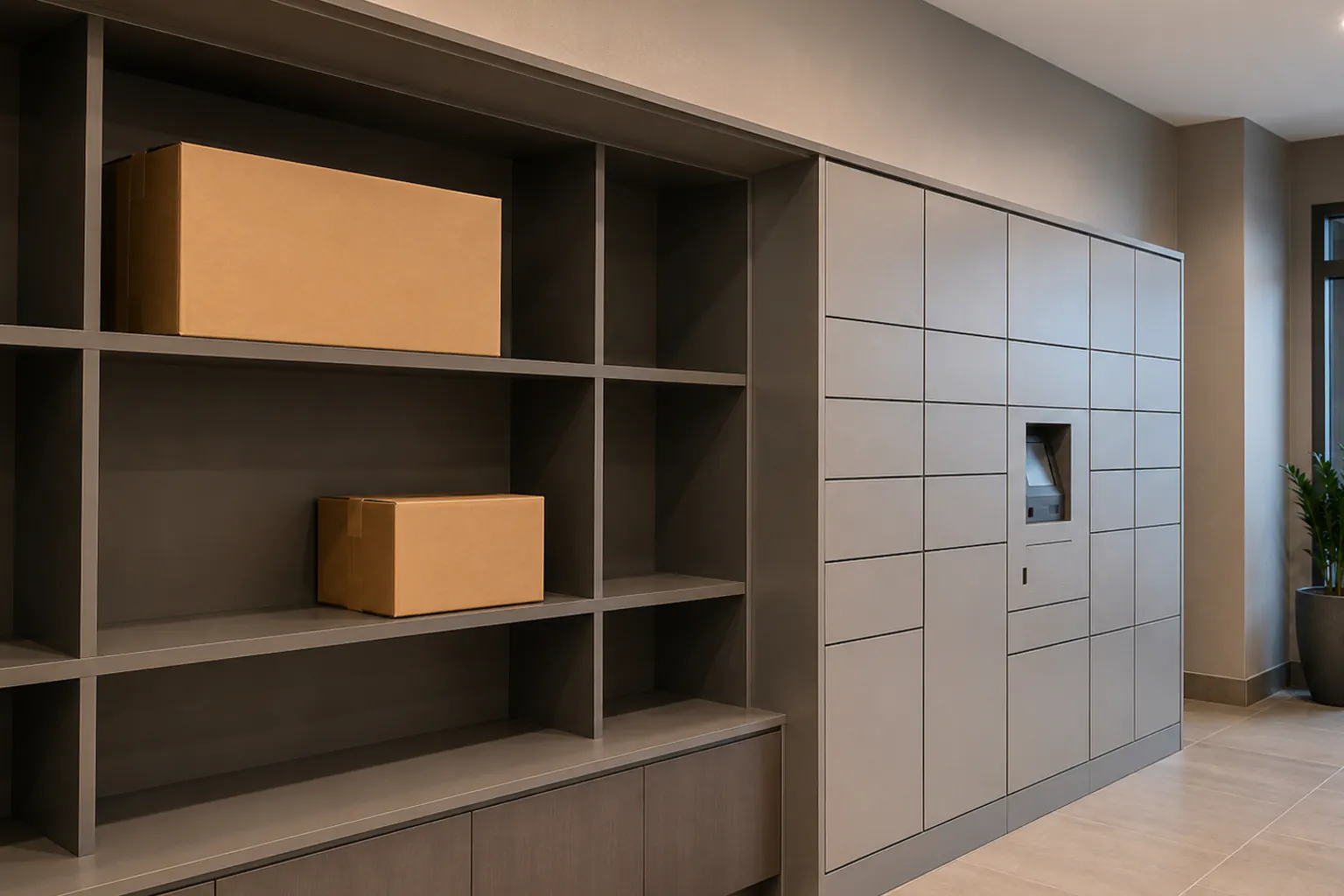
Map the handoff, not just the address
For each recurring carrier or delivery service, write a simple map:
| Step | Household decision | Record to keep |
|---|---|---|
| Order | Which name, unit format, and approved delivery option are used? | Address format and building instruction limit |
| Notice | Which account or device receives a notification? | Account owner and recovery contact |
| Arrival | Where may the item be left or held? | Building, locker, desk, pickup, or carrier procedure |
| Retrieval | Who can collect it and by when? | Named household member or consented helper |
| Exception | What happens if it is missing, damaged, or misdelivered? | Carrier, management, and report reference |
Do not put gate codes, door-release instructions, a vacant-time schedule, a detailed floor plan, or a description of valuables into a public-facing delivery note. A carrier needs enough information to complete a legitimate handoff, not a map of the household.
Confirm the correct unit and building format with management. In a large property, an apparently small difference in a building letter, entrance, unit number, resident name, or locker account can redirect an item or make a valid delivery hard to recover.
Choose the least exposed approved option
Before ordering an important item, ask one quiet question: where can it wait with the fewest unnecessary handoffs? The answer depends on the building and the carrier. It may be an approved mailroom, package locker, staffed desk, carrier pickup location, a signature option, a scheduled delivery when a household member is available, or a trusted person who has agreed in advance.
Use only options the building and carrier actually support. Do not ask a delivery worker to enter a secured area, leave an item in a stairwell, hide it near an exit, block a corridor, or hand it to an unknown neighbor. Do not leave outgoing parcels or letters where anyone can take them.
USPS and the Postal Inspection Service advise collecting incoming mail promptly and using secure outgoing-mail locations rather than letting mail sit in a receptacle. For a planned absence, review the carrier’s official hold or pickup options early rather than posting travel dates or asking a broad online group to watch the apartment.
Treat delivery messages as leads, not commands
A text, email, push notification, or photo may be useful, but it is not proof that a package is safe, that a fee is owed, or that a link is genuine. Use the carrier’s official app, a known account, or an address you type yourself to check a delivery. Do not follow a link in an unexpected message merely because it includes a familiar logo, tracking-style number, or urgent language.
The Federal Trade Commission warns about fake delivery-failure messages and attachments. A real order can coexist with a fraudulent message. Slow down and compare the notice with the order record before sharing a code, password, payment detail, identification image, or building information.
For household continuity, keep a paper note of the normal carrier, building contact, and order-recovery steps. The Family Communication Plan can hold the household contact fallback; do not add account passwords or access codes to that paper.
Retrieve without broadcasting household details
Pick up deliveries as soon as reasonably possible. When a roommate, caregiver, or neighbor is helping, agree on a narrow arrangement: which item, which pickup window, which confirmation, and what information is not shared. Do not share a full order history, permanent building credential, app password, or unrestricted camera account merely to retrieve one parcel.
Photograph a damaged exterior package only when it is safe and appropriate, and avoid placing labels, tracking numbers, signatures, apartment interiors, other residents, or access controls into public posts. Store order confirmations, carrier messages, and any relevant photo privately with the report record.
Do not confront someone you believe took a package, follow a person through a building, search a neighbor’s area, or use a camera image to identify or accuse someone online. Move to safety and use the appropriate carrier, property-management, police, or victim-support channel. An ordinary package dispute is not a reason to create a hallway confrontation.
Keep the mail identity current
Mail can expose more than a delivery schedule. It can reveal financial accounts, health information, identity documents, replacement cards, passwords, account numbers, and evidence of travel or a move. At move-in, move-out, household separation, or a name change, make a dated checklist:
- Confirm the exact recipient names accepted by the building and mailbox system.
- Use the official carrier process for any address change or mail hold; never rely on a link in an unsolicited message.
- Remove former residents from delivery and locker accounts where you are authorized to do so.
- Review recurring subscriptions, pharmacy or medical-supply delivery arrangements, and financial notices with their providers.
- Shred or securely dispose of labels and documents that expose account, address, or tracking details.
- Update a trusted household contact only with the information they need for a real delivery problem.
Do not open, redirect, discard, or photograph another person’s mail. A misdelivered item needs the carrier or building’s documented procedure, not a home workaround.
Build a low-drama missing-item routine
When something appears missing, separate facts from assumptions. Record the order number, claimed delivery time, carrier name, exact approved delivery location, notification text, and any safe photo or building record. Check with the building’s package procedure and the carrier’s official account before deciding what happened. For the prevention side — shortening the unattended time a package sits out, and the calm recovery steps if one is stolen — see reducing package theft as an apartment resident.
Then use this order:
- Check the approved location, carrier notice, and account from a known official route.
- Ask management whether there was an access, locker, mailroom, power, or maintenance issue without asking them to disclose another resident’s information.
- Report the issue to the carrier or seller using the order record.
- Report suspected stolen U.S. mail through the Postal Inspection Service’s official route; use local emergency services only for an immediate threat or crime in progress.
- Preserve the case or work-order number, communications, and any permitted evidence.
- Change the future delivery method only after identifying a realistic, building-approved improvement.
Avoid turning one unexplained notification into a public accusation. A delivery may be delayed, mis-scanned, placed in an approved alternate location, returned, or affected by building access. The record lets the responsible organization investigate without exposing more residents.
Plan for a building outage
An outage can affect a package room, elevator, intercom, locker, access app, camera, router, cellular reception, exterior lighting, and management office. A resident should not force a door, tailgate through a controlled entrance, defeat a locker, or enter a dark shared space alone to retrieve a delivery.
Keep a flashlight available for the route, maintain a charged communication device, and follow building instructions. The Alarm, Camera, and Router Continuity guide explains the technology dependencies; Home Security During a Power Outage covers the wider household routine. If a delivery can wait, let it wait until access, lighting, and official information are reliable.
Review the routine after a move or incident
After a move, building or household change, outage, missing item, or account compromise, review the parts of the routine affected. A periodic reminder can also help you check:
- recipient names and unit formatting;
- active carrier and locker accounts;
- notification and account-recovery paths;
- approved delivery, hold, and pickup options;
- who may retrieve an item and what they need to know;
- building management and carrier reporting contacts;
- camera, doorbell, and privacy settings where they exist;
- papers and labels that should be securely disposed of.
Use the Renter-Friendly Home Security guide for the larger access, lease, exit, and building-authority plan. For account recovery and private records, use How to Store Essential Credentials Offline and Securely. The goal is ordinary reliability: less unattended time, less sensitive information exposed, and a documented next step when the routine fails.
Sources reviewed
- U.S. Postal Service and U.S. Postal Inspection Service: Project Safe Delivery and package-protection guidance
- Federal Trade Commission: package-delivery scam and online-information guidance
Sources reviewed July 15, 2026. Carrier procedures, building policies, local law, tenant remedies, recording rules, and reporting routes vary. This page is household-planning guidance, not legal, law-enforcement, delivery-provider, or privacy advice.