
Start with one person you trust and one question: “If I cannot get home, would you be willing to help with my pet?” Agree on what they can actually do before giving them a key or adding their name to a contact list. A hospitalization, delayed trip, or evacuation while you are away may leave them needing clear instructions rather than a vague offer to help.
CDC’s Be Prepared: Pet Safety in Emergencies recommends a trusted-neighbor buddy system for times when you are not home. The Pet Emergency Preparedness hub covers the wider plan; here, the job is to agree on a helper, access and the limits of their role. If an emergency is already happening, current evacuation instructions and necessary help take priority over completing this plan.
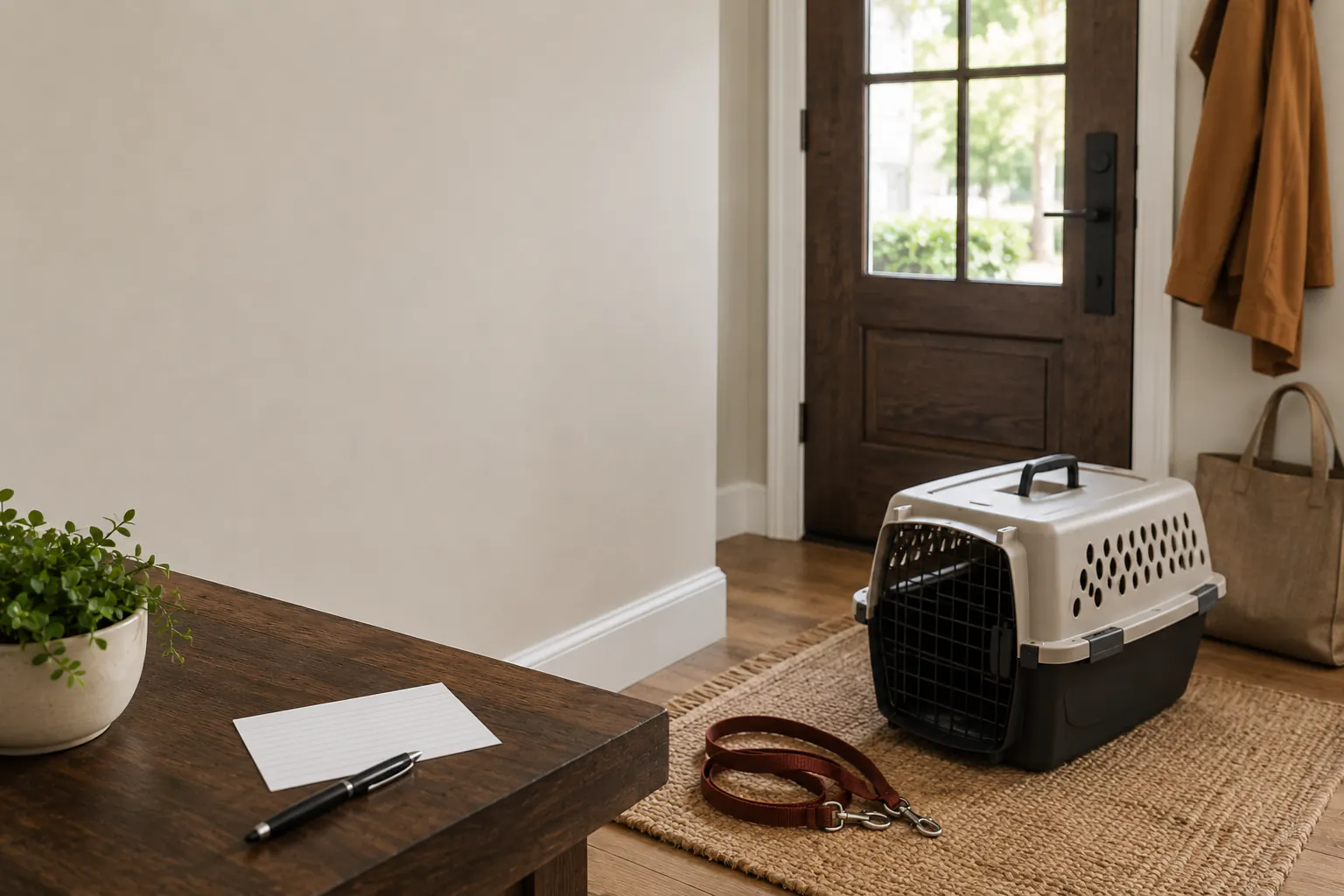
Why “a neighbor has a key” is not a plan
A key may open the door, but it does not settle what your helper has agreed to do. Can they handle this animal, where may they take it, and whom should they call about care? Keep the pet medications, records, identification, and contacts checklist alongside the agreed instructions. This household note does not itself grant legal custody or permission to authorize veterinary treatment.
Confirm consent before an emergency, not during one
Ask the backup handler directly, in a calm conversation, whether they are willing and able to take on this role — including the physical, time, and financial demands it might involve. Do not assume a friendly offer (“let me know if you ever need help”) constitutes agreement to a specific role with specific limits. Confirm:
- whether they can physically access the animal (a key, a code, a landlord’s permission if they do not have standing access);
- whether they are comfortable with the animal’s temperament, size, and any handling needs;
- whether their own household, allergies, or other pets make hosting the animal workable;
- how long they could realistically care for the animal if the disruption extends.
Agree on a second contact if the helper is away, evacuating themselves, or unable to enter safely. Never ask them to enter a closed evacuation area or a hazardous building to collect an animal or supplies. Keep keys, access codes, addresses and care records private; share only what an agreed helper needs, not a public copy of the plan.
Write the ordinary-care notes a stranger to the routine would need
A backup handler who has never fed or walked this specific animal needs more than “please feed my dog.” Record:
- feeding schedule, portion, and food brand or type (with the pet medication and diet record as the source for anything medically necessary);
- exercise, bathroom, or litter routine;
- behavior notes relevant to safe handling — reactivity to strangers, other animals, loud noises, or specific triggers;
- comfort items that reduce stress during an unfamiliar handoff.
Set pickup authority and a contact order
Write down when your helper should act, how to reach you, and who can help if either of you is unavailable. Confirm any required authorization with the veterinarian, boarding operator or relevant qualified adviser beforehand; a contact list is not that authorization. For ordinary coordination, a contact list could include:
- Owner, with the usual contact method and an alternative.
- Local backup handler, with confirmed access and consent.
- Out-of-area contact, who may help coordinate but should not be assumed able or authorized to collect the animal or approve care.
- Veterinarian or boarding facility, if no personal contact can take the animal and a professional option exists.
This is not an urgent-care calling sequence. Do not wait for the owner to answer before seeking necessary emergency assistance or veterinary advice, and do not delay an evacuation order to work through the list. Veterinary decisions follow the clinic’s requirements and the animal’s approved care plan, not this example.
Give the helper the carrier location and confirmed destination information from the animal’s records. Keep the carrier and supplies reachable without blocking doors, stairs or circulation. If no agreed person can help, contact the relevant local animal services or emergency-management office for current options; do not treat an unconfirmed boarding facility as an available place.
Practice the handoff once, calmly
Begin with the owner present, in ordinary safe conditions. Show the helper the permitted access, carrier location, records and familiar routine. Let them ask questions before trying any animal handling. CDC recommends family practice and familiarizing pets with carriers; that does not mean a new helper must manage a frightened animal alone.
Do not force handling, provoke distress, simulate a dangerous event or interrupt prescribed care to finish a rehearsal. If handling is unfamiliar or unsafe, stop and ask the veterinarian or an appropriately qualified animal professional how to prepare. A conversation or walkthrough can identify an unresolved question; it is not proof that a real evacuation will succeed.
Know where the plan stops
This plan does not create legal guardianship or override a landlord’s, shelter’s, or veterinary clinic’s own rules about who may authorize care or make decisions for an animal. Where a formal authorization matters — boarding a pet for an extended period, authorizing significant veterinary treatment, or a dispute over custody — use qualified legal advice specific to your jurisdiction rather than this household document.
Review it like any other emergency plan
Review the plan when the helper’s availability, access or household changes, and when your animal’s routine or approved care changes. Ask again rather than assuming last year’s agreement still works.
Coordinate the handoff trigger with the household’s family communication plan and its evacuation plan, so the backup handler is contacted through the same channel the rest of the household already uses.